LEDRHYTHM - Port LED Lighting Fixtures
For port, seaport, and terminal lighting, LEDRHYTHM offer high-power high mast LED flood lights and fully sealed LED vapor tight lights. With a luminous flux of up to 200,000 lumens and efficacy of 160 lumens/W, you don’t have to worry about insufficient brightness or excessive power consumption. You can view our full flood light range.
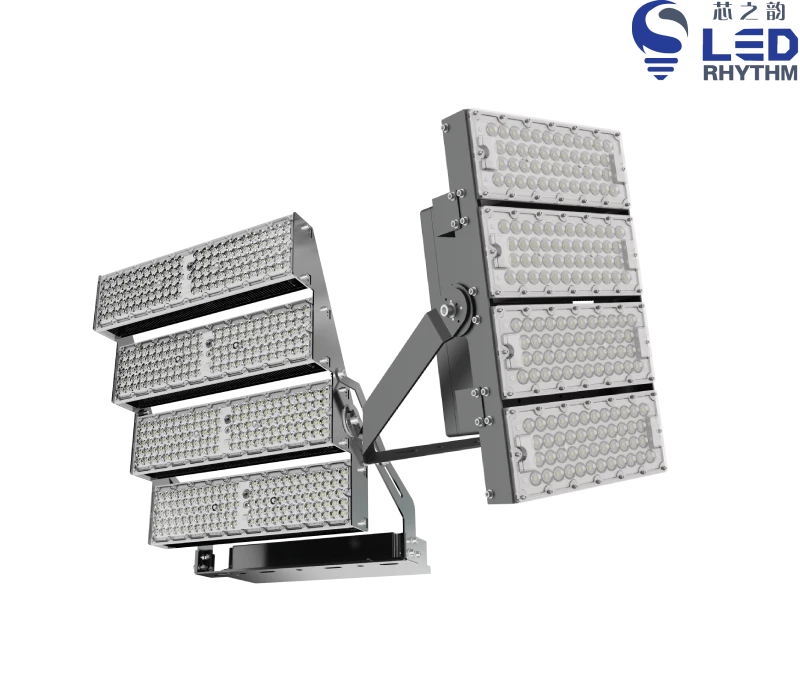
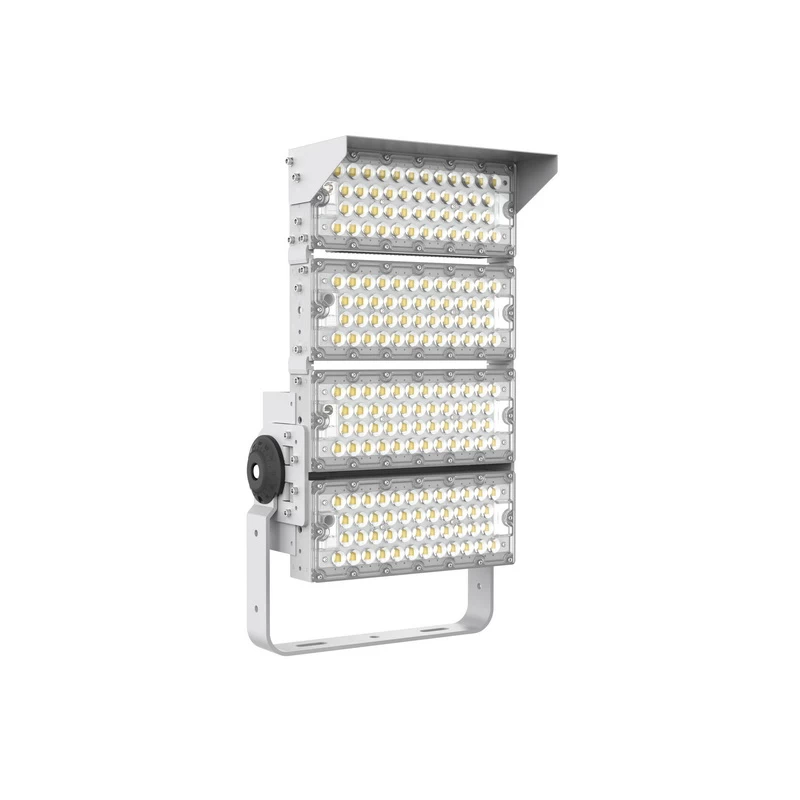
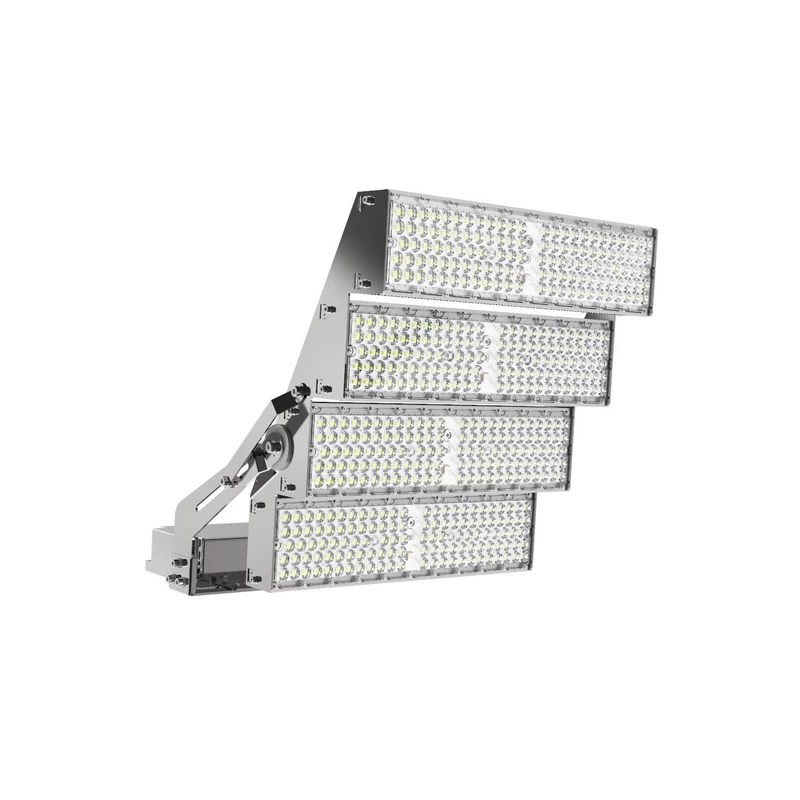
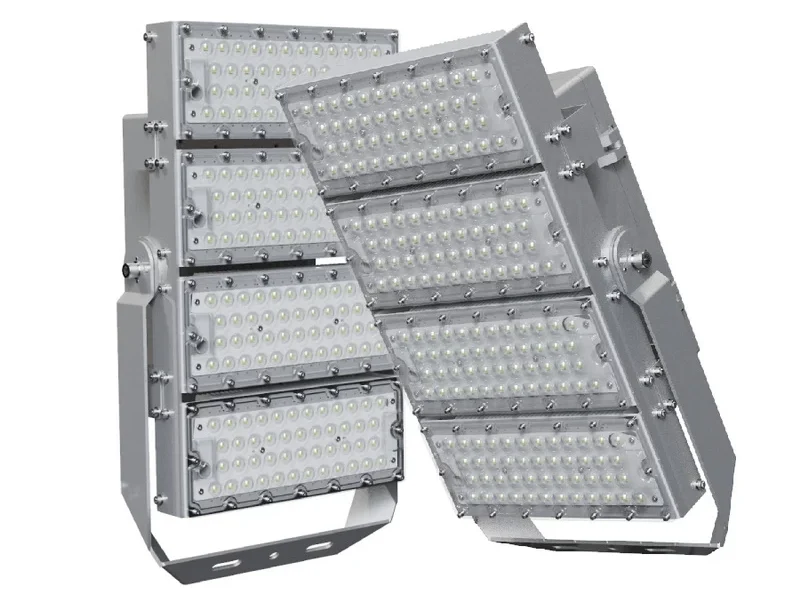
The image on left shows our high-mast flood lights designed specifically for port environments, with from 3000K to 6000K. All fixtures have a minimum IP66 rating and undergo 4,000-hour salt spray test, fully capable of withstanding corrosion from seaport seawater. IK08 to IK10 can also fully withstand the vibration and impact caused by typhoons.
Professional LED port lighting fixtures achieve optimal performance in terms of energy efficiency, stability, and light quality, making them a perfect replacement for traditional lighting systems.
- Protection: IP66 and IK10, resistant to harsh environments such as wind, rain, and sea fog. 10KV/20KV surge protection.
- Construction: Made of die-cast aluminum or impact-resistant PC casing, extremely sturdy construction.
- Corrosion-resistant: Treated with a special corrosion-resistant coating and passed 4,000-hour salt spray test.
- Energy-saving: Luminous efficacy exceeds 150 lm/W, helping ports and terminal lighting achieve long-term energy savings.
- Long life: Lifespan exceeds 50,000 hours, reducing overall operation and maintenance costs. Excellent heat dissipation.
- Intelligent control: Supports 0-10V/DALI dimming and batch lighting control.
- After-sales service: All products come with a 5-year warranty, ensuring worry-free use.
| Category | LED High Mast Flood Lights | LED Vapor Tight Lights |
|---|
| Main Areas | Container yards, open port areas, terminal roads, cargo handling zones | Crane structures, elevated platforms, equipment rooms, control rooms |
| Main Purpose | Illuminate large outdoor areas for night operations and safety | Provide reliable task lighting for equipment operation and maintenance |
| Mounting Height | 12–40 m (39–130 ft), structure and pole mounted | 3–8 m (10–26 ft), structure or ceiling mounted |
| Typical Wattage | 300W – 1500W | 20W – 100W |
| Light Distribution | Narrow to medium beams for long-distance coverage | Wide beam for uniform close-range illumination |
| Protection Level | IP66, surge protection, marine-grade coating | IP69K, sealed housing, resistant to moisture and salt spray |
| Role in Port Lighting | Primary outdoor lighting system | Functional lighting for port equipment and control areas |
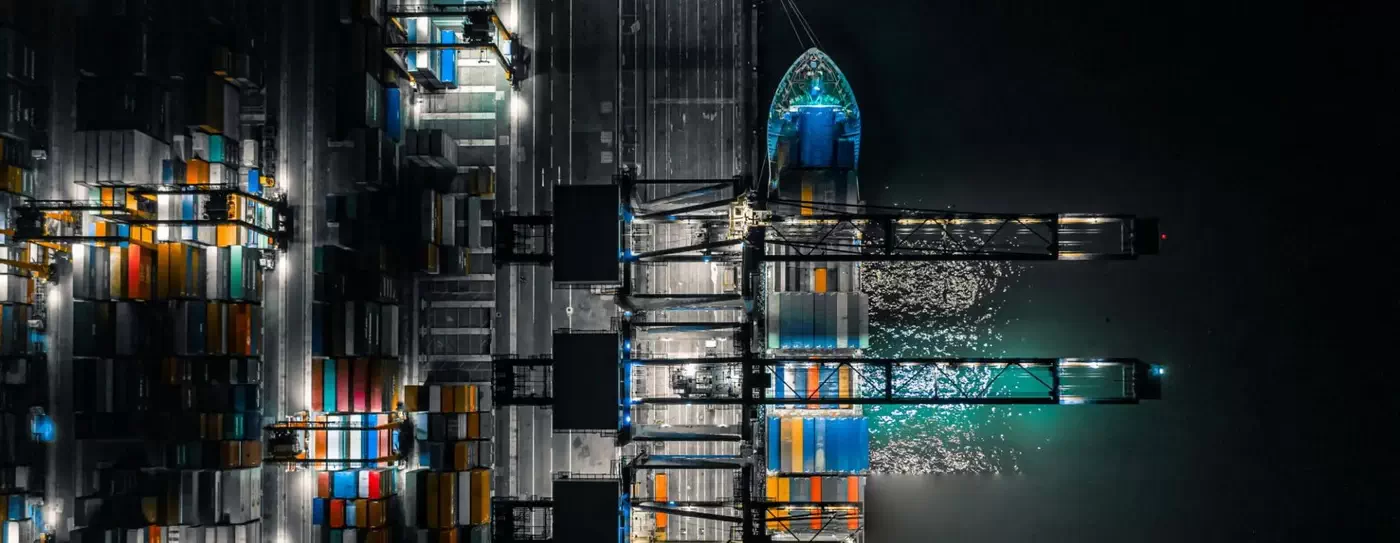
Challenges in Port LED Lighting
Lighting not only ensures the safety and efficiency of ship berthing, container loading and unloading and vehicle traffic, but also directly impacts the port overall operational capacity. Most terminals typically operate 24/7, requiring lighting systems to reliably and consistently in harsh environments, including high humidity, salt spray corrosion and strong winds and vibrations.
The design and implementation of port and terminals lighting presents numerous challenges, not simply providing sufficient brightness but also ensuring safety, stability and cost-effectiveness within complex environments. They cover complex areas, including container yards, dock loading and unloading areas, roads and passageways, tower cranes, and overhead equipment lighting. Our LED series will be able to illuminate them.
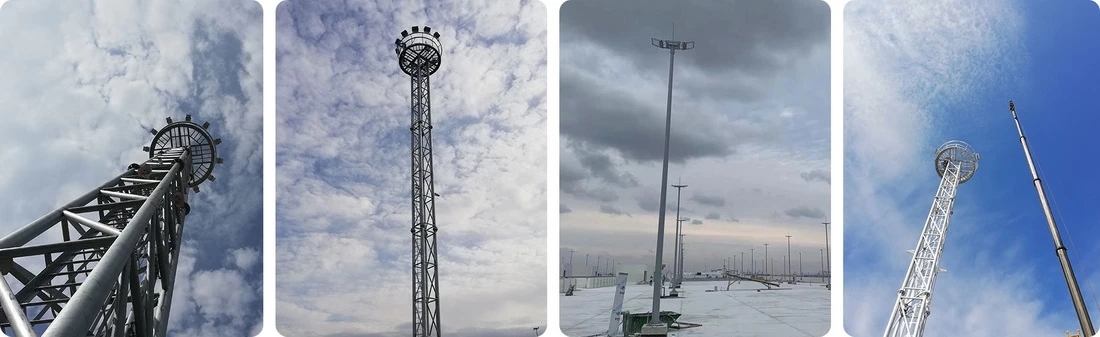
- Higher Installation Heights: Port lighting fixtures is typically installed on high poles or tower cranes 20-40 meters high, requiring high luminous flux and precise beam control.
- Harsh Environments: Long-term exposure to sea breezes, salt spray and humidity can easily lead to corrosion or failure.
- Long-Term Operation: Long daily operating hours, while maintaining low energy consumption and maintenance costs.
- Safety and Glare Control: High-brightness lighting can easily cause visual disturbance to workers, must use of anti-glare structures and specialized lighting distribution.
LEDRHYTHM on-site implementation and successful lighting in shanghai port:
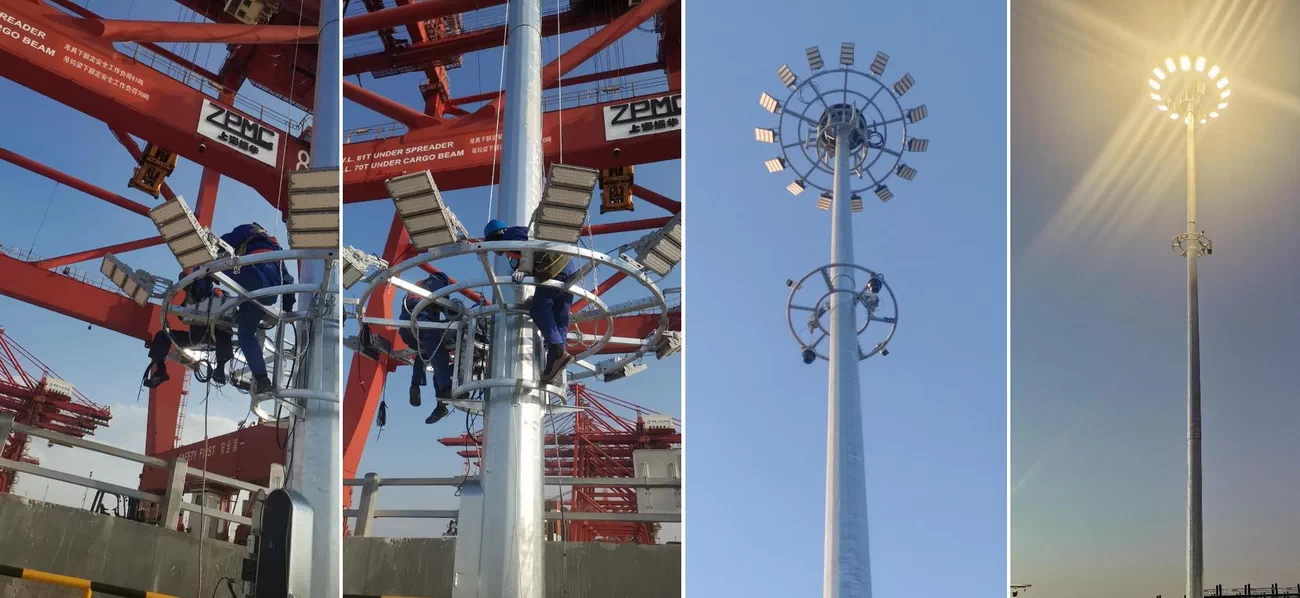
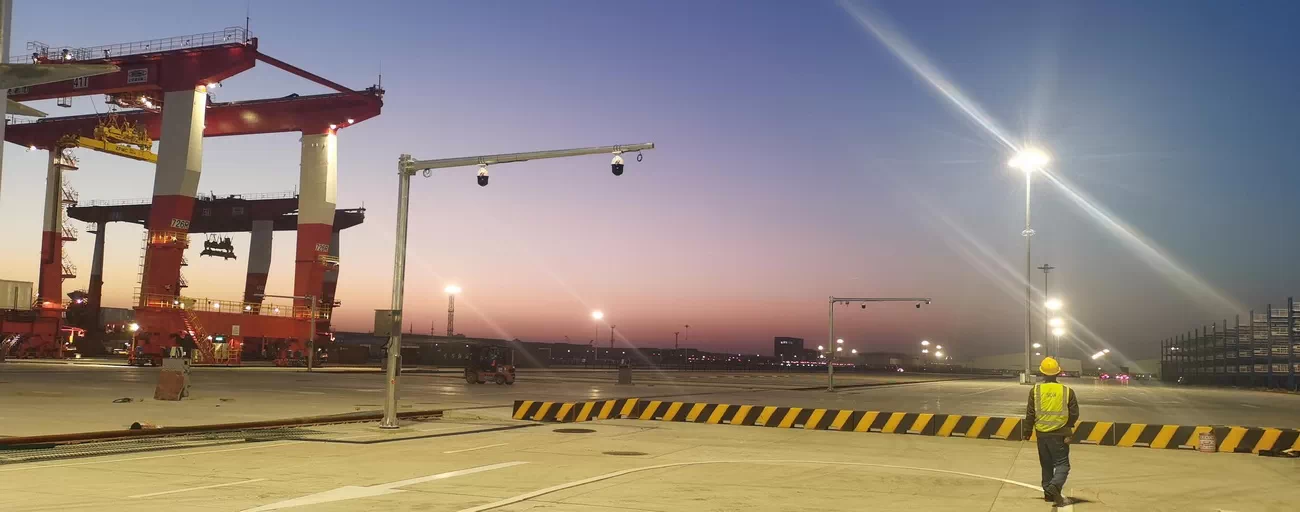
LEDRHYTHM - Port LED Lighting Manufacturer in China
At LEDRHYTHM, port is one of the most important scenarios in our industrial LED lighting. Because it not only places higher demands on the performance and brightness of the lighting fixtures, it can also be used in other similar environments. We have extensive experience in export and lighting design. Please feel free to contact us for customized solutions. As a professional LED lighting manufacturer, our R&D team and sales staff will provide you with comprehensive pre-sales and after-sales service.
Color of Port Light
The color of light not only affects visual effects, but also significantly impacts operational safety and efficiency. Many buyers often fall into the misconception that brighter is better or that any white light will suffice. However, for lighting environments like ports with open views and high visual clarity requirements, the color of the lighting fixtures, also known as its color temperature (K value), requires careful selection. We strongly recommend that port lighting use warm white light (3000K-3500K) or natural white light (4000K-5000K). View more about light color.
Port lights are typically installed on high poles or cranes ranging from 20 to 40 meters in height. Natural white light of 4000-5000K provides high visual clarity, ensuring real details and reducing the probability of misoperation.
Warm white light of 3000K-3500K, compared to cool white light, has less blue light in its spectrum. In the outdoor environment of ports near the sea, characterized by high humidity and salt spray, it exhibits less diffuse reflection and stronger penetrating power. This means the light can more effectively illuminate the ground and sea surface without being reflected by fog.
It is crucial to avoid the extensive use of daylight white light sources (5700K+) in key port operating areas. This not only causes severe light pollution but also easily produces strong glare and light curtains, ultimately leading to blurred vision. Port lighting should flexibly combine warm white and natural white light to meet the principles of people-oriented and safety-based design.
Lighting Standards For Different Areas of Port
Because ports and terminals encompass multiple work and functional areas, illuminance vary from one area to another. When designing lighting, avoid excessive brightness or dimming. Proper illumination not only ensures the safety of personnel and equipment but also controls operating costs. Referring to EN 12464-2 and ANSI/IES RP-40, we recommend appropriate illuminance levels for various areas in port.
- Container yards: Requires illumination (20–50 lx) to ensure accurate container lifting and stacking.
- Loading and unloading areas: Higher illuminance (50–100 lx) to prevent accidents during cargo loading and unloading.
- Terminal roads & passageways: Typically 10–20 lx, ensure safe passage of vehicles and personnel.
- Warehouses &maintenance areas: 200–300 lx to provide a comfortable and efficient working environment.
- Tower cranes & high-rise equipment: Accurate lighting distribution,ensure clear in operating area while avoiding glare.
| Port Areas | Recommended Illuminance (lx) |
|---|
| Container Yard | 20 – 50 lx |
| Quay / Berthing Area | 50 – 100 lx |
| Cranes / Cargo Handling Points | 150 – 200 lx (local vertical) |
| Port Roads & Vehicle Routes | 10 – 20 lx |
| Warehouses / Maintenance Areas | 200 – 300 lx |
Frequently Asked Questions
What are LED ports lighting?
This refers to the use of LED lighting fixtures specifically designed for large and complex industrial environments such as ports, terminals, and coastlines to illuminate large outdoor work areas, equipment structures, and elevated platforms, while being more energy-efficient and reliable. Typically, high-mast LED floodlights are used as the core element in various open areas of ports to ensure the safety and efficiency of transportation and passage. For certain functional areas, LED vapor tight lights are used in conjunction to provide stable, low-glare functional lighting suitable for close-range operations.
Furthermore, LED ports lighting emphasizes corrosion resistance, salt spray resistance, moisture resistance, and high reliability to withstand the high humidity, strong winds, and salt corrosion of coastal environments, ensuring the fixtures will not be damaged and require no maintenance. They have more precise light distribution, strictly controlling the light to the area requiring illumination, effectively reducing glare and light pollution, and avoiding interference with the surrounding sea areas, waterways, and ecological environment. They can also be adjusted in brightness at any time, ensuring lighting safety while helping ports significantly reduce energy consumption.
What is the best port lighting system?
It should possess three main characteristics: industrial-grade robustness and durability, requiring corrosion resistance, high protection, and adaptability to salt spray and vibration, which are key to the long-term reliability of port lighting; professional optical design with high uniformity and low glare; and high luminous efficacy, which are key to energy saving during long-term port operations. Ideally, it should also support smart control and zone management, moving towards an intelligent lighting system.
What types of LED Crane lights are there?
In crane walkways, platforms, and operator’s cab areas, LED vapor tight lights are the most common type of lighting. They offer excellent waterproofing, corrosion resistance, and impact resistance, and can be installed under the crane’s steel structure or beside elevated walkways to provide uniform, low-glare close-range lighting, making them outstanding industrial-grade luminaires.
Secondly, specialized LED floodlights are used where it is necessary to illuminate the crane’s working area or critical operating points. Installed on the boom or structural nodes, they ensure sufficient visibility in the area below and allow for identification of the crane’s outline at a distance.
Can LED ports lighting be dimmed flexibly?
Of course. They all have flexible and controllable dimming capabilities. The lighting requirements vary in different areas of the ports. High illuminance is required during peak operations, while excessive brightness can cause glare and unnecessary energy waste during low-load periods, waiting periods, or non-core areas. 0-10V or DALI dimming, supporting zone, group, and even single-lamp control. This achieves flicker-free, smooth dimming across the entire brightness range without compromising light source lifespan.
At what height can LED port lighting be installed?
In the most critical operational areas of the port, such as container yards, loading and unloading areas, and terminal roads, our LED lights, with a maximum power of 1500W and an ultra-narrow beam angle, can be installed at heights of 12 to 40 meters and remain bright and clear. This allows for large-area, continuous, and uniform coverage while reducing the number of light poles required, and effectively controlling glare, which is particularly crucial for nighttime loading and unloading operations and the passage of large vehicles. For particularly open port areas or where longer projection distances are needed, the height of the high poles can be further increased.
| Mounting Height | Typical Wattage per Fixture | Fixtures per Pole |
|---|
| 20–25 m (65–82 ft) | 400W – 600W | 4 – 6 fixtures |
| 25–30 m (82–98 ft) | 600W – 800W | 6 – 8 fixtures |
| 30–35 m (98–115 ft) | 800W – 1200W | 8 – 10 fixtures |
| 35–40 m (115–130 ft) | 1000W – 1600W | 10 – 14 fixtures |
What are the advantages of LED over traditional fixtures in port and terminal lighting?
- LEDs’ long lifespan and high protection significantly reduce the frequency and risks of high-altitude maintenance, eliminating the need for replacement or maintenance.
- The spectrum of LEDs can be precisely controlled, allowing for flexible selection between 2000K and 6500K, whether requiring light penetration in low-contrast environments such as fog and rain, or high color rendering index (CRI) for bright, sharp lighting.
- LED luminaires, through precise optical design, strictly limit spillage light, fundamentally solving the glare and light pollution problems that traditional luminaires struggle with.
- LEDs start and restart faster, without the preheating or cooling time required for traditional luminaires.
- Professional LED lights utilize a multi-chip modular design; the failure of a single chip module does not affect the operation of other modules, resulting in only a slight decrease in overall light output, rather than complete extinguishing as with traditional luminaires.
- LEDs concentrate most of their heat on the heat dissipation path behind the light source, actively dissipating it through a carefully designed cooling system, rather than radiating it in all directions as with traditional luminaires.

 English
  简体中文
简体中文  Deutsch
  Español
  Français
  Italiano
  日本語
日本語  Русский
  Português
  한국어
한국어