Importance of Tennis Court Lighting
Tennis court lighting demands extremely high visual conditions, as tennis is a fast-paced, responsive sport, and the ball is small and moves quickly. Whether indoors or outdoors, lighting fixture requires bright, clear, and comfortable light to enable players to perform at their best.
Therefore, high-quality tennis court lighting must address issues such as flicker, glare and uneven illumination. These issues not only affect players’ concentration but also increase the risk of sprains and falls. In professional tennis matches, clear standards for illuminance, uniformity and glare are set to ensure that the ball’s trajectory can be clearly seen from all angles.
LEDRHYTHM - Indoor & Outdoor LED Tennis Court Lights
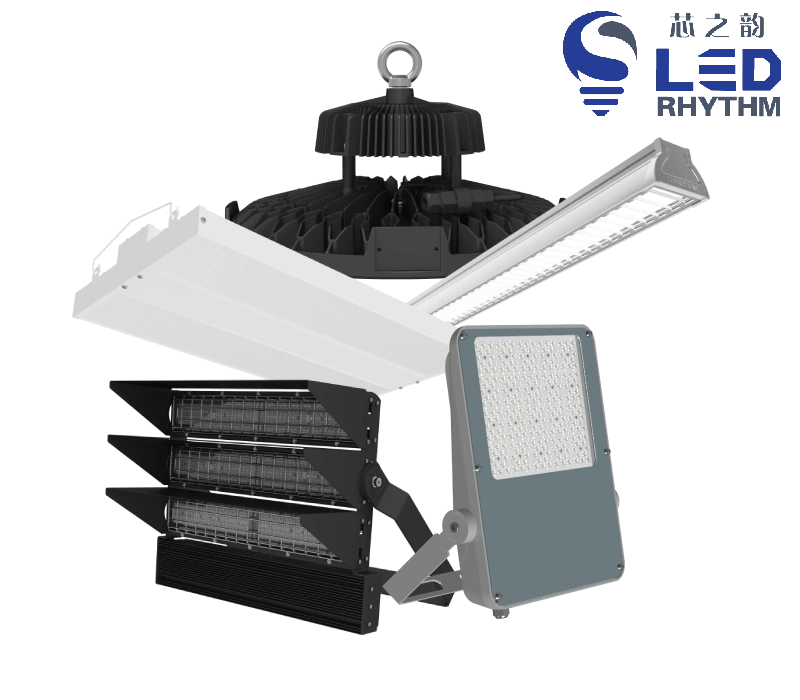
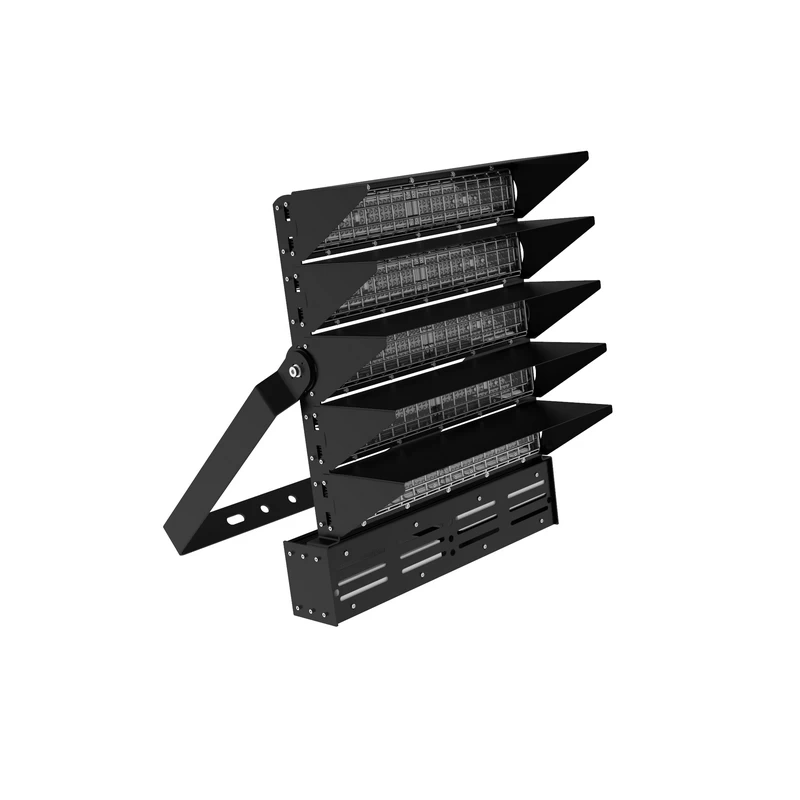
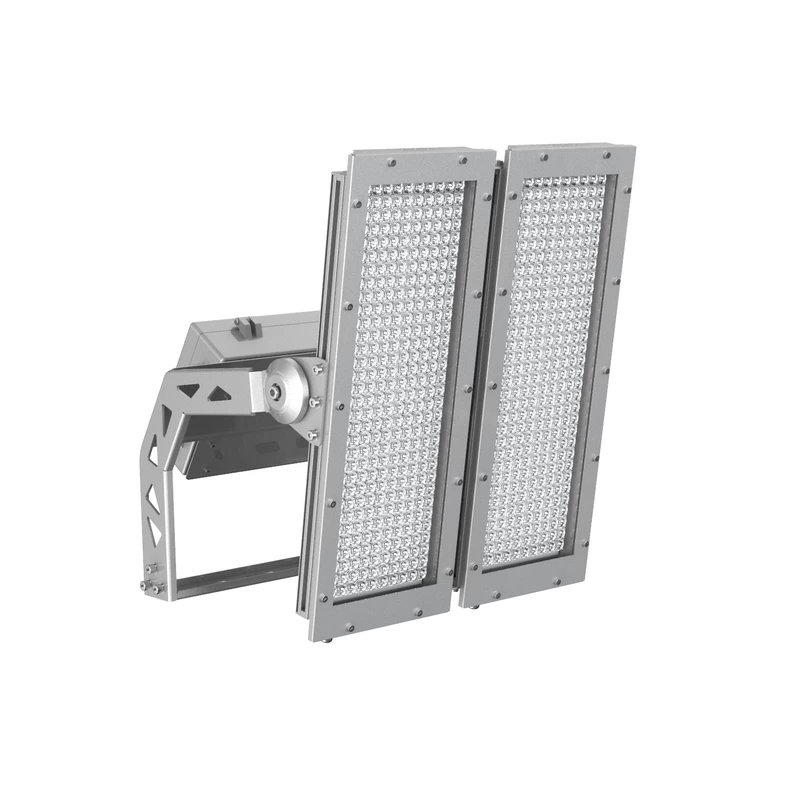
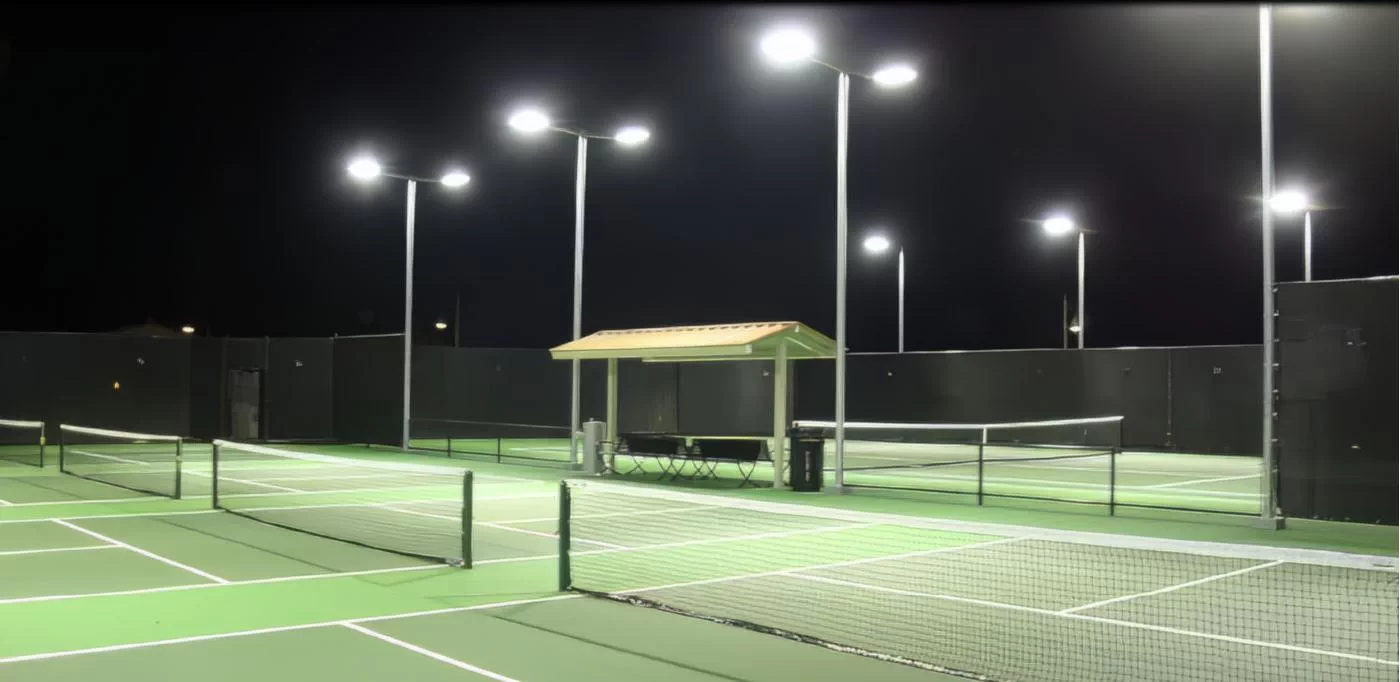
Outdoor tennis courts are often exposed to complex environmental conditions, our LED flood lights are the optimal choice for outdoor lighting. They meet the high illumination and uniformity requirements of competition and training, while also withstanding wind, rain, erosion and temperature change. In addition, LED flood lights for outdoor tennis courts can be equipped with lampshades to significantly reduce spillover light and light pollution. They can also be equipped with anti-collision wire mesh to prevent balls from hitting the fixtures and causing damage. Similarly, flood lights can also be used in indoor courts.
Indoor LED Tennis Court Lights
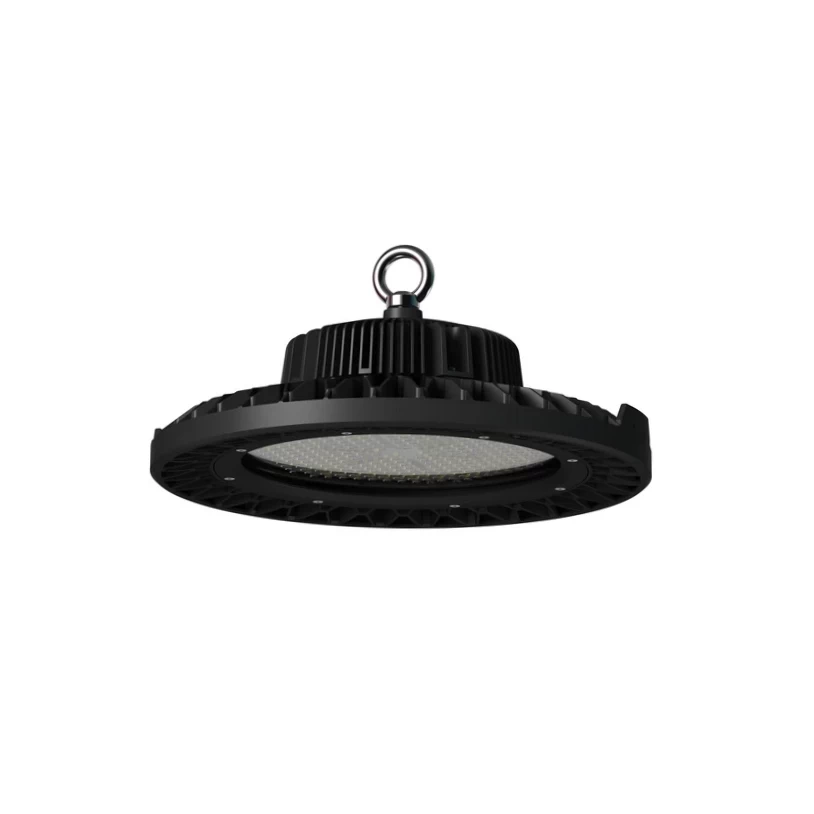
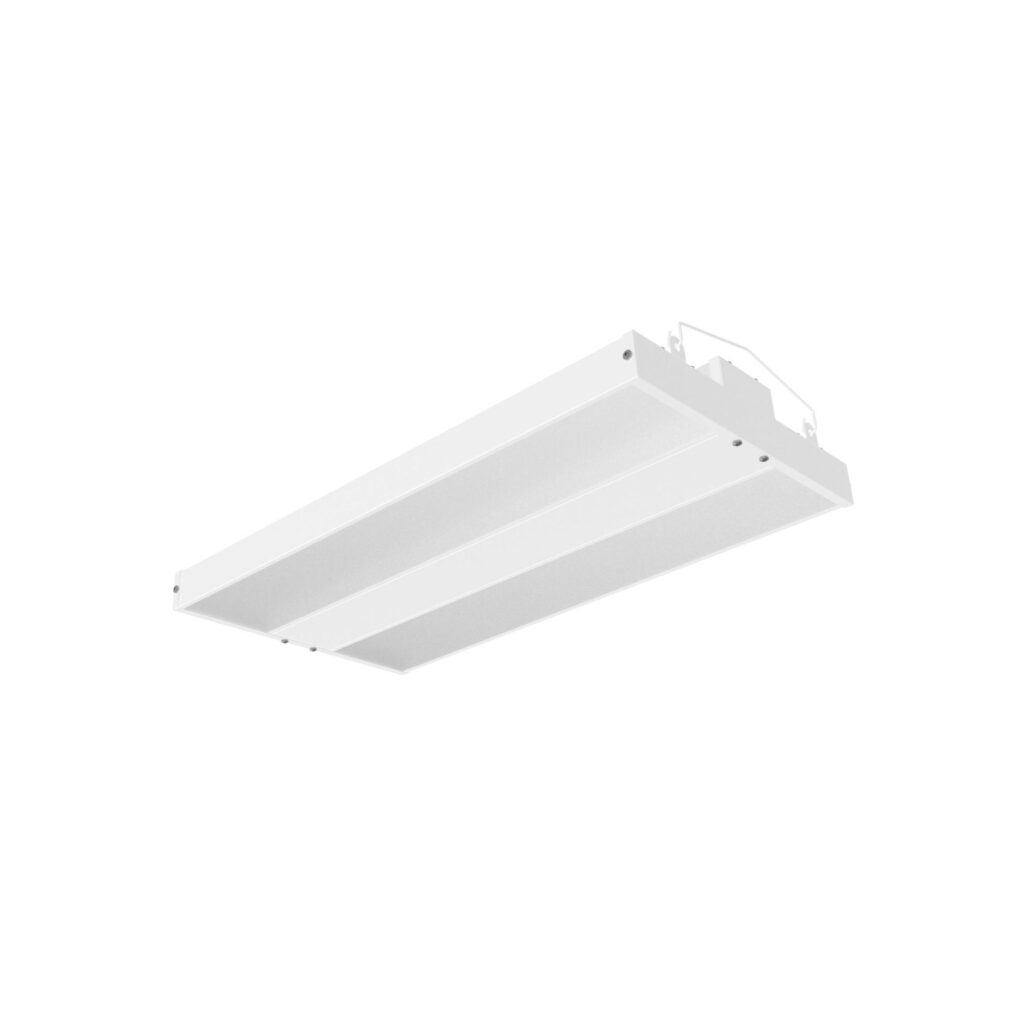
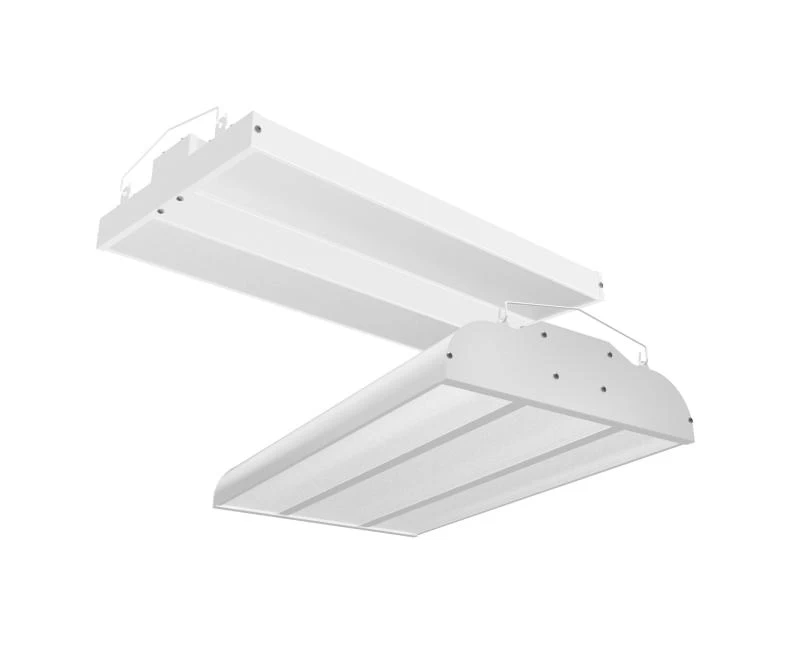
Indoor LED tennis court lights is subject to varying ceiling height restrictions, and uniformity and glare control are key. LED high-bay lights is the core of indoor lighting. We recommend UFO and linear designs. Linear high bay have two luminous surfaces, resulting in a wider light distribution and providing more uniform and softer light. Furthermore, can also be equipped with anti-collision grilles, which protect against impacts from balls. Regardless of the size of your indoor tennis court, we ensure consistent brightness across the court, eliminating dark spots and glare. View all LED high bay series.
| Item |
Indoor Tennis Court |
Outdoor Tennis Court |
| LED Type |
High Bay, Flood Light |
Flood Light |
| Mounting Position |
Ceiling / roof structure |
Poles |
| Environment |
Controlled |
Weather exposed |
| IP Rating |
Standard indoor level |
IP66+ |
| Design Focus |
Uniformity & comfort |
Lighting intensity & coverage |
Advantages of LEDRHYTHM LED Tennis Court Lighting
LEDRHYTHM LED tennis court lighting series not only enhances the sports and competition experience but also minimizes lighting costs, while meeting the requirements for clarity and realism in TV broadcasts and high-definition shooting.
- Energy Saving: The luminous efficacy ranges from 150-180 lm/W, effectively reducing the courts long-term operating costs. Compared to traditional lighting fixtures, can save 60-70% of energy.
- Anti-Glare: Light distribution utilizes specialized optical lenses, reflectors, PC diffusers or anti-collision and anti-glare grilles, ensure athletes experience no visual distraction during high-speed movements.
- Uniformity: Whether indoors or outdoors courts, our LED lighting offers a variety of beam angles (up to 120°) options and larger light-emitting surface to provide wide and more uniform lighting.
- Brightness and color rendering: Meets illuminance standards from entertainment to training to competition, with color rendering index exceeding 90.
- Intelligent control: Supports 0-10V, DALI, DMX and other control methods, enabling zone management and smooth dimming, further improving operational efficiency.
- Long life: After testing, our all LED lights have lifespan of over 50,000 hours and provide you with a 5-year warranty.
Illuminance Standard
Precise illuminance directly affects athletes’ visual clarity, reaction speed, fatigue levels, and the viewing experience for spectators. Insufficient brightness can lead to blurred ball trajectories, delayed judgment, and even increased risk of injury. Depending on the court grade and usage requirements, tennis court lighting is typically categorized into three levels, each with corresponding illuminance standards:
- Recreational Use : 200 – 300 Lux. Meeting basic visibility and usage requirements is sufficient, ensuring safety and cost-effectiveness. Requirements for uniformity and glare control are relatively lenient.
- Training and Amateur Competition: 400-500 Lux. Good illuminance uniformity to reduce visual fatigue, with well-defined glare control. Higher requirements for detail and rapid judgment.
- Professional Competition Tennis Courts: 700-1000 Lux. Provides a clear and stable visual environment for high-intensity competition and spectator. Extremely high illuminance levels, excellent uniformity, and strict glare limitations. Meets the demanding requirements of high-speed cameras.
Furthermore, outdoor tennis courts typically have about 20% lower illuminance than indoor courts. This is because the outdoor environment is more open, and even with better light control, some light will still diffuse. Simply increasing the brightness of the lights would result in severe glare. Indoor ceilings and walls, on the other hand, can reflect some light. Therefore, specific illuminance levels should be determined by comprehensively considering the environment and court type, rather than using uniform standard indefinitely.

Tennis Court LED Lights Retrofit
When tennis court lighting systems face problems such as lamps still being able to light up but with significant brightness decay, uneven illuminance distribution, frequent malfunctions of some lamps, and flickering, retrofitting professional LED lights is the most suitable choice. This can solve a series of problems, bring huge energy savings, and significantly improve the brightness and comfort of lighting in the tennis court.
If the existing fixtures installation height and overall layout of the tennis court are reasonable, LED upgrades do not necessarily mean a complete overhaul. Lighting simulations and designs can be performed based on the old installation and layout to select tennis court LED lights that meet the lighting requirements. Furthermore, LEDs support a wide input voltage range of 100-480V, making them compatible with the existing power supply system, allowing for upgrades without altering the wiring.
- Assess the existing lighting system and installation conditions
- Determine the tennis court level and illuminance requirements
- Lighting design and select suitable LED lights
- Verify electrical compatibility and installation feasibility
- Implement the modification and verify illuminance and effects
Not all tennis court lighting retrofit can be installed in the existing location. For example, if there are insufficient light poles, or if their location or height is seriously unreasonable, replacing them with LEDs may not achieve the desired effect. Structural problems such as rust and cracks appeared at the installation location. Or it might be an upgrade from a recreational court to a professional competition-grade tennis court. In these cases, a comprehensive repair and renovation of the court is necessary.
Tennis Court Lighting Cost
About LED tennis court lighting fixtures, many venue managers believe that the initial cost is too high, making it uneconomical compared to traditional lighting. However, from long-term tennis court operation perspective, choosing an LED solution is undoubtedly more economically advantageous. These include luminous efficacy, lifespan and maintenance.
First, LED significantly reduce energy costs. Traditional 600W metal halide lamps often require 8–12 to meet the illumination requirements of a standard tennis court. However, using high-efficiency LED (150–180 lm/W), only 6–8 are needed to achieve the same or even better brightness. And each fixture consumes less energy.
Second, LED requires less maintenance. Traditional lamps typically have a lifespan of 8,000–10,000 hours, requiring frequent replacement of light sources and ballasts. LED, on the other hand, have a lifespan of over 50,000 hours, requiring virtually no replacement for more than 10 years, minimizing maintenance costs.
| Category | LED for Tennis Court | Metal Halide for Tennis Court |
|---|
| Equivalent Power | 200W | 600W |
| Annual Usage (h) | 1460 h (4 hrs/day × 365) |
| Annual Energy Use | 292 kWh | 876 kWh |
Annual Energy Cost
(@$0.12/kWh) | $35 | $105 |
| Annual Savings per Fixture | ≈ $70 |
| 10-Year Savings per Fixture | ≈ $700 (excluding maintenance) |
Professional Tennis Court Lighting Design
For sports lighting such as tennis courts, fixture selection is only the first step; even more critical is design and layout that meets lighting standards. LEDRHYTHM will provide you with a complete lighting design tailored to your tennis court size, illuminance requirements, uniformity requirements and anti-glare control.
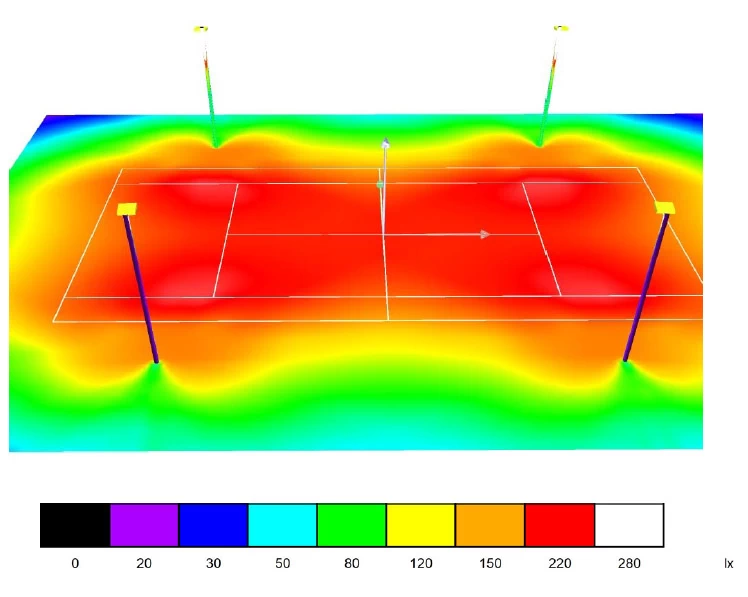
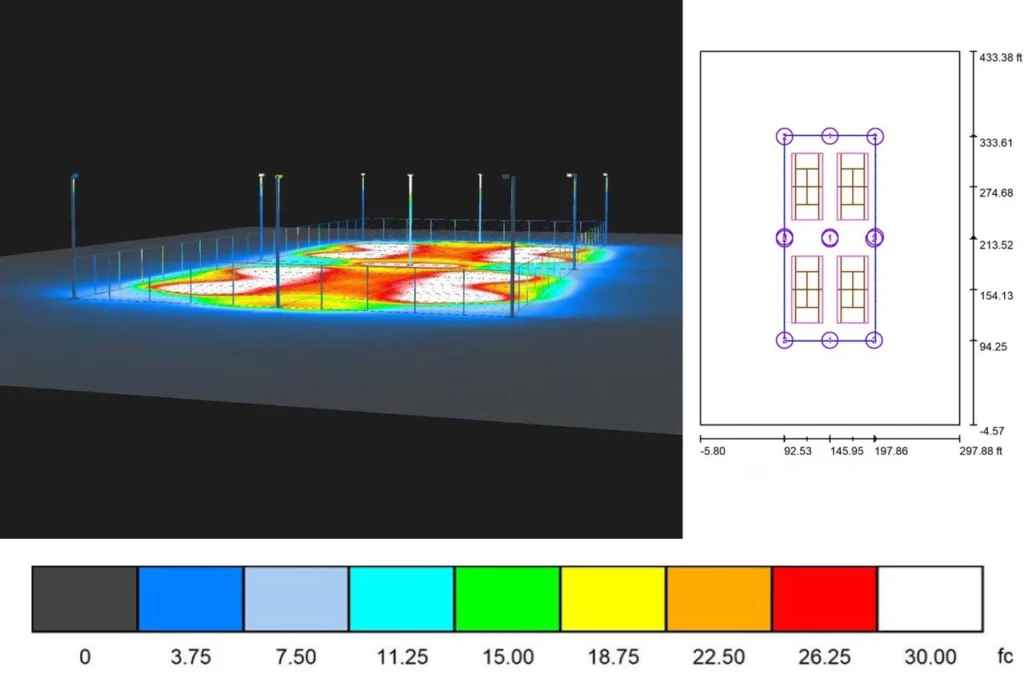
We will use Dialux/Relux lighting simulation app to determine fixture power, beam angle and layout. This allows you to clearly visualize the light distribution before project implementation.
Frequently Asked Questions
What is the layout of the outdoor tennis court lighting?
Outdoor tennis court lighting commonly uses high-power LED floodlights, which are installed on light poles. The layout is the most common and mature, with different numbers of light poles symmetrically distributed on both sides of the court.
- Four-corner layout, where each pole typically houses 1-2 LED floodlights at the four corners of the tennis court. This layout is relatively simple and may have a slightly lower initial investment. However, players are more susceptible to glare from lights in the opposite corners, and shadows are more likely to appear in the center of the court.
- Two-Sided Layout : Poles are placed symmetrically on both sides of the court. Typically, 2 to 4 poles are arranged on each side. More poles reduce the number of lights per pole, effectively controlling glare.
- Six-Pole Layout : In addition to the four-corner layout, one pole is added to the center of each side. This significantly improves the problem of shadows in the center of the court and is an excellent solution for transitioning to professional level.
The true determinant of the lighting effect is whether the pole location, pole heights, and the light distribution methods of the LED floodlights are well-matched. There’s no need to blindly increase the number of poles or lights.

How many watts of LED flood lights do I need for my tennis court?
The higher the illuminance requirement, the higher the wattage of the lighting fixtures usually needs to be, provided that the height of the pole and the number of lights are within a reasonable range. When the target illuminance of a tennis court is about 200 lux, a single LED floodlight typically only needs to be in the range of about 200–300W. when the illuminance increases to 300 lux, the power of a single fixture generally needs to be increased to about 300–400W; and for courts with 500 lux and above, the power usually reaches 400–600W or even higher to ensure sufficient brightness.
It is important to emphasize that these figures are only theoretical references, intended to give you a basic understanding of initial energy consumption. For example, due to luminous efficiency, a 400W floodlight with 160lm/W will be brighter than a 500W floodlight with 120lm/W.
How long do LED tennis court lights last?
Professional LED tennis court lighting fixtures typically have a lifespan of over 50,000 hours under normal use conditions. This is supported by industrial-grade standard design and rigorous reliability verification.
- High-quality LED chips and constant-current industrial-grade driver power
- More efficient heat dissipation materials and structural design
- Outdoor-specific LEDs with an IP66 waterproof rating
50,000 hours does not mean that the LED lights will suddenly fail or go out after reaching this time. It means the brightness of the fixtures will decrease by certain percentage, for example, to 70-90% of the initial brightness (L70-L90). In other words, even after exceeding 50,000 hours, tennis court LED lighting fixtures can still function normally, but will undergo a very slow, almost imperceptible brightness decay process, which is perfectly normal.
How many lumens to light a tennis court?
To estimate the total lumens required for lighting the entire tennis court, it’s first necessary to determine the area of the court to be illuminated. For example, a standard tennis court has a playing area of 23.77 m × 10.97 m. However, in actual lighting design, the surrounding buffer zone is usually included in the calculation. A common overall lighting coverage size is approximately 36.6 m × 18.3 m, corresponding to a court area of about 670 square meters.
Total lumens ≈ Target illuminance (lux) × Illuminated area (m²)
Without considering complex loss factors, the total lumen requirement for different illuminance levels is approximately:
- 200 lux : 200 × 670 ≈ 134,000 lumens
- 300 lux : 300 × 670 ≈ 201,000 lumens
- 500 lux : 500 × 670 ≈ 335,000 lumens
- 800 lux : 800 × 670 ≈ 536,000 lumens
How to avoid glare from indoor tennis court LED lighting?
Linear high bay LED lights are the preferred solution for controlling glare in indoor tennis court lighting. They employ a long, strip-shaped light-emitting surface, releasing light evenly from multiple light-emitting units rather than concentrating it at a single area, resulting in softer visual effect due to their inherent structure.
Furthermore, our linear LED high-bay lights specifically designed for sports areas such as tennis courts lighting have further optimized glare control through their optical design and lens. A wider beam angle, reflected light distribution, and PC diffuser lenses significantly reduce direct light while distributing light more evenly throughout the court.

 English
  简体中文
简体中文  Deutsch
  Español
  Français
  Italiano
  日本語
日本語  Русский
  Português
  한국어
한국어