What are LED Stadium and Arena Lights?
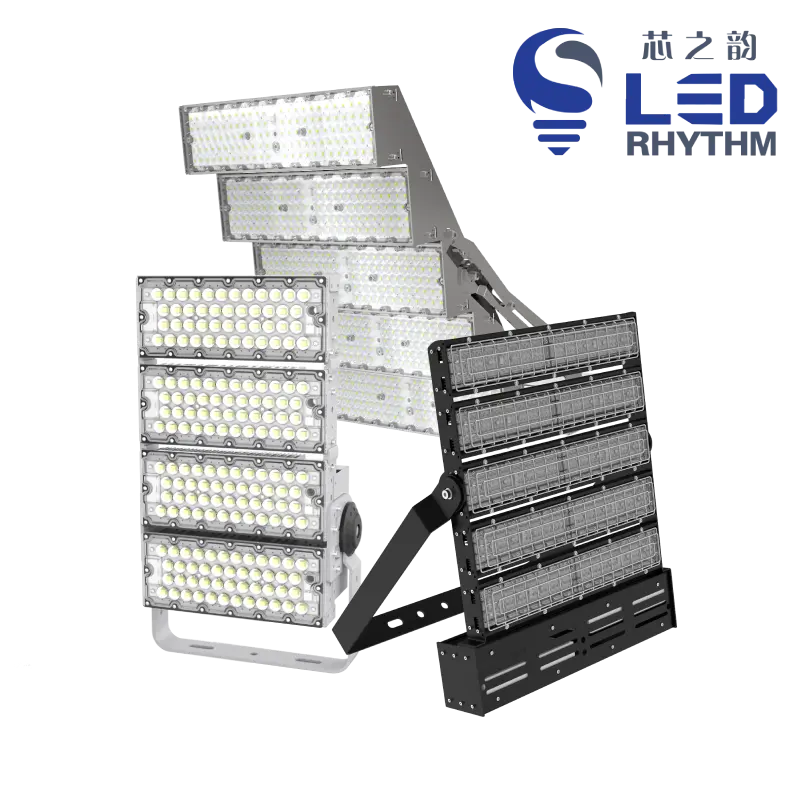
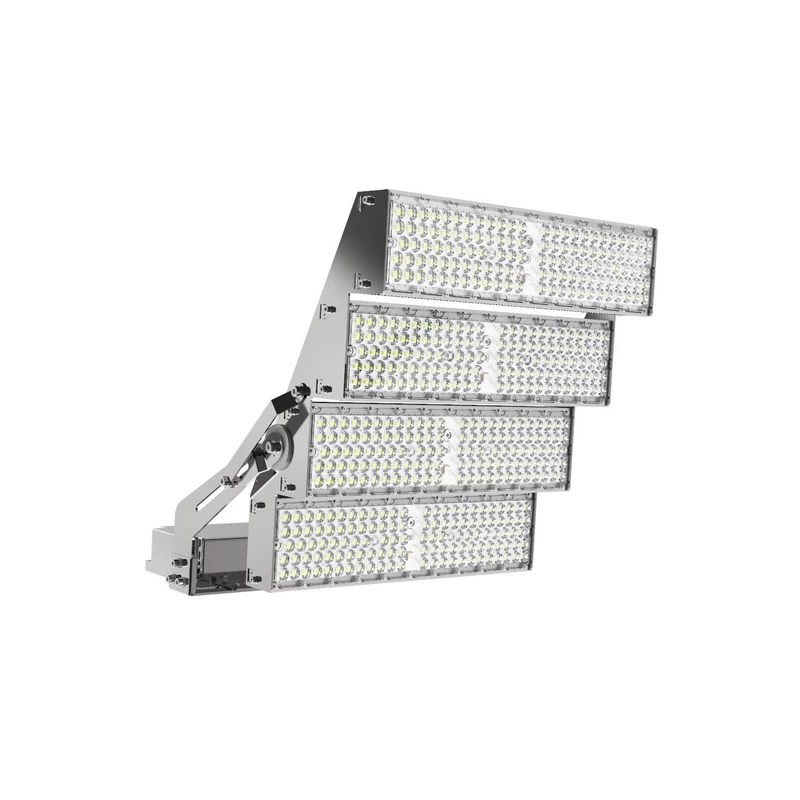
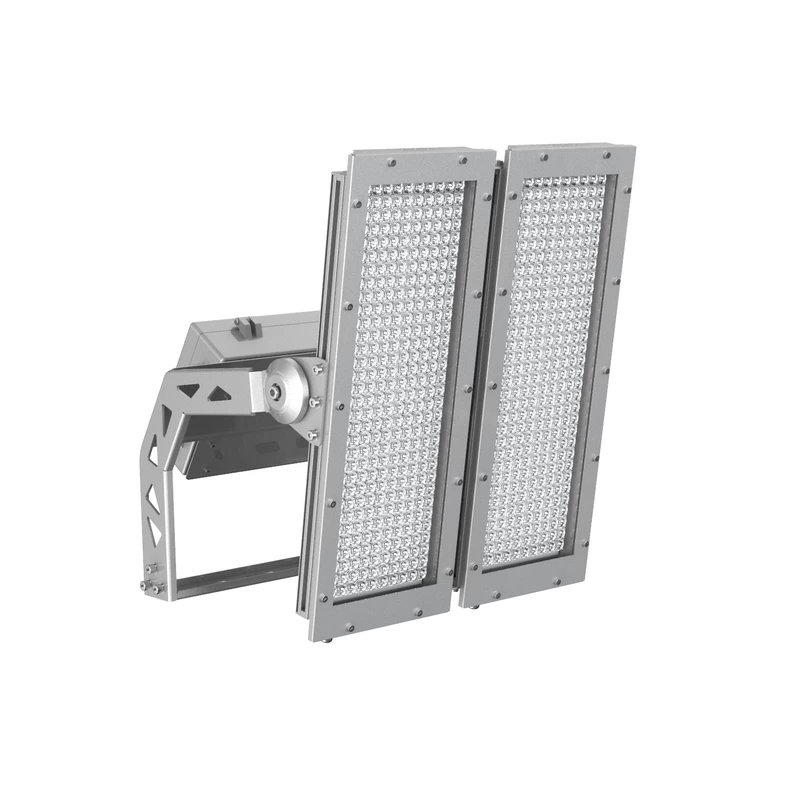
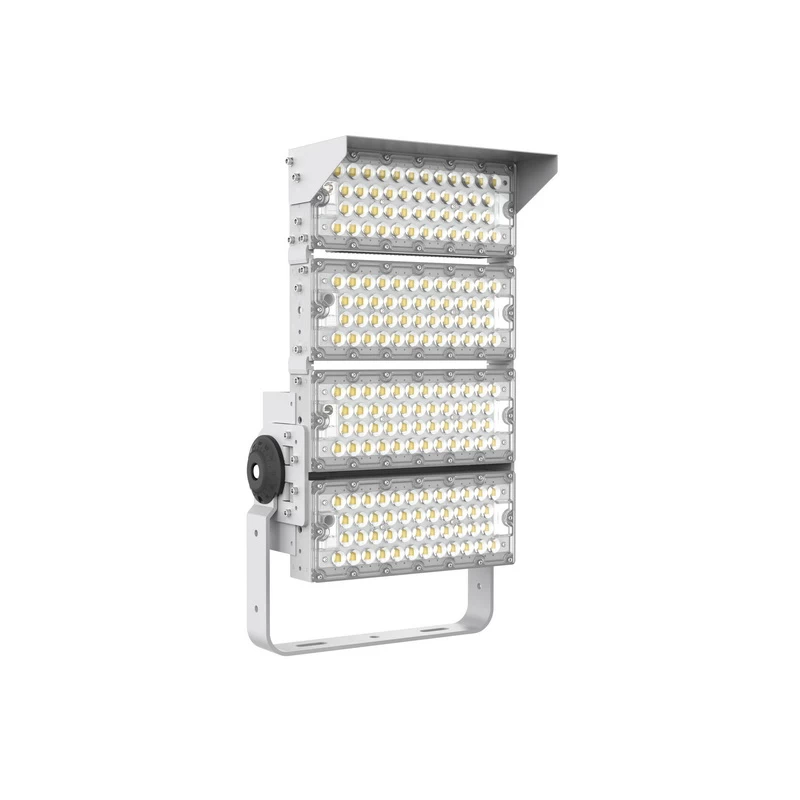
LED stadium lights is a type of high-power industrial grade flood lights designed specifically for large indoor and outdoor sports lighting. Unlike small LED flood lights, they offer higher lumen output and more precise light control, making the entire venue bright and uniform. It’s ideal for multi-purpose stadiums like football, baseball, basketball and track field. Sports stadiums have extremely high requirements for lighting, requiring higher illuminance, excellent color rendering, and large-area uniform light coverage to ensure that athletes have a clear field of vision during competitions.
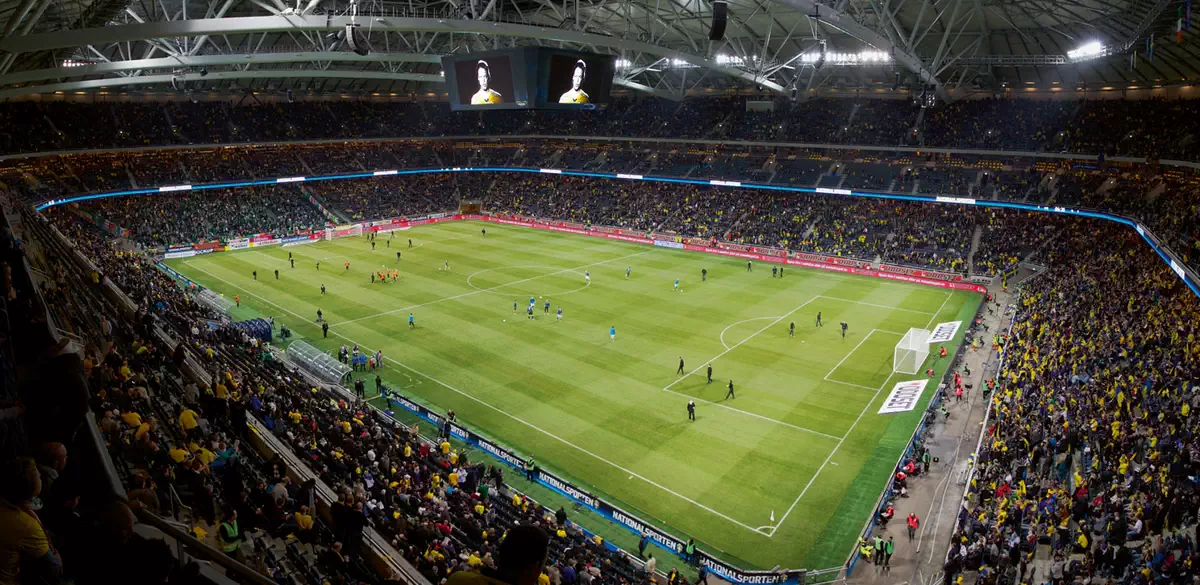
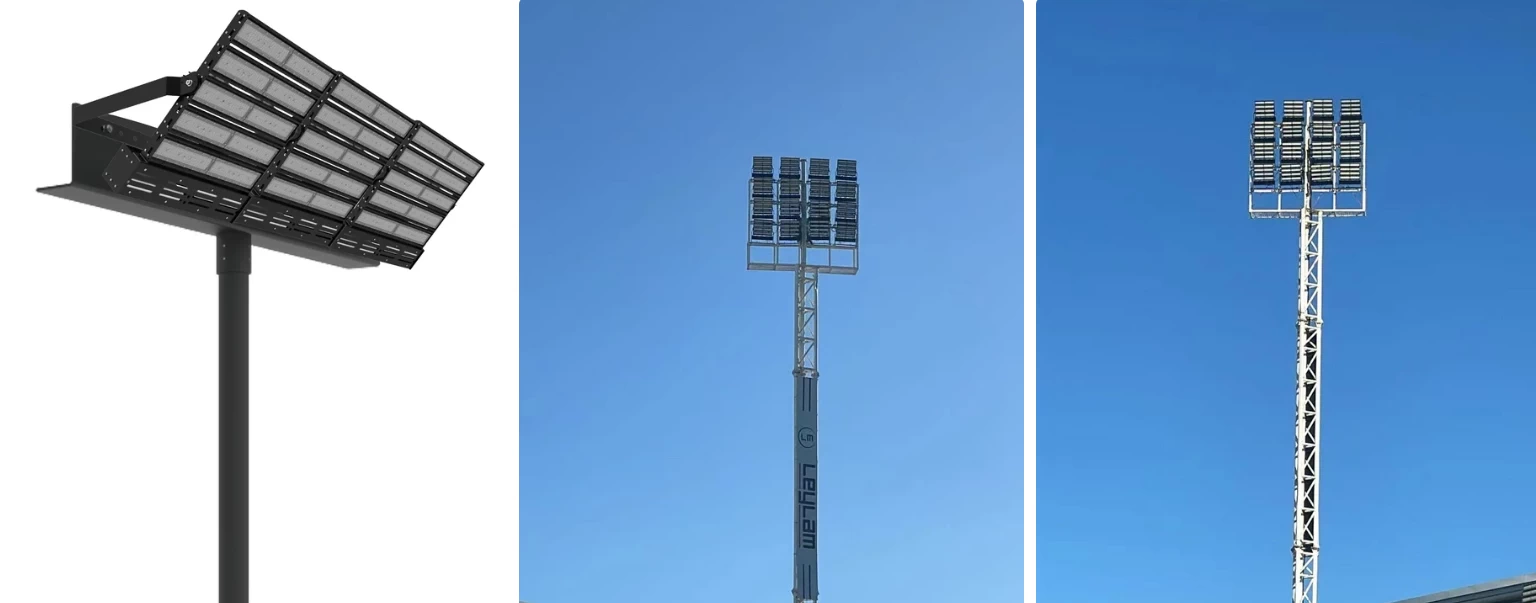
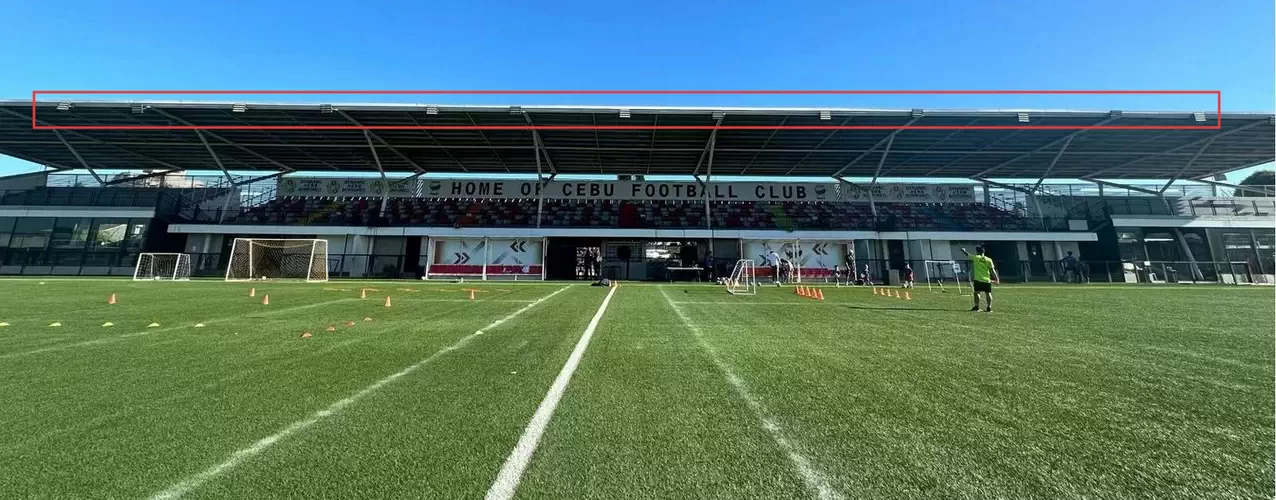
Stadium and sports lighting fixtures are typically installed on 20–50 meter tall poles or structures on top of buildings, providing uniform illuminance large areas with narrow or medium beam angles.
LEDRHYTHM - LED Stadium Lights Manufacturer in China
LEDRHYTHM has specialized in professional stadium lighting solutions for over a decade. As a leading manufacturer of LED lights in China, we are dedicated to providing high-quality lighting systems for worldwide. We meet diverse lighting needs, from routine training to high-definition broadcast-quality competitions.
Furthermore, LEDRHYTHM provides customized lighting design and simulation services to ensure that each project complies with international lighting standards, such as those of FIFA, NBA and FIBA. Whether for new stadium construction or renovations, LEDRHYTHM is the ideal manufacturer choice.
Advantages of LEDRHYTHM LED Lighting in Stadiums
When it comes to modern stadium lighting, LEDRHYTHM goes beyond simply achieving higher power (Up to 225,000 lm); and prioritizes light quality and color rendering, ensuring the best lighting experience at every venue.
- Optical Design: Our LED stadium lights all use professional lenses or secondary glass optics to make the light more uniform, reduce glare, and avoid sky scattering.
- Luminous Efficacy: About large stadium flood lights, 130-150 lm/W is considered excellent. For even greater energy efficiency, we can offer over 150 lm/W, achieve energy savings of over 60%.
- Broadcast-grade lighting quality: High color rendering (CRI ≥ 90) and flicker-free provide clear and realistic vision for athletes and spectators. Can meet the requirements of high-definition camera recording.
- Heat dissipation: The modular or slim design of die-cast aluminum housing, prevents heat from accumulating. High power can also maintain the highest performance.
- Durability: IK10 impact resistance rating and IP66 protection, capable of withstanding harsh weather conditions such as heavy rain, strong winds, vibration, and dust.
- Intelligent Control: Compatible with lighting control systems such as DMX, DALI2 and 0-10V dimming, it supports remote management, zoned dimming and instant switching.
- One-on-one service: We understand that every stadium is unique. LEDRHYTHM provides complete professional support from initial optical simulation, lighting design, installation guidance to 5-year warranty.
LED Lighting Standards For Stadiums
Among the different types of stadium and arena lighting, illuminance, uniformity, glare control and even color rendering can vary significantly. To ensure the visibility, safety, and professional broadcast quality of matches, international standards must be strictly followed. This includes training, amateur, professional and internationally televised competition stadium. Excessive brightness leading to energy waste should be avoided, while insufficient brightness negatively impacts the sports experience.
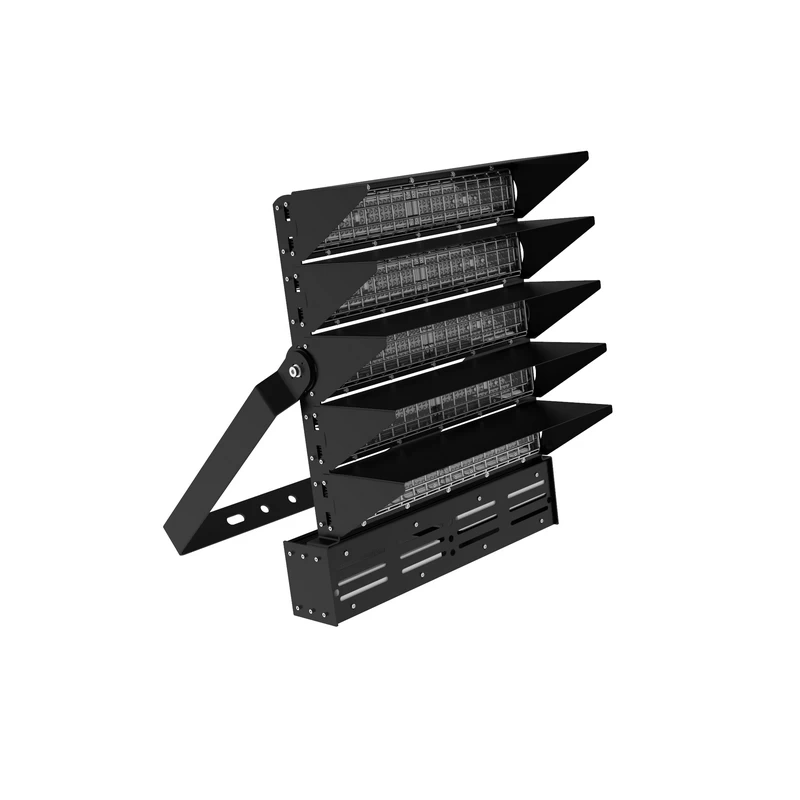
For professional LED stadium lighting that require high-definition broadcasting, the fixtures must maintain low flicker rate (<1%) to meet the needs of high-speed shooting. Overall uniformity is also very important, and obvious dark areas should be avoided to improve athletes’ reaction ability. Cutoff light distribution methods, lights hoods, and anti-glare optics can effectively reduce light scattering towards the sky and glare problems, preventing visual interference during intense sports activities.
| Stadium Level | Horizontal Illuminance | Uniformity | Typical Application |
|---|
| Training / Recreational | 200–300 | ≥0.5 | Leisure football fields, school stadiums |
| Non-broadcast Matches | 500–750 | ≥0.6 | Club stadiums, regional arenas |
| Broadcast Matches | 1000–1500 | ≥0.7 | HD/4K TV broadcasting events |
| International HDTV Events | 2000+ | ≥0.8 | FIFA/UEFA/IOC certified stadiums |
Installation Height and Beam Angle
Wide beam angles (60°- 90°) are suitable for lower installation heights, providing larger area of light coverage at close range. However, if wide beam is used for high-pole installations of 20–40 meters, the light will diffuse too quickly, resulting in insufficient ground brightness and noticeable dark area in the center of the site.
Conversely, narrow beam angles (10°- 40°) are more suitable for high-mast long-range lighting. A more concentrated beam can maintain brightness density even at higher installation (20-50 meters), ensuring stable illuminance in the player area, running track, and center line area. Therefore, in large football stadiums, multi-purpose sports centers, and similar locations, LED stadium flood lights typically employ various beam angles such as 15°, 20°, or 30° to precisely cover different areas.
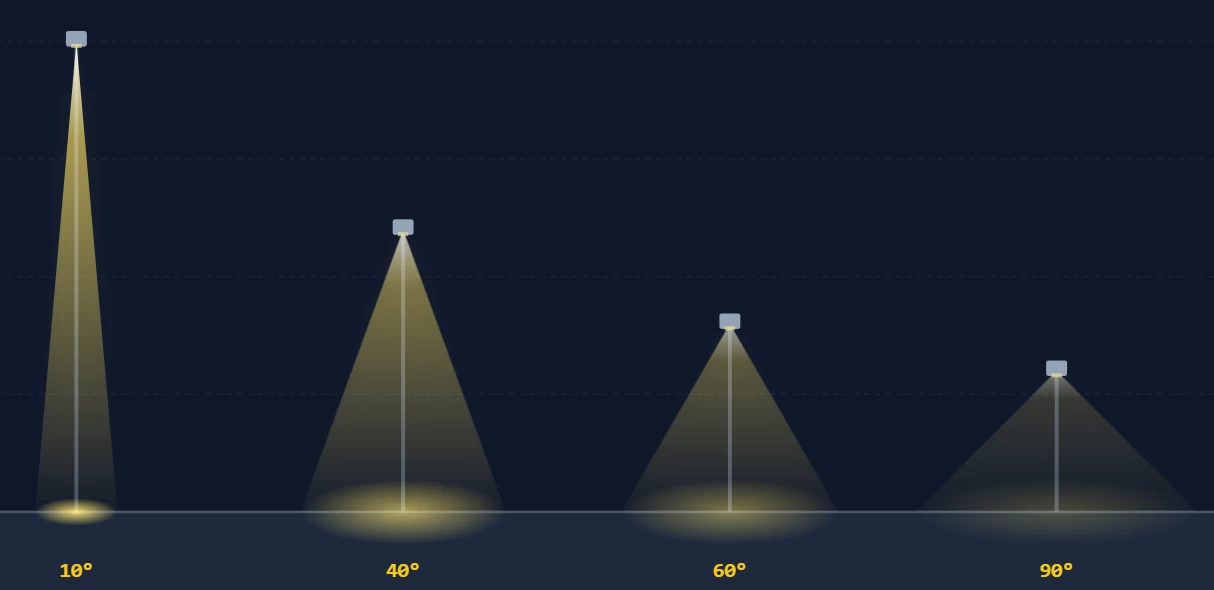
- Soccer fields typically use narrow beams at 10°- 30° to ensure long-distance projection.
- Basketball courts tend to use 30°- 60°, emphasizing uniformity and visual comfort.
- Tennis courts, due to stricter glare control, often employ combined lighting schemes.
In LED stadium lighting design, choosing the right beam angle not only improves illuminance uniformity but also reduces glare and light spill, preventing light pollution or negative impacts on the spectator’s visual experience. We offer variety of beam angle options, and through precision reflector and lens design, allow the fixtures to adapt to different installation heights and stadium structures, achieving optimal lighting efficiency.
Number and Layout of Stadium Lighting Fixtures
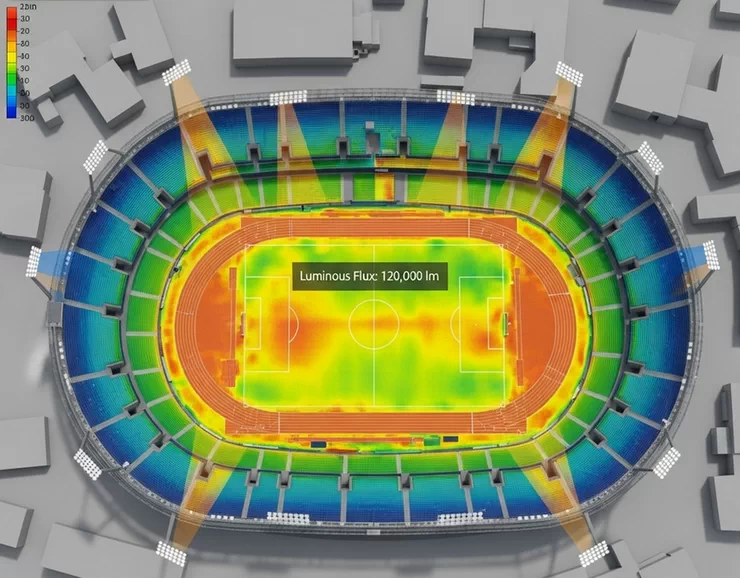
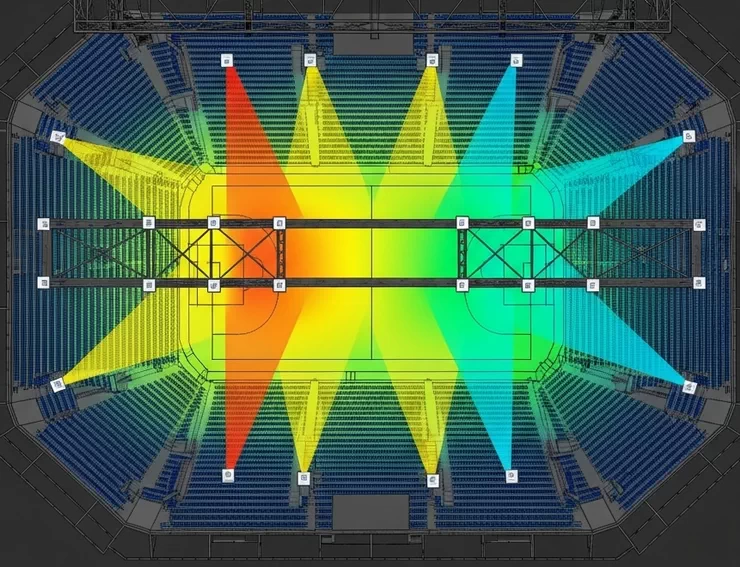
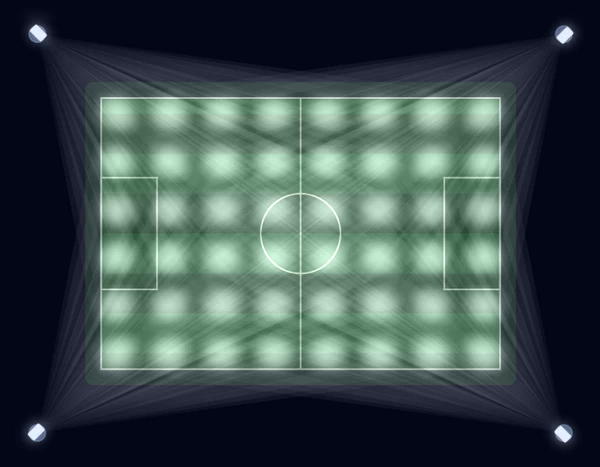
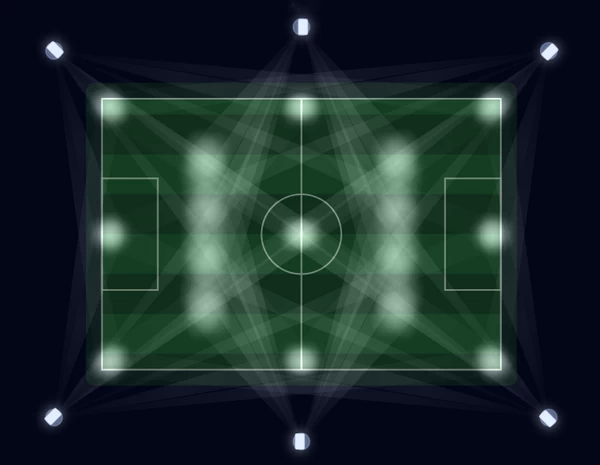
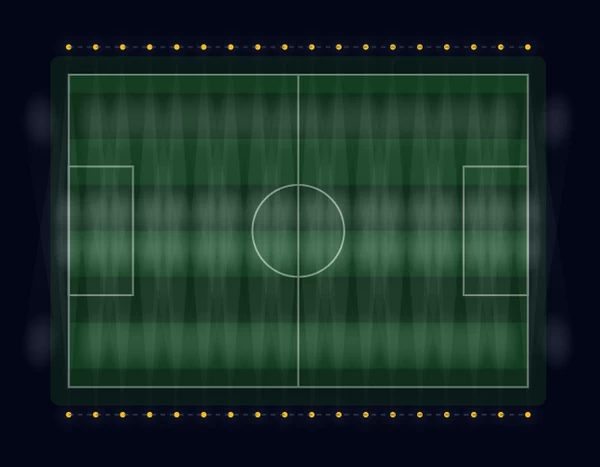
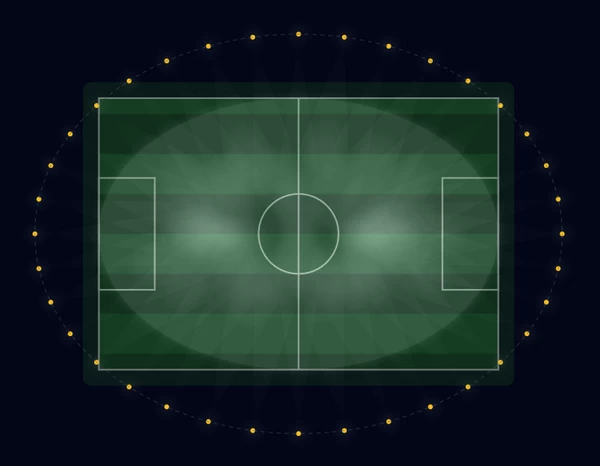
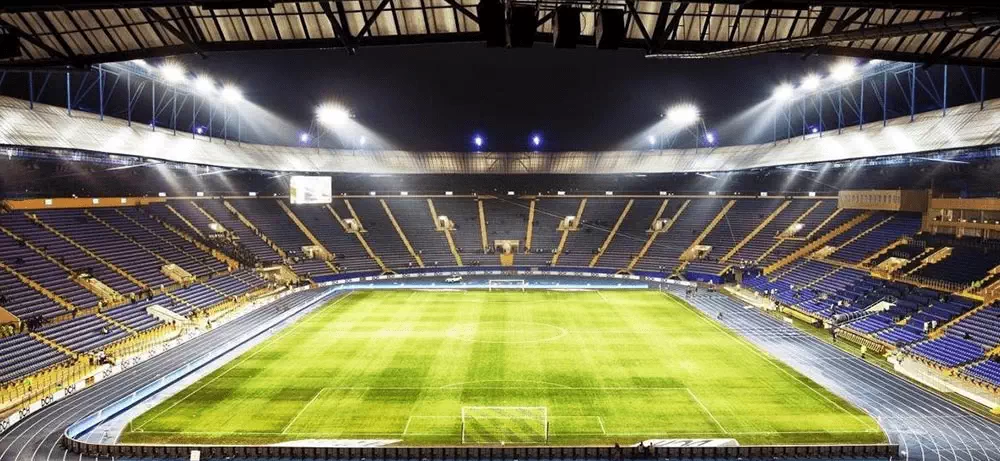
Common LED stadium lights layout types include four-corner, six-pole, two-sides, and ring layout. Four-corner pole is typical layout, suitable for most recreational and training stadiums. Each pole typically with 6-12 lights, using varying beam angles to cover the entire field. Six-pole layout builds four-corner by adding a poles on either side, further improving uniformity. This is the mainstream approach for large football fields and multi-purpose stadiums. Each pole can with 4-8 lights. Two sides layout provides more even illumination along the lines. Large sports centers or international venues with rooftop structures often employ ring layout, achieve broadcast-quality standards.
Determining the number of LED stadium lights needed for a venue is a highly complex issue. It’s not simply matter of calculating by area, but rather determined by several key factors: illuminance level (from 200 lux for training to 2000 lux for broadcast), power, number and height of light poles, and beam angle combinations. Therefore, lighting simulation is necessary. Contact us immediately for a free solution.
| Layout | Fixtures Number | Advantages | Considerations |
|---|
| 4-Pole | 6-12 per pole | Simple, cost-effective | Need more fixtures for uniformity |
| 6-Pole | 4-8 per pole | Better uniformity | Higher installation cost |
| Two Sides | 6–10 | Good for elongated fields | Requires better glare control |
| Ring / Roof Mounted | 8–20+ | High illuminance, good uniformity | Complex installation and maintenance |
Achieve Scene Switching
Some stadiums are no longer limited to simple competitions; they have become comprehensive venues for sporting events, performances and commercial activities. LEDRHYTHM LED lighting systems support technologies such as DMX and 0-10V/DALI dimming. This allows for scene switching to meet the lighting needs of different events.
- Competition: Provides high-intensity, flicker-free professional lighting for high-definition filming.
- Training: Maintains uniform lighting while reducing energy consumption.
- Daily Use: Low power and low brightness ensure safe passage.
- Activity Mode: Supports dynamic lighting and zoned dimming.
Precautions for LED Stadium Lighting
LED stadium lights are typically expensive and have longer construction period. There are many common mistakes in procurement and installation. If the solution is not correct, it will cause serious problems such as light pollution, severe glare, and huge cost losses. Furthermore, the needs of different sports should be flexibly considered.
- Determining the appropriate installation height is crucial to avoid glare, as this can affect athletic performance and cause eye discomfort for spectators.
- Stadium LED flood lights are frequently exposed to strong winds and vibrations. Therefore, it’s essential to pay attention to the wind resistance rating of the fixture, the support frame strength to prevent loosening or shifting after prolonged use.
- High-level waterproofing (IP66 or higher) and high surge protection (10–20kV) are essential; otherwise, they are easily damaged in heavy rain or thunderstorms.
- Some stadiums require strict control of light pollution, preventing light from entering residential areas, roads, or surrounding buildings. This can be addressed through shield, shading panels, and precise light distribution.
- For higher installation height and numerous lighting fixtures, prioritizing more stable drivers and structures is essential for maintenance-free operation and reduced long-term maintenance costs.
- Intelligent control systems should be planned in advance. Professional stadiums are increasingly adopting DALI, DMX, or intelligent control. Providing corresponding interfaces and cabling in advance can avoid future retrofit costs.
Why is luminous efficiency of LED stadium and arenas lights not high?
Stadium and arena LED lights are typically very high-power, such as 600-1500W. To maintain stable operation and reducing heat generation, this reduces luminous efficacy. In addition, will also sacrifice some luminous efficiency in order to have more accurate light distribution and reduce glare. For large stadium lighting, higher luminous efficiency isn’t necessarily better. Because uniformity, glare reduction and color rendering are more important, achieving 130-150 lm/W is considered excellent. We can offer 150-170 lm/W, a very high performance in the modern.
LED stadium floodlights vs ordinary LED floodlights?
| Comparison Item | LED Stadium Floodlights | Ordinary LED Floodlights |
|---|
| Beam Angle | Narrow (10°–40°) | Wide (60°–120°) |
| Light Uniformity | High uniformity for large venues | Basic uniformity |
| Glare Control | Advanced anti-glare shields and optics | Ordinary |
| Power Range | 200W–1500W | 50W–200W general use |
| Optical Performance | Long-throw, clean beam | Short-distance illumination |
| Driver & Protection | High-end drivers, 10kV–20kV surge protection | Standard drivers, basic protection |
| Heat Dissipation | Modular, independent heat dissipation | Simple heatsink |
| Control System | DMX / DALI / smart dimming | Basic on/off or simple dimming |
| Installation Height | Designed for 20–50 m poles | Suitable for low poles or walls |
What is the protection level of LED stadium lights?
LEDRHYTHM LED stadium lights can withstand various harsh outdoor environments. Minimum IP66 water and dust resistance rating, ensuring long-term operation in heavy rain and sandstorms. Furthermore, the luminaires’ reinforced structure, with an IK08–IK10 impact resistance rating, effectively withstands external shocks and typhoon vibrations. Standard configuration includes 10-20KV surge protection to prevent damage to the lighting fixtures from lightning strikes or voltage fluctuations.
How many watts can it replace in traditional stadium fixtures?
Traditional stadium lighting fixtures are typically metal halide lamps, which are far less efficient than LEDs, less than half the efficiency. Whether for large or small projects, we have corresponding replacement solutions for LED, which not only reduce energy consumption by more than 60%, but also greatly reduce long-term maintenance costs.
Taking LEDRHYTHM LED stadium flood lights with efficiency of 150 lm/W as example:
- 300W LED can replace 700W–1000W MH/HID
- 400W LED can replace 1200W–1500W MH/HID
- 600W LED can replace 1500W–2000W MH/HID
- 800W–1000W LED can replace 2000W–2500W or even higher
Do you offer customizable services for your LED lights for stadiums?
Yes, as a professional LED stadium lights manufacturer and supplier, we can provide comprehensive customizable services for lighting fixtures. This includes multiple aspects, from optical design to intelligent control, helping you build professional lighting system that best suits your venue, sport level, and budget. Our customization include, but are not limited to:
- Optional LED chip and driver power supply brands
- Luminous efficiency and color rendering can be specified
- Customizable power and luminous flux
- Optional special beam angles and other light distribution methods
- Multiple intelligent control solutions are available
What wattage is required to meet the LED high mast stadium lighting standard?
High mast stadium lighting typically refers to luminaires installed on poles 20–50 meters, used to provide long-distance, wide-area, and higher uniformity illumination for large football fields, baseball fields, track field, and other. Due to the high installation height and long projection distance, the luminaires must have sufficient luminous flux and narrow beam angle, therefore their wattage is usually higher. For example, for installations on 20–30 meter poles, 300W–600W is sufficient for 200–300 lux, and 600W–900W is sufficient for 300–500 lux. At height of 30-40 meters, 900W–1200W can achieve 500–750 lux. For heights above 40 meters, 1200W–1500W is recommended, and by selecting different beam angles, 1000–2000 lux+ can be achieved.
What color temperature is best for stadium lighting?
The optimal color temperature for stadium LED lighting is typically 5000K–6500K, which is the mainstream international standard range. This CCT range provides bright, clear, and high-contrast visuals, making it easier for athletes to capture the motion of fast-moving objects and providing viewers with more natural and comfortable viewing experience. Its also most suitable for high-definition shooting and broadcasting.
- 5000K: Natural light color, close to midday sunlight, better balance, suitable for most training and regular competitions.
- 5700K: Balancing athletic performance, spectator experience, and broadcast quality, it is the best overall solution and the first choice for most professional stadiums.
- 6500K: Significantly improves brightness, making long-distance shots clearer and further enhancing visual contrast. Suitable for TV broadcasts, professional sporting events, and other major events.
CCT below 4000K tend to be warm and yellowish, causing visual fatigue, reducing contrast and clarity, which is detrimental to the sports experience and safety, and can even make video footage appear dark and blurry. Furthermore, below 5000K is still not recommended, as it also makes stadium lighting appear unclean and unclear, which is not good for athletes and spectators.
Why do stadium lighting typically require higher color rendering?
Sports demand high levels of color reproduction, visual experience, and broadcast quality. High color rendering index (CRI) stadium lighting enhances the visual judgment of athletes, referees, and spectators, preventing colors from appearing grayish. Reproducing every true color is essential to meeting the requirements of high-definition broadcasting. Therefore, CRI > 80 or 90 is not an option, but fundamental requirement for sports lighting.
How long do LED stadium lights last?
The lifespan is typically 50,000-100,000 hours and meets L70/L80 standards. It’s not just about staying lighting for longer, but about maintaining controllable light decay, sufficient brightness, and still stable operation even after many years. Under normal use conditions, it can operate stably for 10-20 years with minimal maintenance, which is one of the main reasons why modern stadiums are comprehensively upgrading to LED.
- High-quality LED chips can maintain ≥70% luminous flux (L70) after 50,000 hours, and even reach L80 or L90 standards.
- High-quality drivers have excellent heat resistance, capacitor life, and surge protection, ensuring high reliability for LED stadium lights under high power and long-term high load operation.
- Die-cast aluminum fins, independent air channels, and modular heat dissipation design keep the entire system at low temperature, fundamentally extending its lifespan.
- Excellent protection performance, can withstand heavy rain, strong winds, corrosion, sandstorms, and freezing temperatures, preventing damage and aging of the luminaire due to harsh external environments.

 English
  简体中文
简体中文  Deutsch
  Español
  Français
  Italiano
  日本語
日本語  Русский
  Português
  한국어
한국어