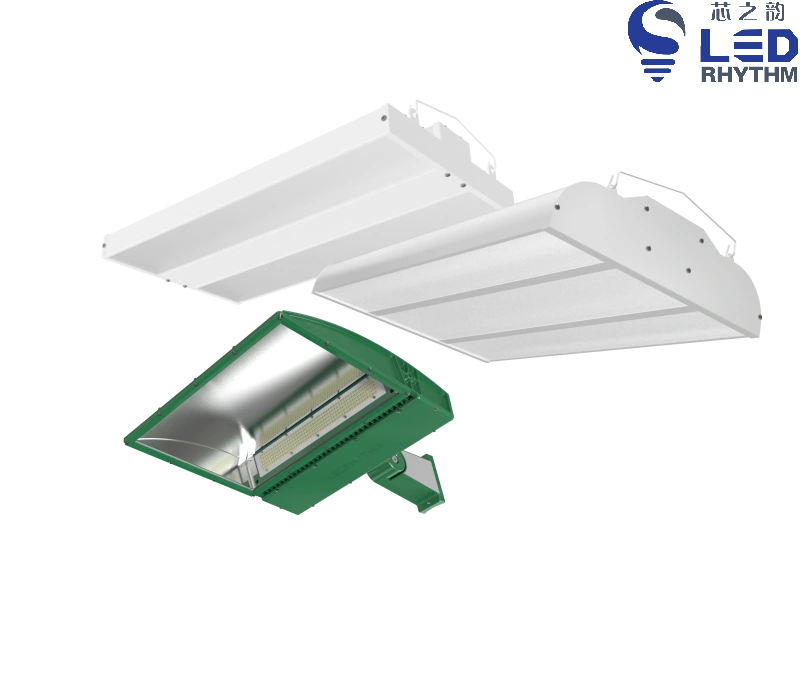
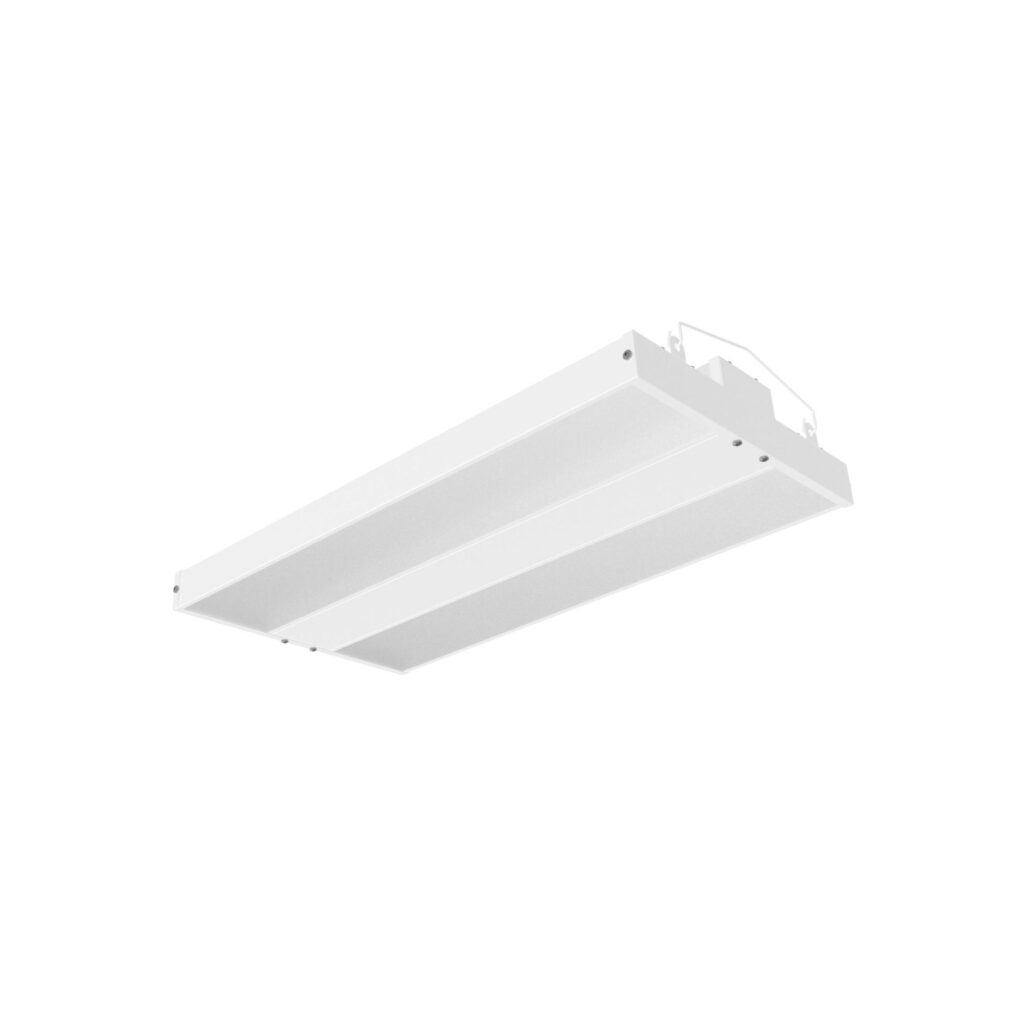
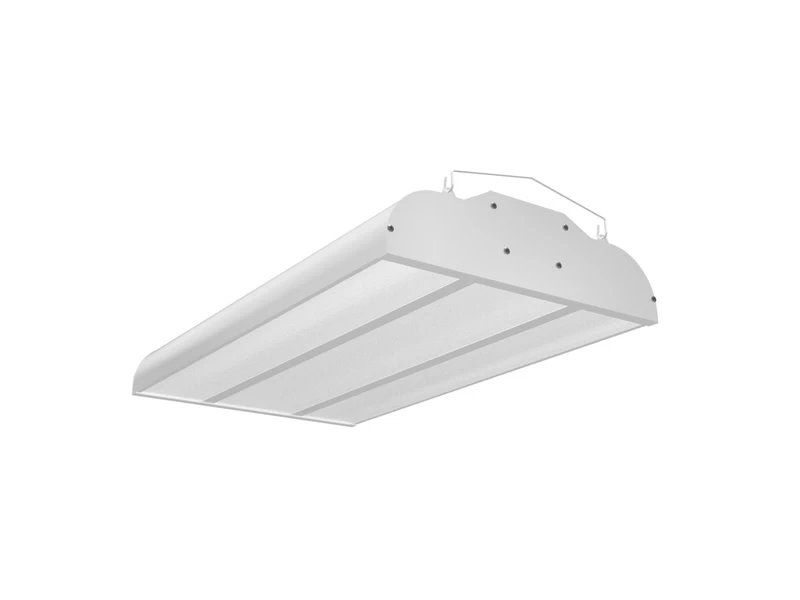
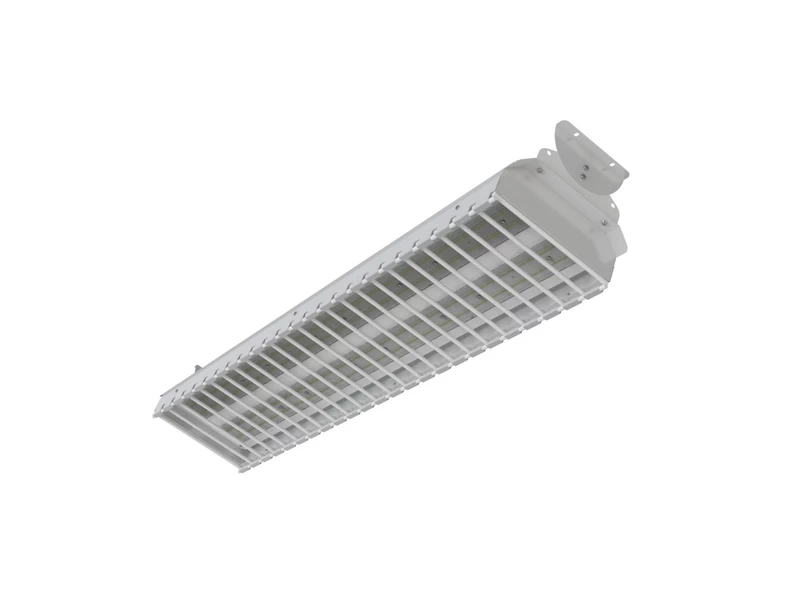
Used for indoor badminton courts and other indoor sports lighting, reflected light without direct glare.
Equipped with grille, it effectively reduces glare while protecting against impacts from balls.
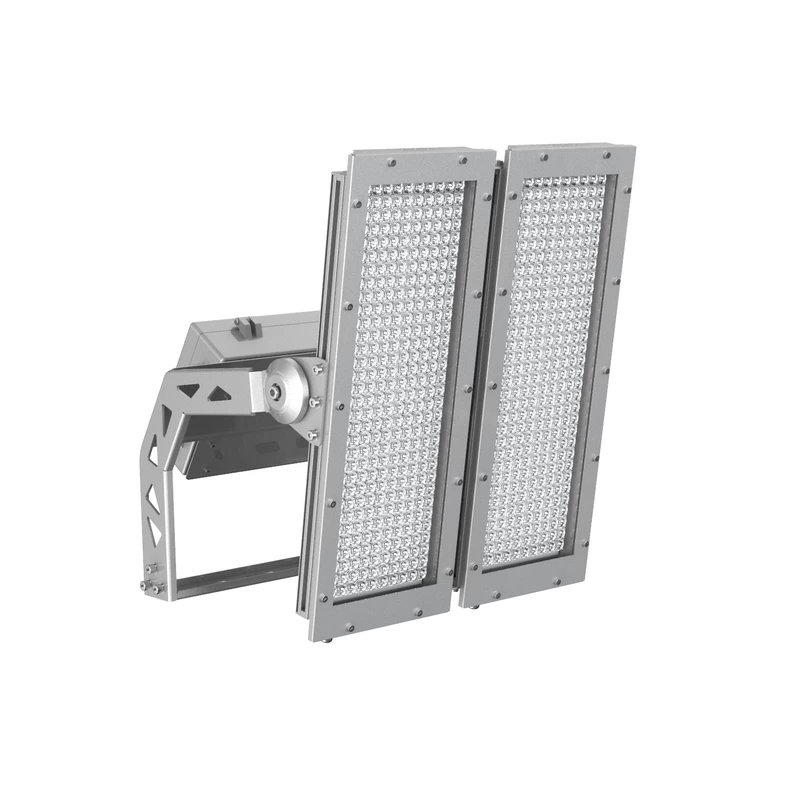
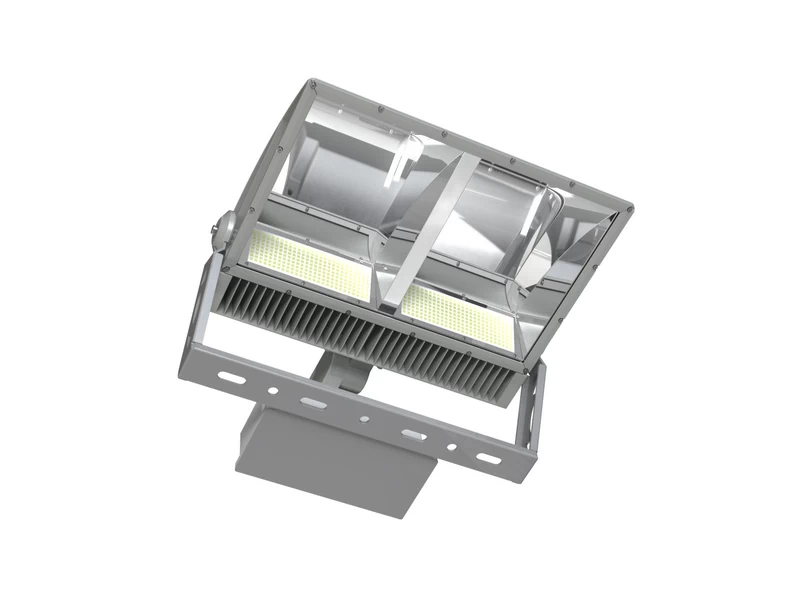
LED floodlights for tennis and badminton courts. Unique reflective light design, eliminating direct glare.
What Is Badminton Court Lighting?
Badminton court lighting creates a completely different visual environment from other industrial and commercial spaces, such as warehouses and workshops, and it is not also simply application of ordinary indoor and outdoor sports lighting. Compared to basketball and volleyball, their faster ball speed, smaller size, and higher flight require players to frequently look upwards, accurately identify targets, and react quickly. Therefore, badminton courts require lighting environments with very strict glare control, while maintaining high brightness to ensure clear, long-lasting, and comfortable visual effects.
Whether it’s a simple recreational or training or badminton court for competition, lighting systems require careful control of glare, shadows, and brightness fluctuations; otherwise, the human eye will easily become tired, dizzy, and the sport experience will be greatly reduced. This is especially true in high-level competition or commercially operated courts, where the requirements for light softness, uniformity, and color rendering are extremely high.
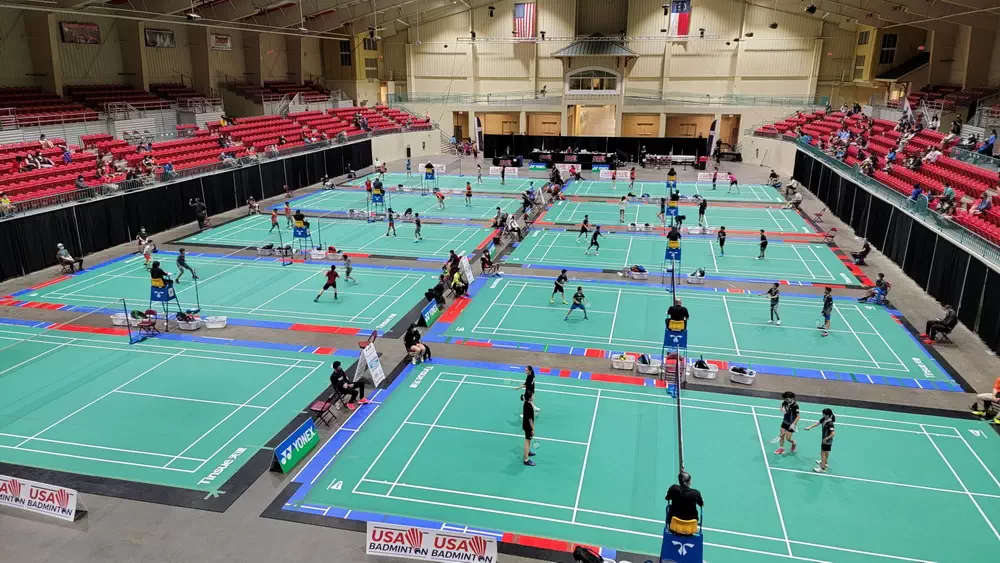
Although the area of a single badminton court is not large, achieving ideal lighting effects and a good sports experience is difficult. Traditional metal halide, fluorescent lamps, or even ordinary LED lights often struggle to meet these comprehensive requirements simultaneously. They typically achieve sufficient illuminance but suffer from strong glare, while achieving low glare results in insufficient brightness. LED lights specifically designed for sports like badminton courts are the best choice, creating an environment with ample and uniform brightness, true color reproduction, and no glare interference, while meeting lighting standards from amateur to professional levels.
Indoor Badminton Court LED Lighting
Badminton courts are more commonly and recommended indoors because the shuttlecock is extremely lightweight and its flight trajectory is easily affected by airflow. Indoor courts are insulated from wind and rain, so lighting fixtures can focus solely on lumen output and glare control. We strongly recommend using linear LED high bay lights for indoor badminton courts, as their key advantage lies in their sophisticated optical design. Can provides a wider and more even distribution through special lenses or reflectors and maximize glare control. Illuminance can also meet professional competition standards of 1500 lx and above.
- Some linear LED lights are specifically designed for sports lighting
- Power from 80W to 300W to meet both low and high bay installation (6-14m+)
- Dual light-emitting surfaces ensure more even light distribution
- High-transmittance frosted or micro-prism PC covers reduce glare
- Professional grilles significantly reduce glare and prevent impacts
- Hidden LED chips emit light through reflection, reducing direct glare
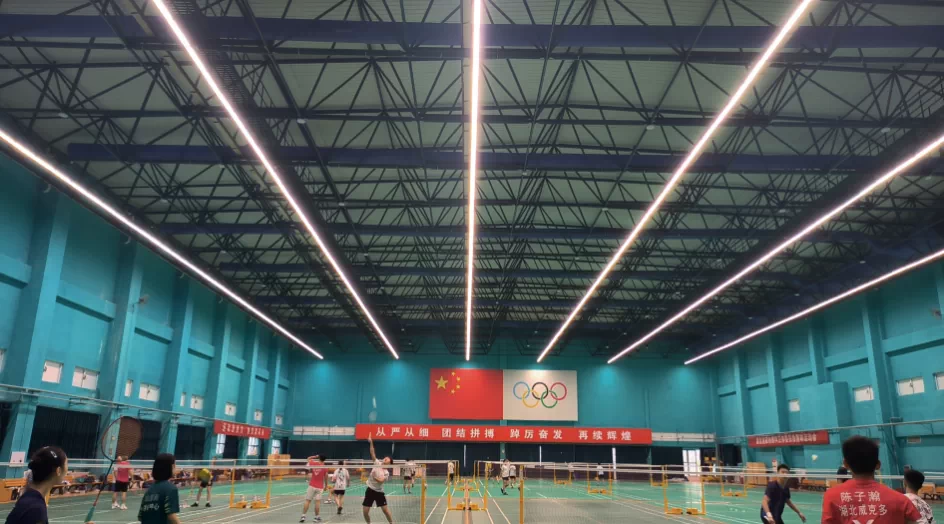
For amateur recreational or training courts with low requirements, UFO high bay LED lights are also recommended. By using appropriate beam angles and accessories, they can also meet the basic requirements for illuminance and glare control in badminton courts. And they have greater advantages in luminous efficiency and rapid retrofitting.
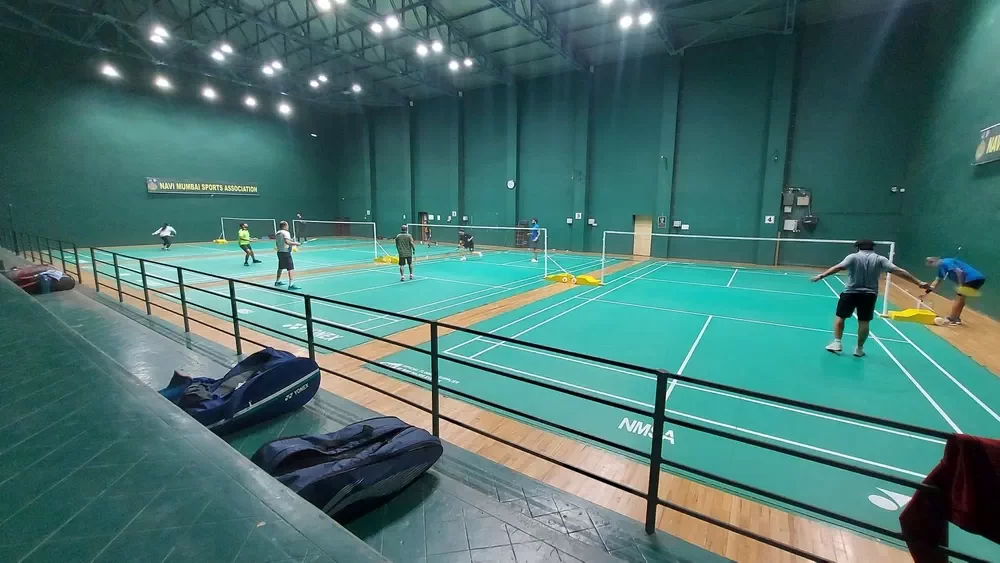
Indoor Badminton Court Lighting Design and Layout
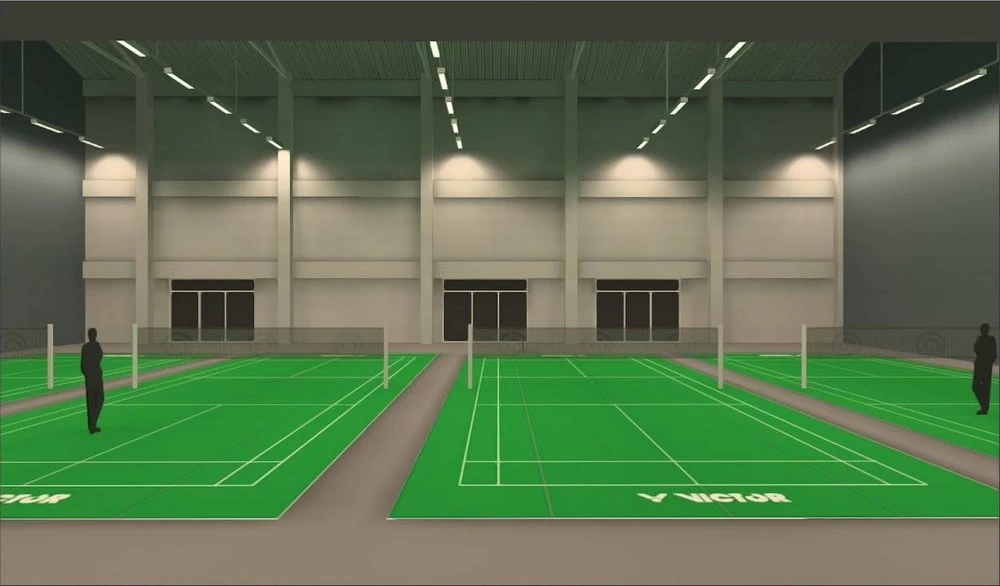
The dimensions of a badminton court are 13.4m by 5.18m for singles, and 13.4m by 6.1m for doubles. To avoid glare caused by excessive brightness above the players, there should be no lights above the main playing area. International competition court requires a minimum installation height of 12m; for other levels, the ceiling height can be lower. Lighting fixtures should use medium to wide beam angles, depending on the size of the stadium.
Then, choose a suitable layout and conduct lighting simulations based on the required illuminance to determine the type and wattage of the badminton court lights, etc.
- Top Layout: Lighting fixtures are evenly distributed above the court with symmetrical beam angles, suitable for most recreational and training badminton courts.
- Side Layout: Fixtures are installed on both sides of the court, more than 1 meter from the sidelines, with asymmetrical beam angles, suitable for high-illuminance and competitive courts.
- Hybrid Layout: Fixtures are installed on both the top and sides. Suitable for large and extra-large multi-purpose stadiums.
Outdoor Badminton Court Lighting
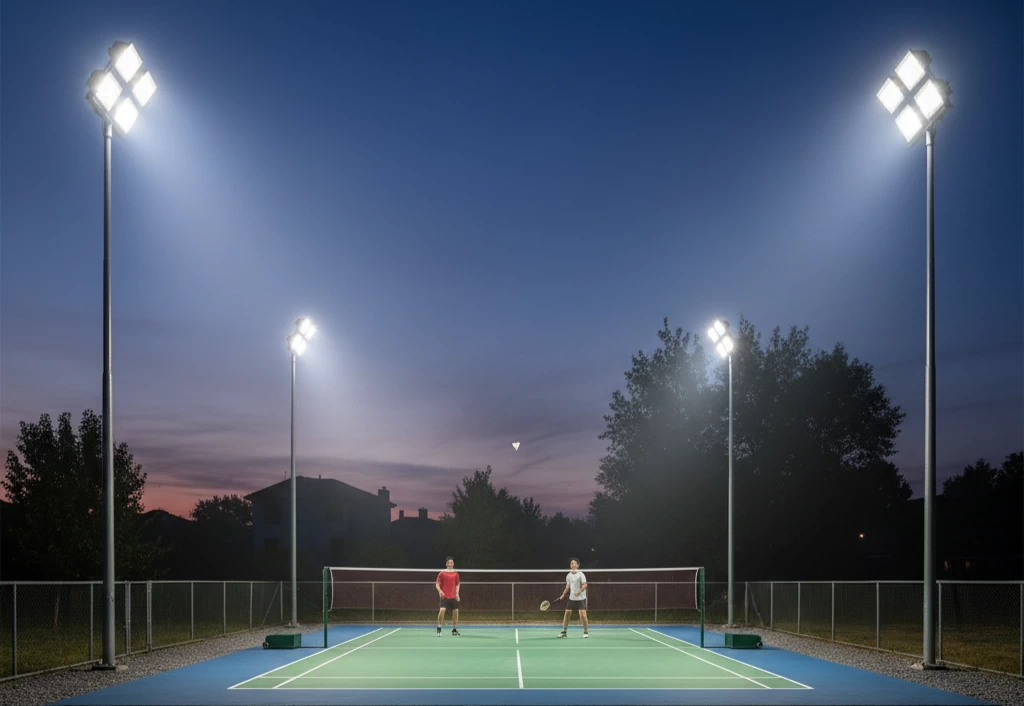
Due to the influence of wind, outdoor badminton courts used for competitions or professional training are very rare, as it affects shuttlecock speed and landing point, reducing the fairness and controllability of the game. Therefore, outdoor courts mainly serve community recreation, family leisure, or adaptive physical training. Their lighting does not need to be too bright, but light pollution must be controlled, and they must be maintenance-free and stable in operation.
We recommend using LED sports floodlights for outdoor badminton courts. 100W to 400W is usually sufficient and can be used at most common installation heights. These floodlights feature various asymmetrical beam angles, reduces glare and prevent light scattering in all directions. A minimum IP66 waterproof construction, high-strength aluminum alloy shell, anti-corrosion coating, and stable drive system ensure long-term reliable operation even in heavy rain, typhoons, and UV radiation.
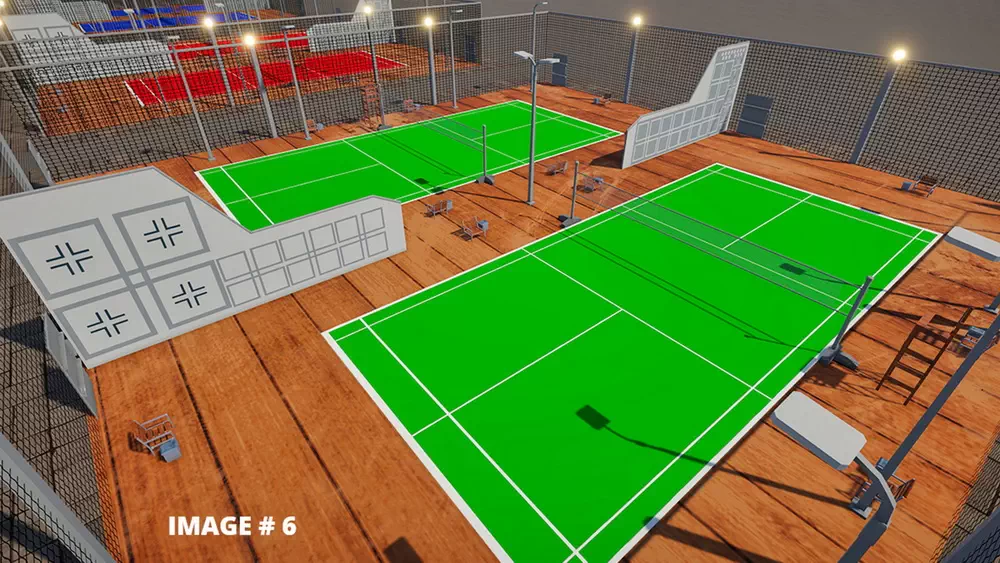
Outdoor installation layout uses light poles mounted on either side or at the four corners of the court. To ensure uniformity and control glare, a pole height of 8m to 12m is recommended. If multiple courts are clustered together, increase the pole height to 15m to 20m for unified lighting.
LED Flood Light for Badminton Court
Professional sports LED flood lights are the main lighting solution for outdoor, semi-outdoor, and even indoor competition-level badminton courts. Ordinary floodlights have too wide a beam angle, too diffused light, and lack a light-shielding structure, resulting in excessive glare and severe light pollution, making them unsuitable for sports lighting like badminton. These two should not be confused. Their installation areas are very wide, for example:
- In outdoor courts, they can be installed on poles of various heights;
- In semi-outdoor multi-functional stadiums, they can be installed on building structures;
- Indoor badminton court can be installed on both sides of the court, commonly seen in competitions and TV broadcasts.
A truly suitable LED flood light for badminton courts must meet higher standards in both optics and structure. First, it needs precise optical control, such as narrow beams and asymmetrical beams, which are crucial for reducing glare and improving court uniformity, that even high lumen output isn’t too dazzling. Second, it must be flicker-free, which typically requires a high-quality driver power. Finally, it must have high protective performance, meeting requirements for waterproofing, dustproofing, corrosion resistance, and surge protection.
As an LED sports lighting manufacturer, our floodlights fully meet the lighting standards for indoor and outdoor badminton courts, from recreational to professional competition. Color temperature of 4000K to 5000K, a color rendering index exceeding 90, and energy savings of over 65% compared to traditional MH or HPS.
| Mounting Height | LED Flood Light | Application Description |
|---|
| 8–10 m | 100–300 W | Single or small outdoor court, sufficient to meet the needs of sports without wasting costs |
| 10–12 m | 300–400 W | Multiple concentrated outdoor courts or large indoor courts with high ceilings |
| 12–15 m | 400–600 W | Multifunctional sports, open roof structures, professional or tournament-level indoor badminton courts |
Badminton Court Lighting Requirements
The lighting requirements or standards for badminton courts are usually only for professional competition and broadcast-level courts, but even entry-level amateur courts have minimum requirements in terms of illuminance, uniformity, and color temperature. Illuminance is a prerequisite for perceiving the high-speed movement of the shuttlecock and distinguishing fine boundary lines, with top speeds exceeding 300km/h. From recreational to competitive badminton court lighting, the requirements for illuminance increase exponentially.
Uniformity means that if there are significant differences in brightness on the court, the shuttlecock may suddenly disappear or darken during flight, directly affecting the player’s judgment. Color temperature should be maintained within the range of 4000K to 5000K, which allows for focused concentration and clear vision without excessive glare.
International Sports Federation Standards for Badminton Court Lighting
| Court Level | Horizontal (lux) | Vertical (lux) | Uniformity (Uo) | CRI | CCT |
|---|
| Recreational / Training | 150 – 200 | — | ≥ 0.40 | ≥ 60 | 4000K |
| Club / School Training | 300 – 500 | — | ≥ 0.50 | ≥ 70 | 4000K |
| National Competition | 750 – 1000 | — | ≥ 0.60 | ≥ 80 | 5000K |
| TV Broadcast (National) | 1000 – 1250 | 750 – 900 | ≥ 0.60 | ≥ 80 | 5000K |
| TV Broadcast (International) | 1250 – 1500 | 900 – 1050 | ≥ 0.70 | ≥ 80 | 5000K |
| HD / HDTV Broadcast | 1800 – 2000 | 1300 – 1500 | ≥ 0.75 | ≥ 80 | 5000K |
* Since athletes often look upwards, it is recommended that no lights be installed directly above or behind the field to reduce glare.
Olympic Games Lighting Standards For Badminton Courts
| Position | Illuminance (lx) | Uniformity (Minimum) |
|---|
| Ev-Cam-min | Eh-ave | Horizontal Direction | Vertical Direction |
|---|
| | | | Emin / Emax | Emin / Eave | Emin / Emax | Emin / Eave |
|---|
| Match Court | 1400 | — | 0.7 | 0.8 | 0.7 | 0.8 |
| Total Court | 1000 | — | 0.6 | 0.7 | 0.6 | 0.7 |
| Isolation Zone | — | 150 | 0.4 | 0.6 | — | — |
| Spectators (C1 / Main Camera) | See ratio table | — | 0.3 | 0.5 |
| Eh-ave-FOP / Ev-ave-CAM-FOP | ≥ 0.75 and ≤ 1.5 |
| Eh-ave-TPA / Ev-ave-TPA | ≥ 0.5 and ≤ 2.0 |
| Eh-ave-TPA / Eh-ave-FOP | 0.5 – 0.7 |
| Light Source | CRI Ra ≥ 90 | Tk = 5600K |
| Relative Glare Rating for Fixed Camera (GR) | ≤ 40 |
Ev = Vertical Illuminance; Eh = Horizontal Illuminance.
CAM = Camera direction; FOP = Field of Play; TPA = Total Playing Area.
Emin = Minimum illuminance; Emax = Maximum illuminance; Eave = Average illuminance.
UG = Illuminance Gradient; GR = Glare Rating; CRI Ra = Color Rendering Index; Tk = Correlated Color Temperature.
Frequently Asked Questions
Why choose LEDs as the light source for badminton court lighting?
Modern lighting has rapidly evolved from traditional light sources such as metal halide and HPS to professional sports lighting systems centered on LEDs. This is not just about saving electricity and being more environmentally friendly, as is often said, but stems from the stringent requirements of badminton itself for light quality and stability. LEDs have achieved significant improvements in luminous efficiency, lifespan, and optical control, and will continue to drive the entire sports lighting industry to higher levels in the future.
- Low Energy Consumption: LED lights for badminton courts can achieve a luminous efficiency of up to 160 lm/W, with a wattage less than half that of MH and HPS for the same luminous flux output. Energy savings of 60-70%.
- Longer Lifespan and Lower Maintenance Costs: The standard lifespan of LEDs is between 50,000h and 100,000h, eliminating the need for bulb replacements and achieving virtually maintenance-free operation throughout their lifespan.
- Low Glare: Through various optical distribution methods, direct and indirect glare is avoided.
- Efficient Heat Dissipation: Thermal conductive materials and structures have undergone long-term testing.
- Stable and Flicker-Free: Eliminates problems such as slow start-up, rapid brightness decay, and noticeable flicker.
- High Uniformity: Eliminates annoying shadows and strong contrasts between light and dark areas.
- Intelligent control: Optional dimming function, and batch zone and timed control are also available.
Should indoor badminton court lighting be LED high bay or flood lights?
For most indoor badminton courts, choosing LED high bay lights (especially linear high bay) is a better option. Indoor courts have extremely high requirements for uniformity, glare control, and visual comfort. Professionally designed linear high bay LED lights have better anti-glare structures and a softer light emission mode, which can evenly distribute the light on the court while reducing a lot of glare and making it no dazzling when looking up.
However, if the space is very open, the installation height of the lights will exceed 12m to 15m, or if the indoor badminton court hosts national or international tournaments and has fixed spectator stands, then not only is extremely high illuminance required, but the direction of cameras must also be taken into account. Therefore, LED floodlights must be chosen. Using a side or circular arrangement, with the lights installed on the sides or perimeter of the court, can eliminate glare when looking up and provide even higher illuminance.
Using a combination of high bay lights and floodlights in indoor sports lighting is also an advanced strategy. The former ensures overall uniformity, while the latter enhances vertical illuminance or compensates for shadows. This hybrid approach allows for more flexibility and cost-effective achievement of the highest lighting standards.
Do badminton court LED lights require frequent maintenance?
No need. They are all industrial-grade LED products that have undergone professional design and long-term testing. LED light sources will not experience sudden failures due to vibration or frequent switching. Furthermore, they offer excellent heat dissipation, long lifespan, and high protection performance, ensuring stable operation of the lighting fixtures without the need to replace the light source or perform maintenance downtime.
Does badminton court lighting need a dimming function?
If the primary use of a badminton court remains constant, such as used only for daily activities or training, and the required illuminance remains unchanged, then the wattage of the lighting fixtures only needs to meet that illuminance, such as 200-300 lx. There is no need to add additional dimming; dimming will not bring significant value and will instead reduce the experience.
However, for courts with multiple usage levels, dimming becomes very meaningful. For example, badminton court in the same environment might frequently host professional competitions but be used for training or recreation at other times. In this case, the wattage and configuration of the fixtures must meet the illuminance requirements during competitions, such as 1000+ lx, outputting the highest lumens during events to meet the high illumination requirements. With an integrated dimming system, the brightness can be dimmed to 300 lx during training, achieving energy savings and extending the lifespan.
Our badminton court LED lights can be equipped with 0-10V and DALI2 dimming function, allowing for smooth, batch adjustments of brightness or wattage.
What are the most common design mistakes in badminton court lighting systems?
- Arbitrarily increasing wattage to improve illuminance while neglecting optical design results in bright but glaring light, as well as bright but uneven light. This is especially important in badminton court lighting design.
- Placing lights directly above or behind the court, where players frequently look up to receive shuttlecocks, can severely impair their judgment due to direct, intense light.
- Ignoring vertical illuminance and focusing only on ground brightness is also problematic. Badminton is an aerial sport, and the visibility of the shuttlecock in the air is more important than on the ground.
- Using architectural or area flood lights instead of sports flood lights results in strong glare and light pollution due to a lack of anti-glare and precise optical control.
- Using light fixtures with a color temperature higher than 6000K, solely pursuing contrast and sharpness, will also increase glare and is detrimental to sports performance.
- No lighting simulation and optical calculations were performed, relying solely on experience for arrangement, easily leads to dark areas, ghosting, and glare risks.

 English
  简体中文
简体中文  Deutsch
  Español
  Français
  Italiano
  日本語
日本語  Русский
  Português
  한국어
한국어