LED Industrial Lighting

Industrial LED lighting represents higher lighting standards and requirements, offering not only high brightness and high efficiency but also stability in harsh environments. Our industrial-grade LED lights provide you with professional lighting solutions.

led industrial lights

LEDRHYTHM - Industrial LED Lights

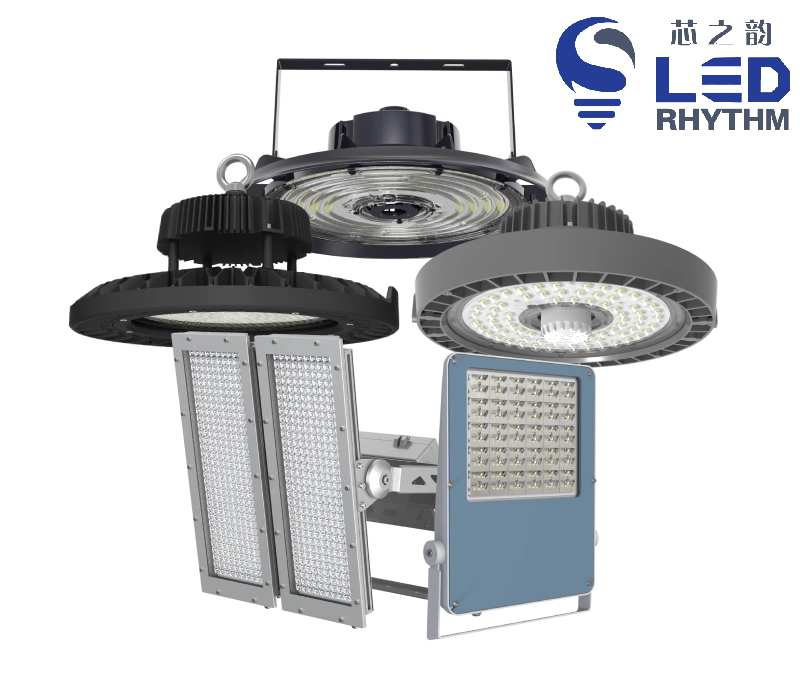
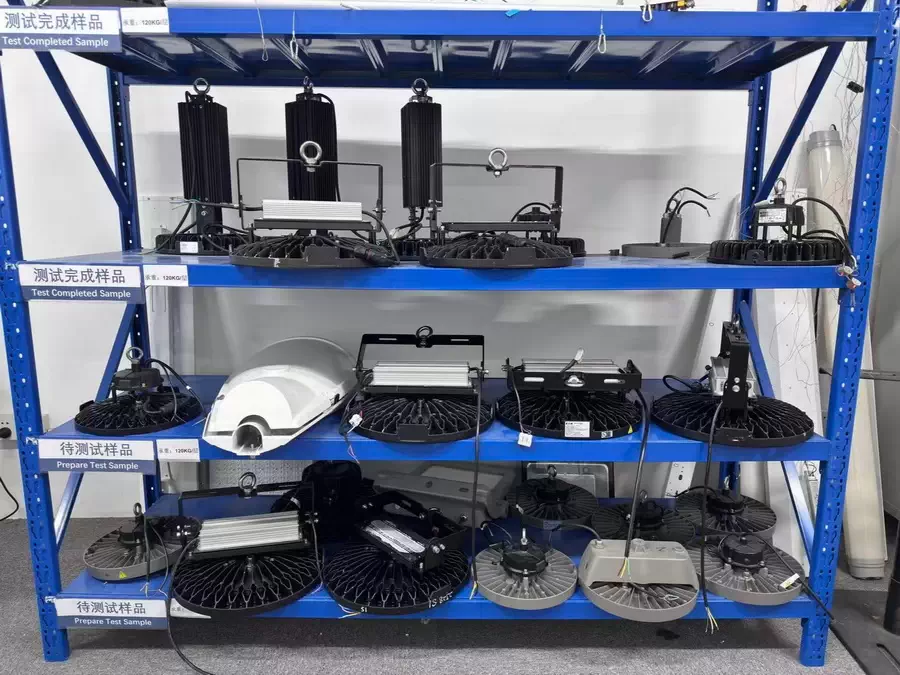
Industrial LED lighting fixture is different from household lighting in that it must can provide stable illuminance in large, harsh environments. Different types of fixtures are used depending on application. To dissipate heat quickly at high power output, the fixture body is more robust and durable, made of die-cast aluminum, and is also larger in size. Here are some common industrial LED lights series in LEDRHYTHM:

  • LED high bay lights – Suitable for environments with ceilings over 4-6m, such as warehouses, factories and indoor sports.
  • LED vapor tight lights – Excellent waterproof, dustproof, and corrosion-resistant features, most representative industrial LED light.
  • LED flood lights – Provide uniform, large-area illumination, both indoors and outdoors.
  • LED linear lights – Linear emitting surface, soft light, and excellent color rendering.
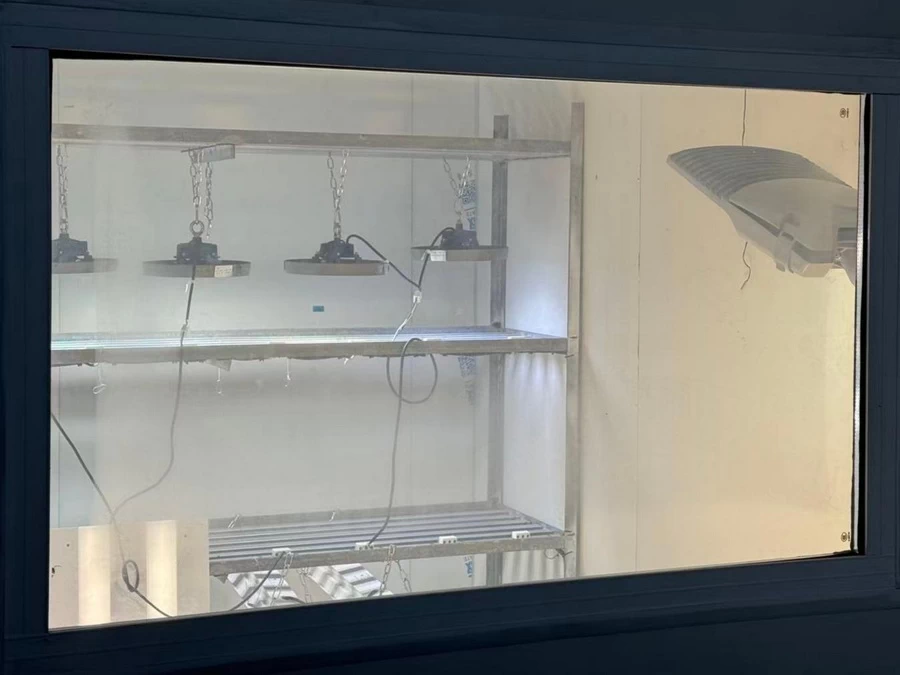
  • LED high-temperature lights – Designed for space with ambient temperatures exceeding 65°C.
  • LED street lights – Installed on light poles, illuminating various outdoor roads and areas.

Industrial LED Lighting Manufacturer in China

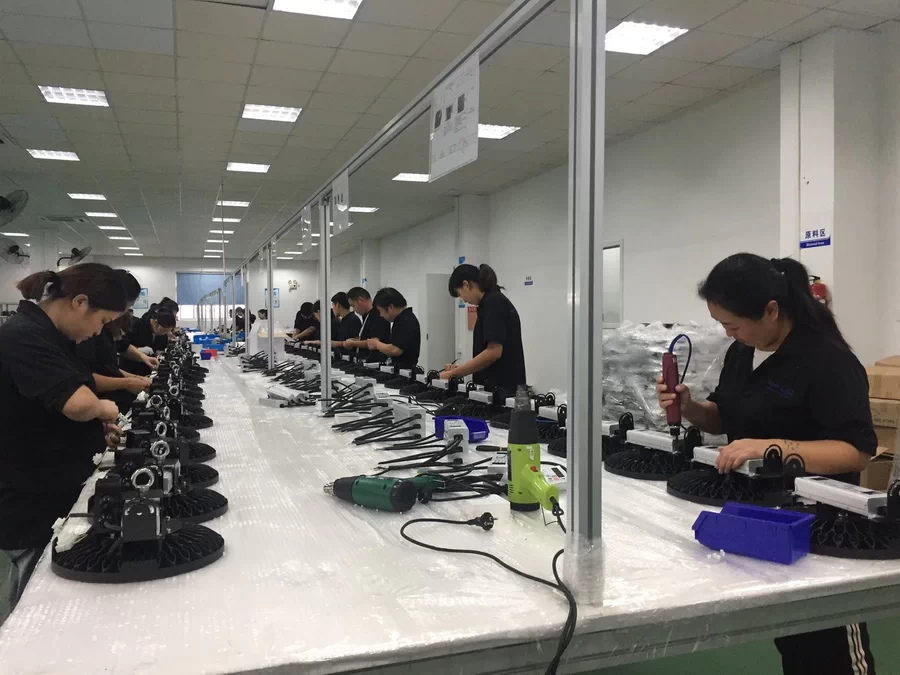
We have over ten years of experience in the research and development and production of LED lighting, and all our lighting fixtures meet industrial-grade standards, not for home use. As a truly reliable manufacturer and supplier, we also offer customization services and are the technology partner behind projects. From product design and structural development to mass manufacturing, everything is centered around the practical needs of high-intensity industrial lighting applications.

Large, professional LED industrial lights factory offer a 5-year warranty, ensuring greater reliability in both technical capabilities and after-sales service. Beyond the lighting fixtures themselves, we can provide lighting simulations and layout planning based on the client’s site dimensions and installation conditions, helping projects achieve a better balance between illuminance and energy efficiency.

industrial led lighting manufacturers china

Rapid Development of Industrial LED Lighting

As LED technology continues to mature, the industrial lighting sector is undergoing significant changes. Most importantly, energy consumption is significantly reduced. According to statistics, industrial lighting consumes about 30% of the world’s electricity, while LEDs can save 60% to 70% of energy consumption. Luminous efficacy has increased from the early 100 lm/W to over 150–180 lm/W, and product advantages in energy saving, lifespan, and optical design are becoming increasingly evident. Simultaneously, modern industrial LED lighting is becoming increasingly intelligent, with batch intelligent control, dimming, and sensors becoming increasingly common. The lighting fixtures are becoming increasingly resistant to high and low temperatures, corrosion, and explosions, which has completely changed the traditional way of lighting.

If you want to learn more about the latest trends, you can read our special article – “What is New in Industrial LED Lighting in 2025

industrial led lighting suppliers
industrial led lighting company

Why Choose LEDRHYTHM?

High Efficacy and Energy Savings
Luminous efficacy of up to 190 lm/W, saving over 80% energy compared to traditional metal halide or fluorescent lamps. This significantly reduces businesses’ electricity costs and carbon emissions.

Ensure Safety
Industrial sites often face challenges such as dust, moisture, oil mist and vibration. IP65–IP69K rating and IK08–IK10 impact resistance, ensuring stable operation and reducing maintenance risks.

Extreme Environments
For high temperatures areas, we can stable operation at ambient temperatures 65–75°C, and can be customized down to 110°C. Also provide cold-resistant lighting as low as -40℃.

Optical Design
All industrial LED lights undergo professional optical design and offer a variety of light distribution methods. They effectively reduce glare, shadows and dark areas, improving lighting quality.

Intelligent Control
Supports DALI and 0–10V dimming, and can be integrated with smart sensors or IoT systems to achieve zoned lighting, automatic sensing, and energy savings.

Professional Certification
Products are certified by international standards, including CE, RoHS, UL, and DLC. They boast a lifespan of 50,000–100,000 hours, reducing replacement frequency and maintenance costs.

Indoor Industrial LED Light

Affects Safety And Efficiency

In industrial environments, dim or flickering lighting fixtures can easily lead to operator errors and even workplace accidents. Therefore, an excellent lighting system is crucial. Even, bright light not only helps people maintain focus, also provides stable, flicker-free illuminance, preventing discomfort and fatigue. This ensures worker safety and productivity.

Industrial LED Lighting Solutions

In terms of lighting type, the solutions can be divided into indoor industrial LED high-bay and low-bay lighting, which achieve the desired effect through different installation heights and optical structures; and outdoor industrial LED flood lighting, such as ports and construction sites, to achieve wide coverage. Then, the specific parameters and characteristics of the luminaires are selected based on the different environmental conditions and requirements. Specific solutions for LEDRHYTHM include, but are not limited to, the following examples. If you are planning a new lighting project, you can also contact us at any time, and we will provide more targeted industrial LED lighting solutions based on the actual site conditions.

Warehouse Lighting

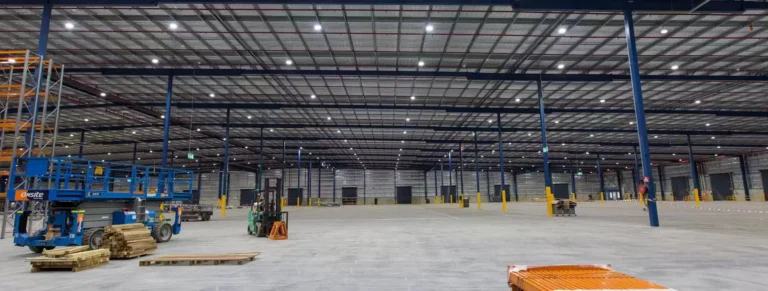
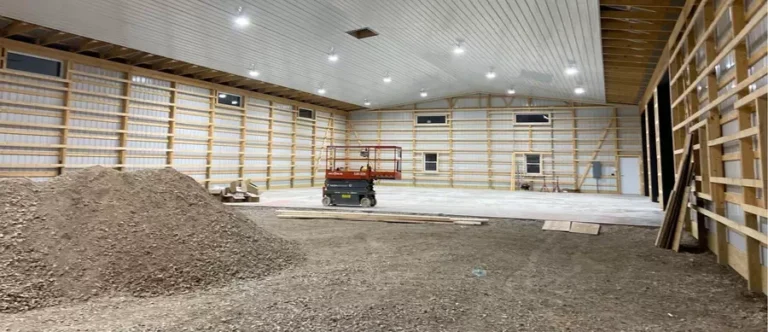
For large warehouses, clear and comfortable visibility is crucial, which requires high illuminance and low glare. For shelving and aisles, linear high bay lights are the preferred choice.

Factory Lighting

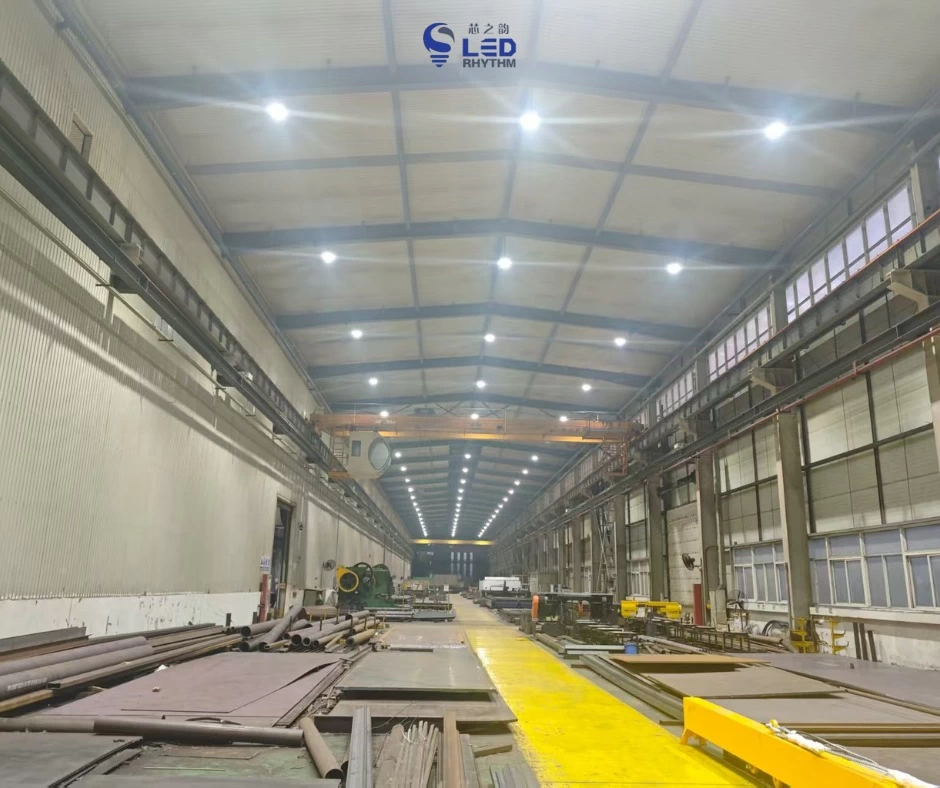
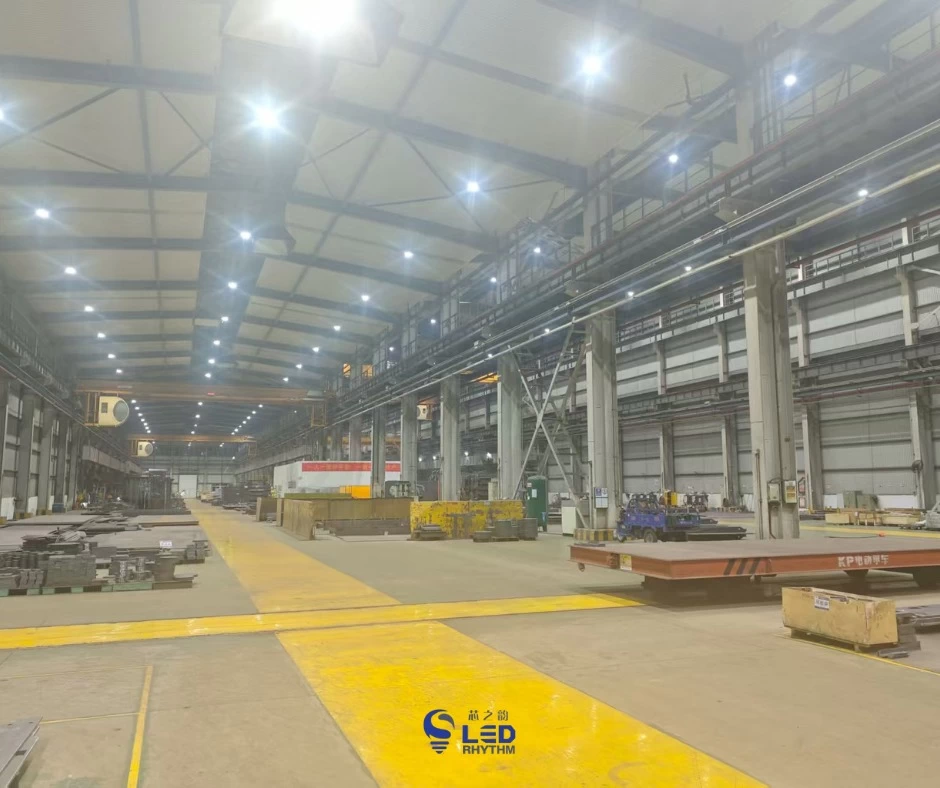
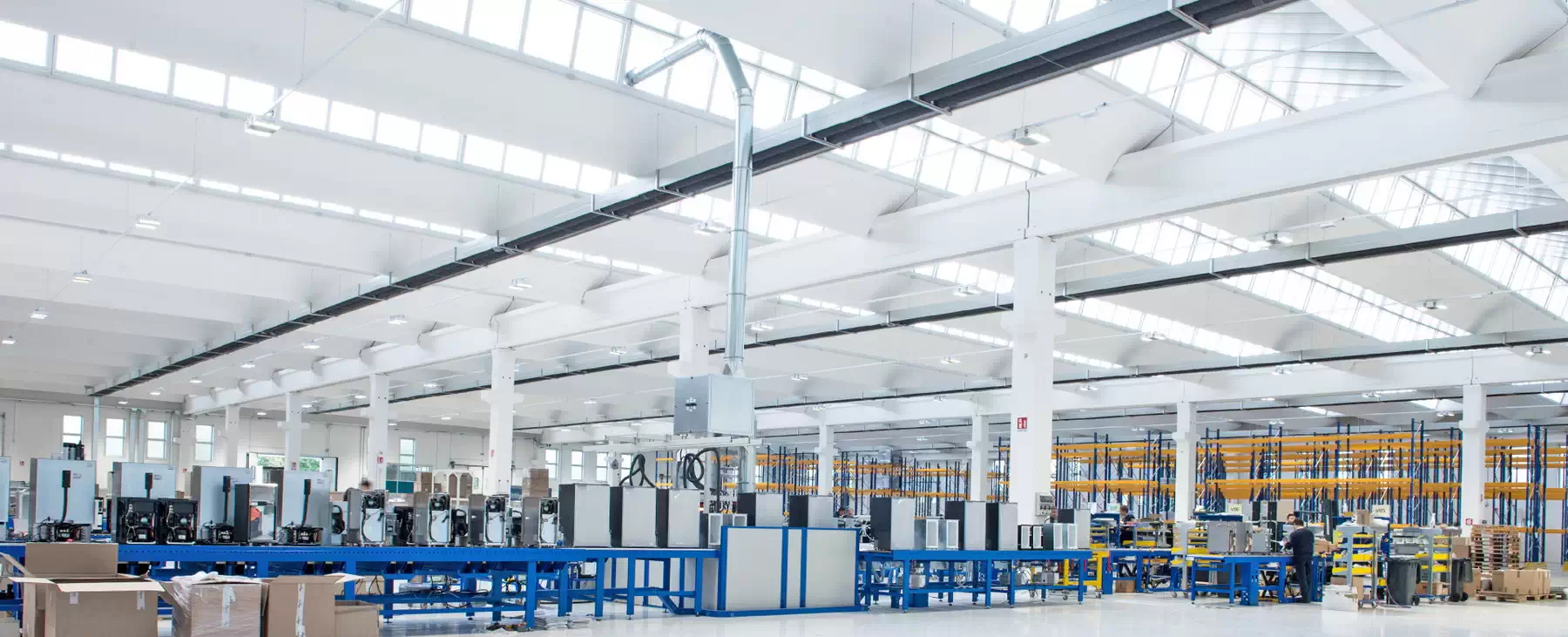
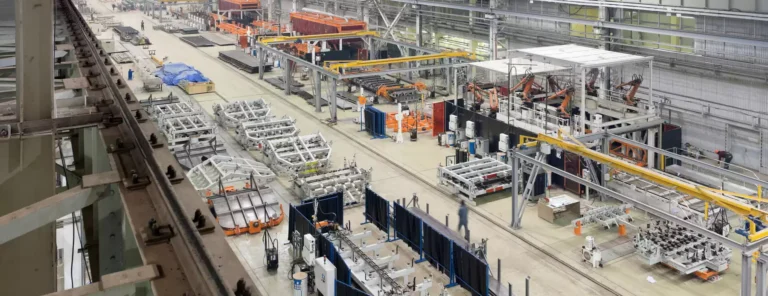
Factory environments are more complex, encompassing work areas such as assembly, processing and testing. These environments can be subject to humidity, dust, and high temperatures.

Workshop Lighting

The complex workshop environment may include welding, assembly, and testing, often accompanied by metal dust. This has high demands for both localized lighting and overall uniformity.

Port Lighting

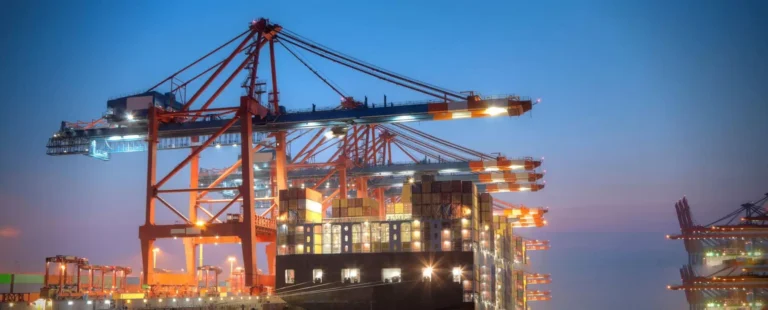
Port and terminal lighting needs to withstand harsh conditions such as salt spray, humidity and strong winds. Long-distance irradiation, corrosion resistance and high protection are key requirements.

Barn Lighting

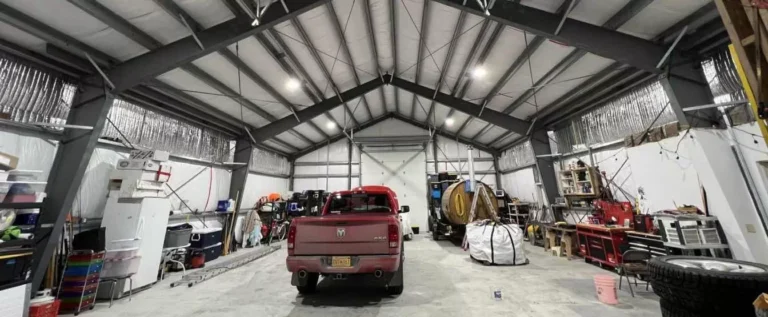
Barn lighting is widely used in agricultural storage and livestock farming. Compared to common industrial LED lighting, barn lighting emphasizes environmental resistance, low glare, and spectral design.

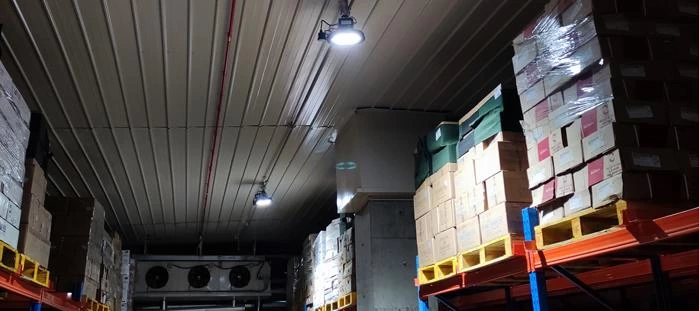
Cold Storage Lighting

Cold storage temperatures often drop below -20°C to -40℃, requiring luminaires to be cold-resistant, condensation-resistant, waterproof, and capable of cold-starting.

Frequently Asked Questions

How to determine if LED lights meet industrial-grade standards?

First, there’s the structure and materials. For LED lights with a power exceeding 150W, the lamp body typically needs a large-area heat dissipation structure and a high thermal conductivity die-cast aluminum shell to ensure effective temperature control during operation. Second, there’s the protection capability. Industrial LED lighting fixtures generally need to have an impact resistance rating of IK08 or higher and IP65 or higher, while also possessing a certain degree of corrosion resistance.

Electrical adaptability is also an important indicator. Industrial LED lights typically have wide voltage compatibility to adapt to different regions or unstable power supply conditions. Finally, their brightness performance can be observed; they should not only have high lumen output but also show no significant attenuation.

What are the advantages of using LEDs in industrial lighting?

  • Significant energy savings: Compared to traditional MH or HPS, it can save 50% to 70% of electricity consumption.
  • Extra-long lifespan: Industrial LED lighting has a standard lifespan of 50,000 to 100,000 hours, reducing the hassle of frequent replacements.
  • Instant start-up and flicker-free operation: It reaches maximum brightness immediately upon power-on, with no flickering.
  • Directional light distribution: Flexible optical design allows for precise control of light direction, reducing light waste and spillage.
  • No ultraviolet or infrared radiation: Color temperature is selectable, and it will not cause thermal damage or aging to the illuminated objects.
  • Wide operating temperature range: Can operate stably in extremely cold or hot environments.
  • Polluting-free: Contains no harmful heavy metals such as mercury or lead, and is environmentally friendly after disposal.

Can industrial LED lights be used in hazardous locations?

Yes, but only if you choose industrial LED lights specifically designed for hazardous environments. For example, in areas with flammable gases or dust, explosion-proof types are required; in high-temperature factories, more heat-resistant high-temperature types are needed; and in corrosive environments, types with anti-corrosion coatings or corrosion-resistant materials are essential. We offer different types of lighting fixtures to suit these complex conditions, ensuring safe application in various hazardous locations.

What are the typical applications of LED industrial lighting?

Environment Example Application Key Characteristics
High Temperature Steel Mill Extreme heat environment requiring strong thermal management
General Industrial Warehouse High ceiling space, high-bay
Humid Environment Wastewater Treatment Plant High humidity with moisture and corrosion risk, requiring IP65+
Dusty Environment Cement Plant Heavy dust conditions, IP6X, easy clean
Corrosive Environment Chemical Plant Chemicals, corrosion-resistant housing
Explosive Environment Oil Refinery Flammable gas, explosion-proof certified
Vibration Area Stamping Workshop Frequent mechanical vibration requiring shock-resistant design
Low Temperature Cold Storage Below -25°C, cold start, anti-condensation
Outdoor Industrial Port Terminal Exposed to rain, sea breeze, and ultraviolet radiation
Confined Space Ship Cabin Limited installation space
High Ceiling Area Airport Hall Very high mounting height requiring powerful and efficient lighting

What is the equivalent power of industrial LED lighting and traditional?

The high luminous efficacy of industrial LED lighting enables it to achieve the same or even higher brightness as traditional lamps at lower power. For example, a 150W LED high-bay light can typically replace a 250W–400W MH; while a 200W LED can replace a 500W–600W MH or HPS.

This equivalent replacement not only significantly reduces energy consumption, but also reduces the number of fixtures and lowers maintenance costs. When replacing LED, the equivalent power will vary depending on the luminous efficacy.

Required Luminous FluxLEDRHYTHM Industrial LED (190 lm/W)Traditional MH / HPS (70 lm/W)
≈ 20,000 lm100W250W
≈ 40,000 lm200W500W
≈ 60,000 lm300W750W
≈ 80,000 lm400W1000W

What is the best color temperature for industrial lighting?

In most LED industrial lighting, the color temperature is generally between 4000-6500 K. If below 4000 K, the light will be dim and yellowish, which is not conducive to work environments that require concentration. Higher color temperatures, on the other hand, can help improve productivity and maintain focus.

  • 4000K to 5000K: Neutral white light, suitable for areas where visual comfort is important.
  • 5000K to 6500K: Cool white light, closer to daylight, often used in high-precision areas, inspection areas, and spaces requiring high concentration.

How often do LED industrial lights need cleaning or maintenance?

They have a high protection performance and robust structure, effectively protecting their internal components and requiring less frequent maintenance. In harsh environments, such as those with high dust, high humidity, and strong corrosive conditions, cleaning should be done every 1-2 year. Other environments can be cleaned every 3-4 year.

TALK TO OUR​

Pop-ups Contact Form