Why Baseball Field Lighting Matters
Baseball is a intense sport, and the ball’s flight speed, trajectory, and the moment of impact all need to be clearly visible. Professional baseball field lighting should consider fairness, spectator experience, operational safety and cost-efficiency. Given the small size and high speed of balls, the quality of lighting directly impacts batters’ judgment and pitchers’ performance. From the trajectory of a high-speed flying ball to the subtle movements of player, lighting must ensure every detail is clearly visible, with high color rendering to ensure realistic camera capture. It’s not just about illuminating the field; the illuminance and glare in different areas such as the pitcher’s mound, home plate, and center field must be strictly controlled so that athletes can make quick judgments and exert their full strength.
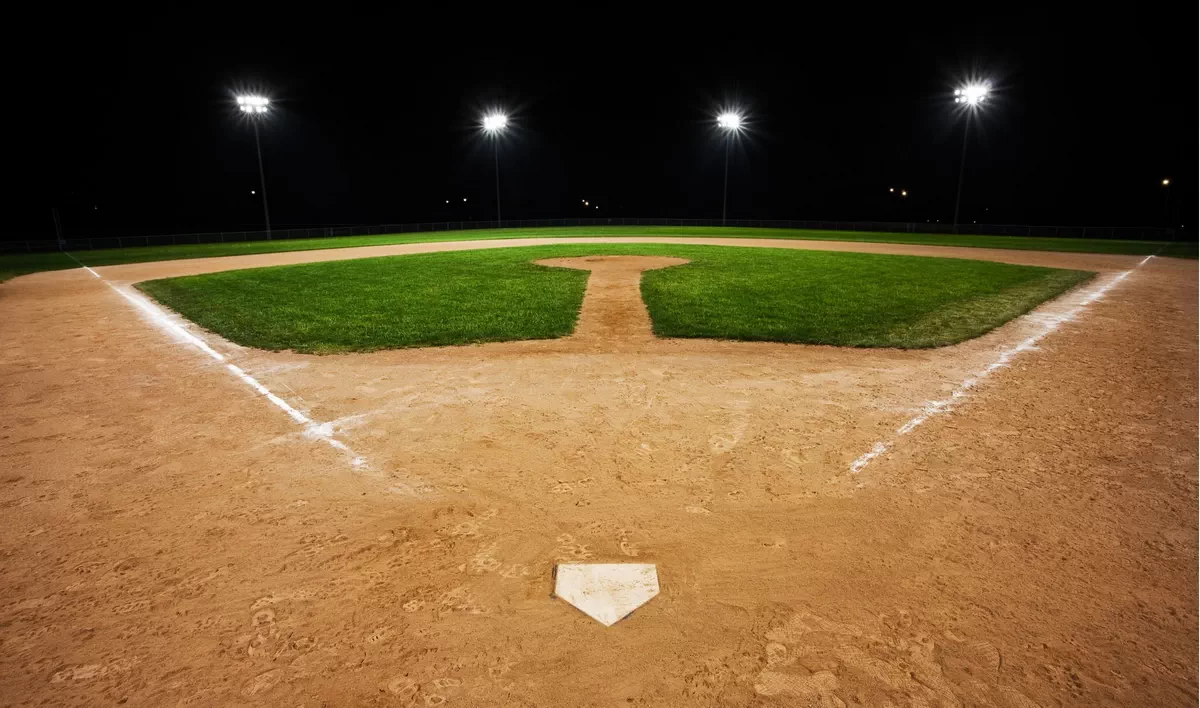
Choosing the right LED baseball field lights and conduct reasonable lighting design not only ensures bright and uniform illumination inside and outside the field, but also prevents light from scattering into the sky and effectively reduces glare. This will enhance safety and provide spectators with optimal viewing experience.
LEDRHYTHM - LED Baseball Field Lights Manufacturer in China
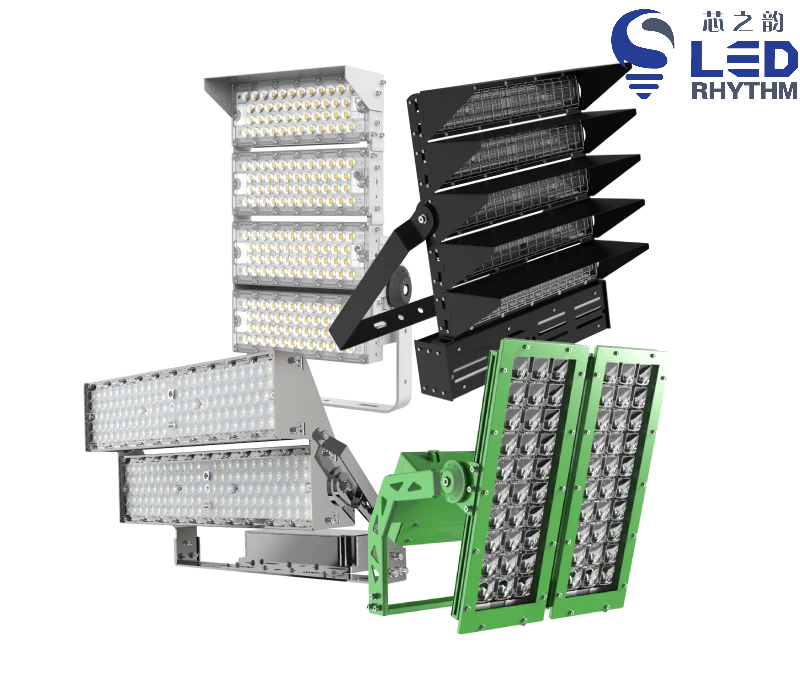
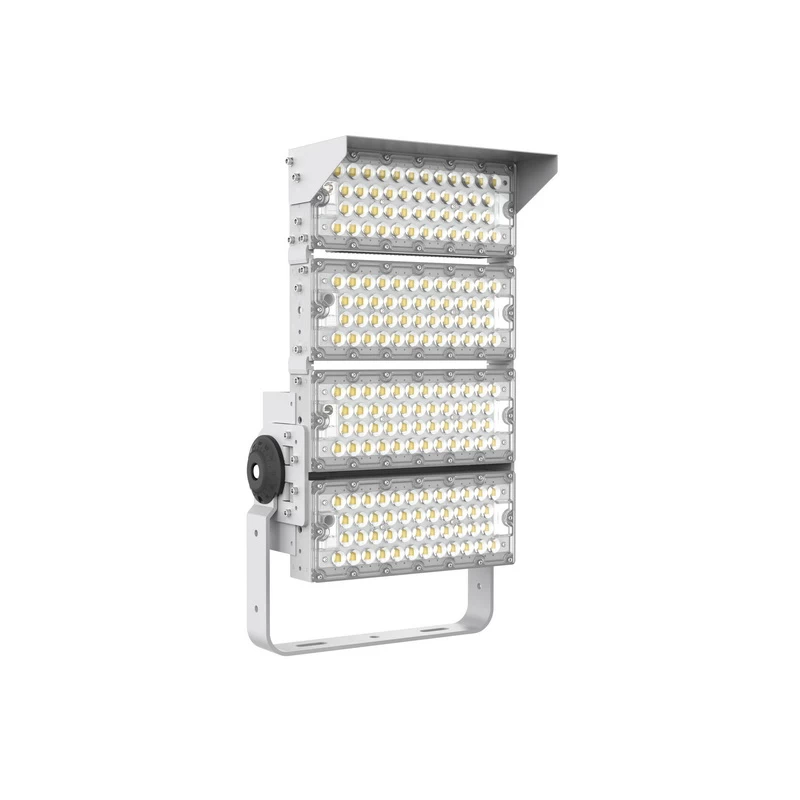
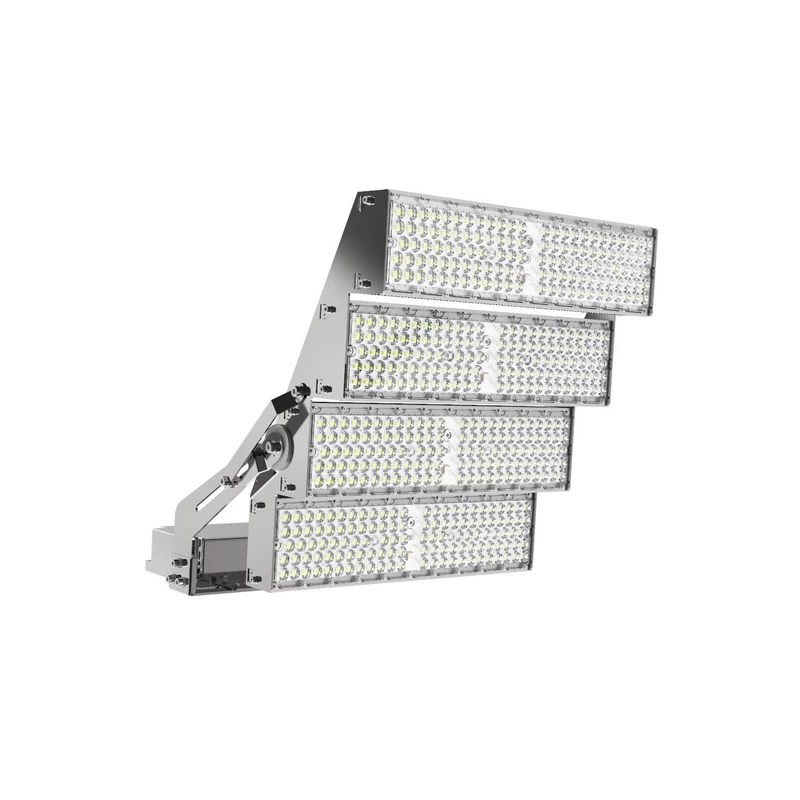
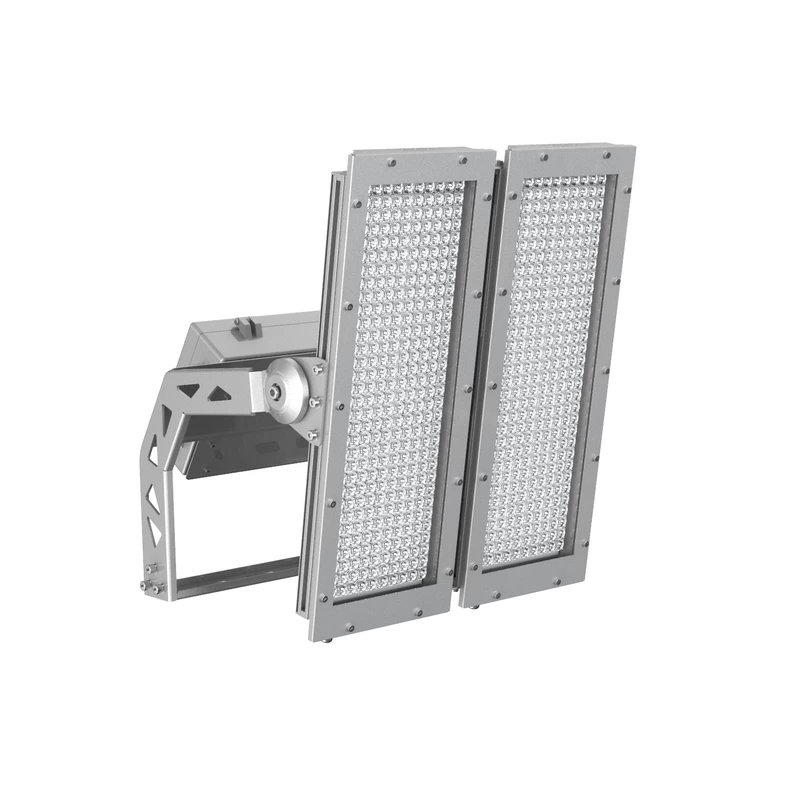
As a leading LED sports lighting manufacturer in China, with over 10 years of experience and nearly 100 successful installations in baseball field, we not only meet the diverse illumination standards of indoor and outdoor, but also significantly reduce energy consumption and maintenance costs. LEDRHYTHM offers LED flood lights for baseball fields from 100W to 1500W, installation height can be flexibly selected and meets various illuminance standards, its ideal for replacing traditional baseball field lighting fixtures and achieves maximum cost-effectiveness. View all LED flood lights.
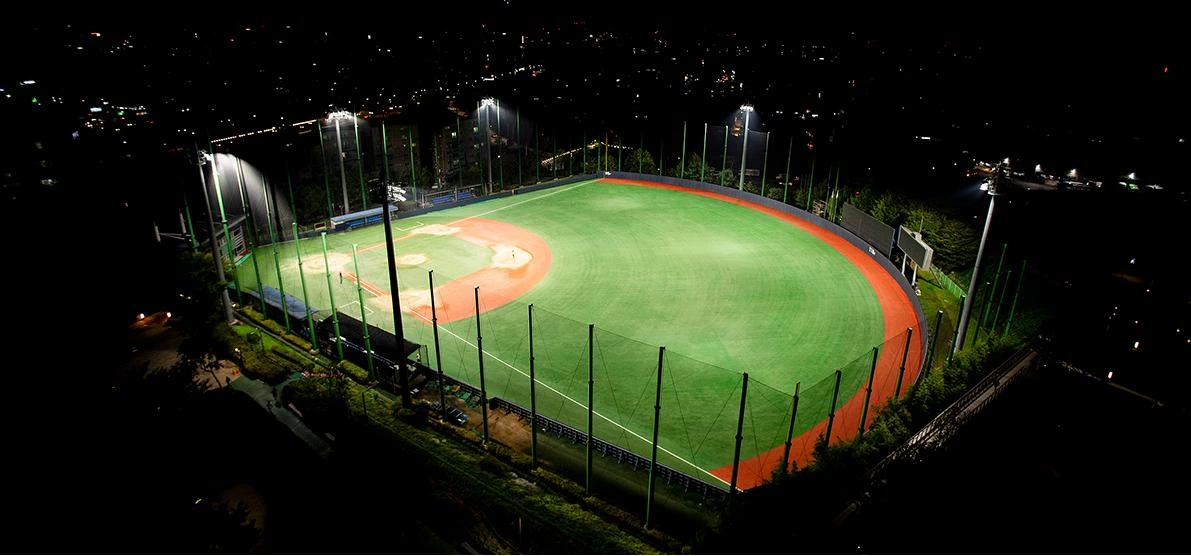
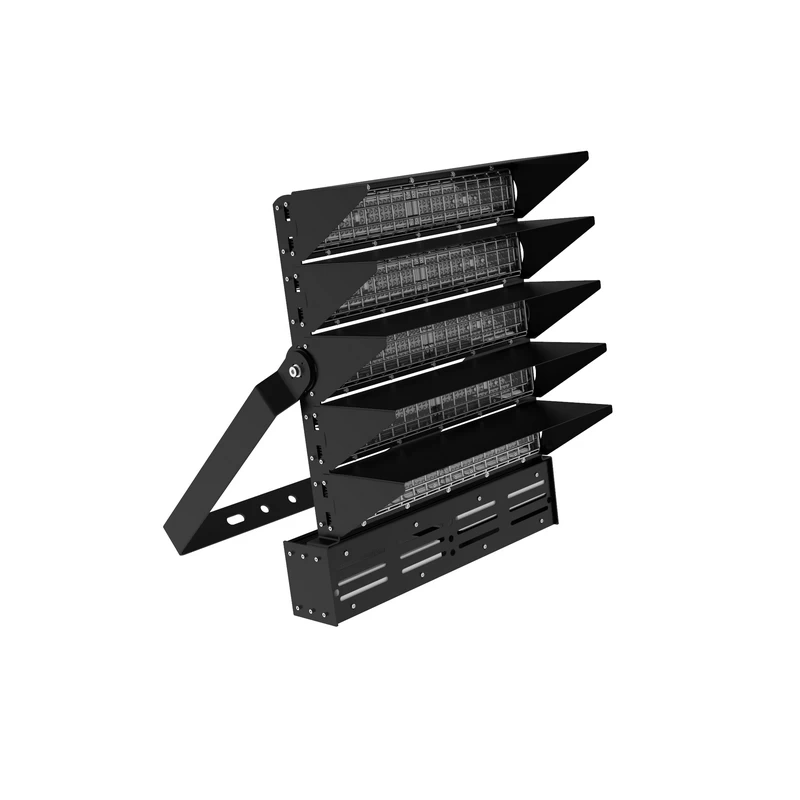
LEDRHYTHM baseball field LED lights is designed with the diverse lighting needs and ensure long-term operational reliability. We don’t simply discuss our fixtures are more energy-efficient and longer lifespan than traditional. What’s more important is the overall lighting experience and fixture stability. This is crucial for players’ performance.
- Energy efficiency: Luminous efficiency exceeds 150 lm/W, saving more than 65% energy compared to traditional lighting fixtures, and improving lighting quality.
- Uniformity and glare: Utilizing precise optical lenses or reflectors, and compatible with light shields, we maintain high uniformity throughout the lighting environment and effectively reduce glare.
- Different areas of the baseball field: Zoned lighting is implemented to meet the different visual needs of the pitcher’s mound, infield, and outfield, ensuring smooth transitions between light and dark areas.
- Heat Dissipation: Fixture body are constructed from high-strength die-cast aluminum and utilize internationally renowned LED chips and power supplies for superior heat dissipation.
- High color rendering: CRI>80/90, making clothing colors, grass colors, and every detail appear incredibly clear and realistic. This further enhances the experience for athletes and spectators.
- Protection: IP66 waterproof and dustproof, IK10 shock resistant, and 10/20KV surge protection ensuring stable operation in a variety of harsh outdoor weather conditions.
- Installation: The fixtures are suitable for various heights of high poles and lighting layouts, offering high flexibility to meet the needs of different baseball field renovations or new constructions.
Correct Layout
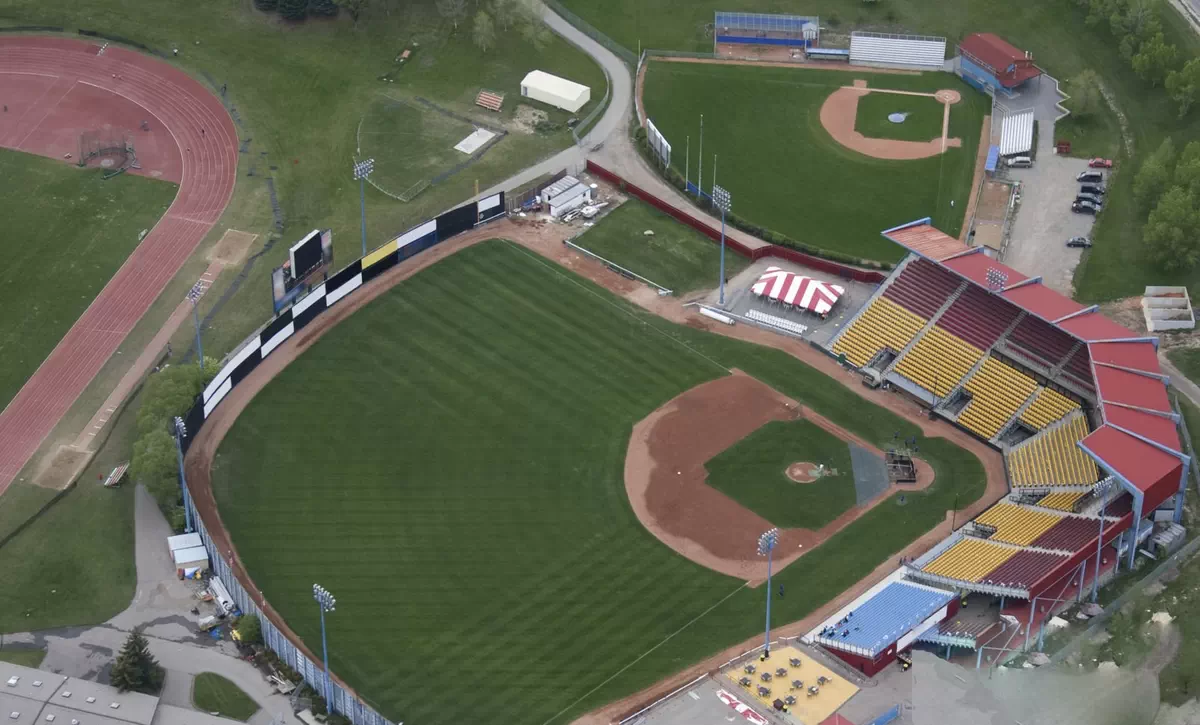
Baseball field lighting design must simultaneously meet the visual needs of pitchers, batters, outfielders and spectators, making lighting layout crucial. Depending on the size and specific purpose of the baseball field, light pole layouts typically fall into one of three categories:
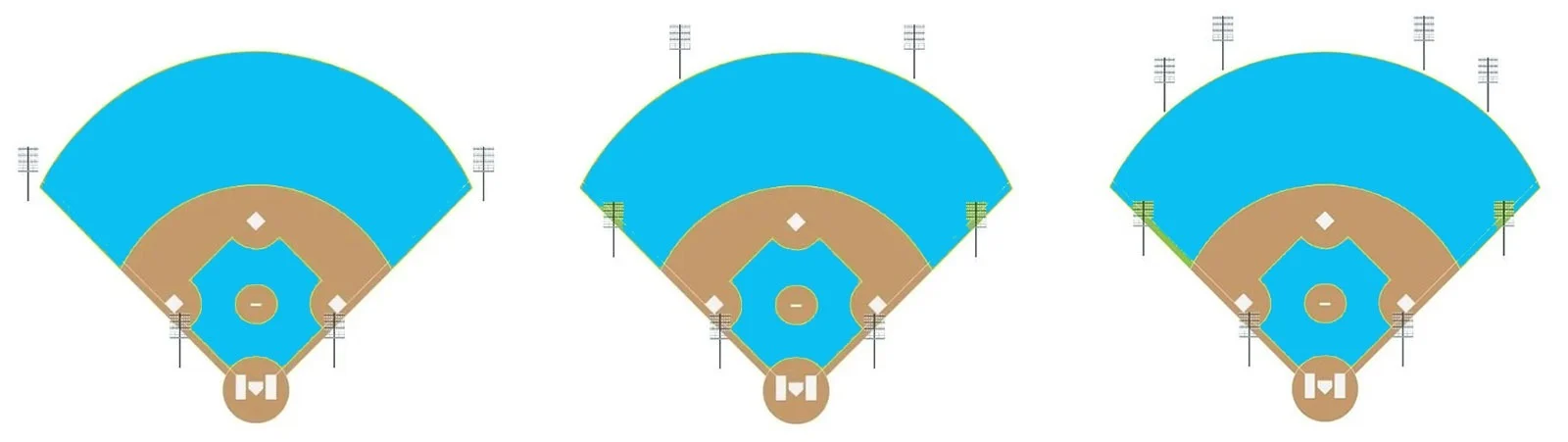
- Four-pole layout: two in the batter’s box and two in the far outfield fan-shaped area. This layout is simple and low-cost, making it suitable for baseball training grounds or amateur competitions lighting. While it can meet basic lighting needs, it can suffer from insufficient illuminance and poor uniformity in professional competitions.
- Six-pole layout: Adds poles on both sides of the outfield to the four-pole layout. Batter’s box retains two poles, while the outfield is more complete coverage. This improves outfield uniformity and horizontal illumination, achieving a better balance between cost and lighting effectiveness.
- Eight-pole layout: Evenly distributed around the baseball field, this layout provides the most comprehensive and uniform lighting, making it particularly suitable for professional games and TV broadcasts. Through professional optical design, glare can be significantly reduced while ensuring that illumination in all areas meets international standards.
Baseball Field Lighting Standards
In lighting design of sports like baseball fields, illuminance (lux) is one of the most critical indicators, determining the field brightness. Higher the illuminance, the clearer the vision for athletes and spectators. You can learn more about illuminance here.
The pitcher’s mound, batter’s box, and home plate area require significantly higher illuminance than the outfield. This is because batters have only few hundred milliseconds to judge the trajectory of the ball, and any slight shadow or difference in brightness can affect their performance. Excessive glare must be avoided and kept within the range that the human eye can tolerate.
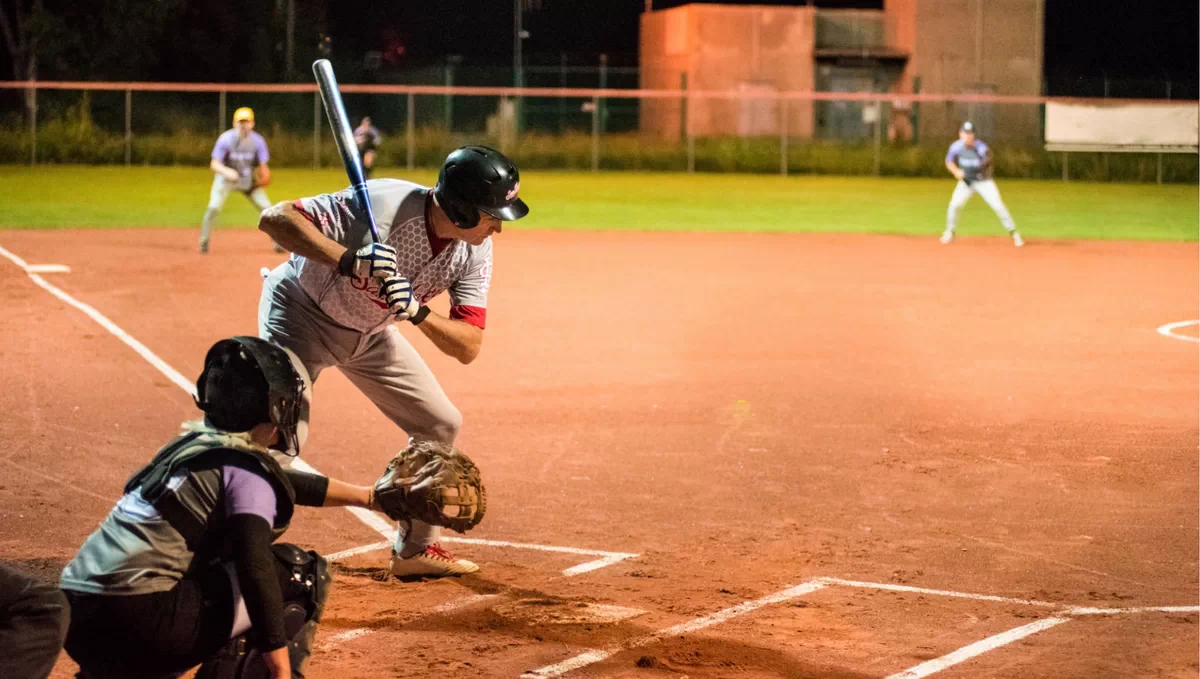
In addition, there are corresponding standards for baseball field lighting for different purposes. Amateur training grounds primarily ensure basic safety and visibility, so illumination requirements are lower. Official matches require higher brightness and uniformity. Professional fields, must meet the demands of high-definition TV broadcasts, which not only requires higher illumination but also requires no flicker and high color rendering.
| Baseball Level | Infield (lux) | Outfield (lux) | Uniformity | Glare Control | CRI (Ra) |
|---|
| Amateur / Training Fields | 300-500 | 200 | ≥0.6 | Basic | ≥70 |
| High School / Semi-Professional | 500-800 | 300 | ≥0.7 | Enhanced | ≥80 |
| Professional / TV Broadcast | 1000-1500 | 700+ | ≥0.8 | Professional / UGR Controlled | ≥90 |
Baseball Field Lighting vs Other Sports Lighting
Baseball field lighting differs significantly from other sports venues, such as football fields and tennis courts. Due to the unique characteristics of baseball, the lighting requirements for pitcher’s and batter’s areas are the highest, ensuring clear ball trajectory. Other areas have slightly lower requirements. However, lighting requirements for soccer and tennis primarily focus on uniform coverage and low glare. Thus, while it share the same emphasis on energy conservation and glare reduction as other sports venues, it present greater challenges of illumination zoning, optical control and layout complexity.
| Aspect | Baseball Field Lighting | Other Sports Lighting |
|---|
| Lighting Focus | Zoned lighting (pitcher, batter, infield, outfield) | Maintain whole-field uniformity |
| Complexity | Highly complex; each zone requires different light levels & beam angles | Lower; more consistent lighting requirements |
| Glare Control | Strict – batters and pitchers are very sensitive to glare | Moderate – reducing discomfort for players |
| Beam Angle | Multiple asymmetric beams for different zones | Focus on overall coverage |
| Aiming Difficulty | Requires precise aiming to avoid shadows | Easier aiming with fewer critical zones |
High-Power LED Baseball Stadium Lights
LED baseball field lights are one of the representatives of high-power flood lighting, and heat dissipation management is always the core technology that determines the lifespan, luminous efficiency stability of the lights. LEDRHYTHM offers typical high-power options including 300W, 600W, 900W, 1200W, and even 1500W. However, if the thermal management is inadequate, not only will the light decay accelerate, but it can also lead to fatal problems such as frequent off and driver failures under high loads. Therefore, truly professional LED baseball stadium lights possess high power and high lumen output, but also needs to maintain stable temperature range during long-term operation.
- Fixture body is made of high thermal conductivity die-cast aluminum and features numerous heat sinks to effectively reduce the operating temperature of the LED chips.
- Structure mostly is modular design, with each light source module having independent heat dissipation, preventing heat transfer. And have greater space between the module and the driver.
- High temperature resistant LED chips are paired with high thermal conductivity copper substrate (MCPCB) to ensure rapid heat conduction from the chip solder joints to the heat dissipation module.
Lighting Simulation
Lighting simulation is an essential step in professional stadium lighting design; otherwise, even the best-performing LED baseball lights will not achieve optimal results. Using professional software such as DIALux, AGi32, and Relux, we will generate a 3D photometric model and quantitative data analysis based on the actual size, structure, light pole distribution, and illuminance requirements of the field. The simulation will select most suitable wattage, quantity, beam angle, and illumination angle for fixtures.
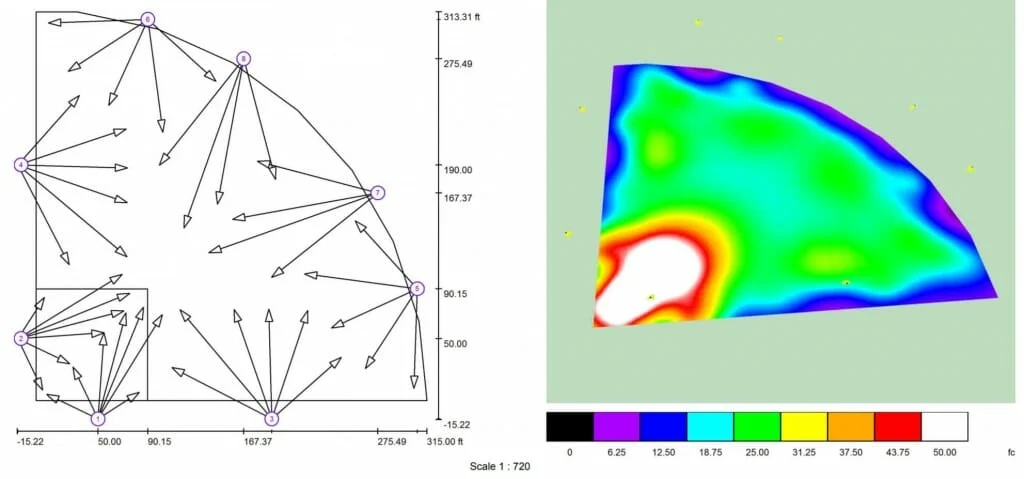
The simulation provides clear view of the illuminance distribution in the infield, outfield, bases runner’s path, pitcher’s box, etc., allowing you to see where it’s too dark, where the illuminance is too high, whether the uniformity is up to standard, and whether the glare is excessive. Before the actual installation of the lights, the angles, power, and number of light poles can be adjusted in advance, avoiding the need for secondary construction. Furthermore, by changing the light distribution scheme, the same illuminance can be achieved with fewer lights, avoiding unnecessary procurement and installation, and helping small and medium-sized baseball fields lighting save on initial costs.
How many LED baseball field lights do I need?
The number of LED baseball field lighting fixtures is a complex issue, influenced by multiple factors. For example, a standard field typically requires 6-8 poles, with each pole equipped with 6-16 lights depending on illumination requirements and installation height. Small fields, on the other hand, only require 4 poles.
If the field requires higher illuminance and uniformity, more fixtures will be needed. Therefore, comprehensive calculation must be made based on field size, illumination requirements and fixture type. LEDRHYTHM can provide professional lighting design for your any baseball field, ensuring it meets your needs while avoiding unnecessary energy and costs waste.
| Pole Layout | Fixtures per Pole | Amateur / Training (Total) | High School / Semi-Pro (Total) | Professional / Broadcast (Total) |
|---|
| 4 poles | 10–16 | 40–64 | Not recommended | Not suitable |
| 6 poles | 10–16 | 60–72 | 72–84 | 84–96 |
| 8 poles | 12–16 | Not suitable | 96–112 | 112–128 |
What is the appropriate pole height for LED baseball field lights?
LED baseball field lighting poles height cannot be determined simply; it needs to be calculated comprehensively in conjunction with the beam angle, pole layout, and illuminance uniformity. For example, for the same field, if there is layout of 4 light poles, then higher light poles and more fixtures are needed to achieve full coverage.
However, under normal circumstances, the range of pole height can still be determined based on the baseball field size or purpose. Higher poles offer better light control, effectively reduce glare, and provide more flexible lighting coverage, enabling more precise zone lighting, making them suitable for professional fields. While lower poles may provide a wider coverage area for a fixture, they are more prone to light pollution and struggle to illuminate the entire field, resulting in lower uniformity.
- 12–18m: Smaller field, limited cost, recreational or training use
- 18–25m: Formal games, high school baseball fields, significantly improved lighting quality
- 25–40m+: Meets high-definition live streaming and professional game standards
Can LED baseball field lights be installed on existing poles?
Typically, LED baseball field lights can be directly installed on existing light poles, provided that the pole structure and load-bearing capacity meet the standards. We come standard with U-shaped adjustable angle mounting brackets, allowing for installation on light poles in various ways and angles. Supports input voltages selection from 100V to 480V, ensuring direct compatibility with most older fields wiring without requiring replacement. However, still necessary to check if the pole can withstand the weight of the new lights, and to inspect for corrosion or unstable foundations. Substandard poles will require reinforcement or replacement.
Most importantly, we can re-simulate the lighting based on the existing pole height to ensure that illuminance, uniformity, and glare all meet the standards. But if the existing pole is too low, it still be possible to install, but the effect will not reach the better level.
What costs can LED lighting for baseball field save?
- At same brightness, LED are 2-3 times more efficient than traditional lighting. Can significant savings on electricity costs, which constitute the largest and longest-lasting portion of the overall cost.
- LED have the characteristics of long life, high reliability, and extremely low light decay. They no require maintenance or replacement replacement of bulbs and ballasts for 50,000+ hours, which greatly reduces maintenance and downtime costs.
- The renovation project does not require replacing the existing wiring, has good compatibility, so can save on renovation costs.
- With high protection performance, the fixture will not be damaged due to internal water ingress or outer shell corrosion, further saving on labor and parts purchase costs.
Is LED baseball field lighting type of flood lights?
Yes, actually all outdoor LED stadium lighting is essentially type of floodlight. However, it is not the kind of wide-beam conventional floodlight we usually see used for building facades or courtyards, but industrial high-mast LED flood lights with specialized optical design and high-strength structure.
It is classified as floodlight because it uses high-power directional projection. Through lenses, reflectors, and precise beam control, it projects light onto the desired area from higher and still achieving large-area coverage. Compared to conventional, baseball field LED flood lights have the following significant differences:
- Smaller beam angles, such as 10°, 20°, 30°, 40°, and asymmetric light distribution.
- Higher power outputs meet the requirements of high illumination, from 300-1500W.
- Long-distance lighting, installation heights are typically between 14-40 meters.
What is the equivalent power of the LED baseball field lights?
- 300W LED can replace 600-800W MH (metal halide lamp)
- 600W LED can replace 1200W-1500W MH
- 900W LED can replace 1800W-2000W MH
- 1200W-1500W LED can replace 2500W-3000W MH
This is because LED baseball field lights have higher luminous efficiency and lower light loss. Their equivalent power is usually half or even less than that of traditional metal halide lamps (MH/HID), and their actual illuminance is much higher than that of traditional lamps with the same power.
What color temperature is best for baseball stadium lighting?
We recommend color temperature of 5000-5700K for baseball stadium lighting, which is also the primary choice for most fields. This range of cool white light provides clear and bright visual effects, allowing everyone to see the changes on the field clearly, while also ensuring optimal player focus, without causing fatigue like warm yellow light. For more professional games fields, 6000K–6500K is recommended. This will make every detail sharper and clearer, but may increase glare, requiring extra consideration during design. Both of these ranges offer better color rendering, which is crucial for sports lighting.
How to control glare or light pollution?
Baseball stadium LED lights will employ ultra-narrow beams or precisely designed asymmetrical beam angles, ensuring that the light irradiate only on the field and does not shine into the sky or outwards. This will significantly reduce glare and minimize upward scattering, thus naturally controlling light pollution. Secondly, adding light-controlling accessories such as shades, grids, and side baffles to the fixtures can effectively prevent random light scattering, which is also crucial for controlling glare and light pollution. Increasing the installation height appropriately can also control glare. Higher installation allow light to be projected onto the field at gentler angle, while no easy to glare when people look up.
Can LED baseball field lights withstand complex outdoor weather conditions?
Our LED lights have comprehensive weather-resistant design from four aspects: structure, electrical system, sealing, and heat dissipation, to ensure that they can withstand various harsh and changeable weather conditions in the baseball field.
When facing typhoon, the robust shell and mounting brackets remain undeformed and no loose at height of 50 meters. When exposed to salt spray and rain corrosion, the die-cast aluminum casing has corrosion-resistant coating that prevents rust, damage, and breakage. In the face of thunderstorms, we have 10kV or 20kV surge protection, so the fixtures will not short-circuit or be directly damaged. Facing torrential rain and sandstorms, the standard IP66 rating provides perfect protection for the internal components of the fixtures. Facing the hot weather, excellent heat dissipation and heat resistance ensure stable operation.

 English
  简体中文
简体中文  Deutsch
  Español
  Français
  Italiano
  日本語
日本語  Русский
  Português
  한국어
한국어