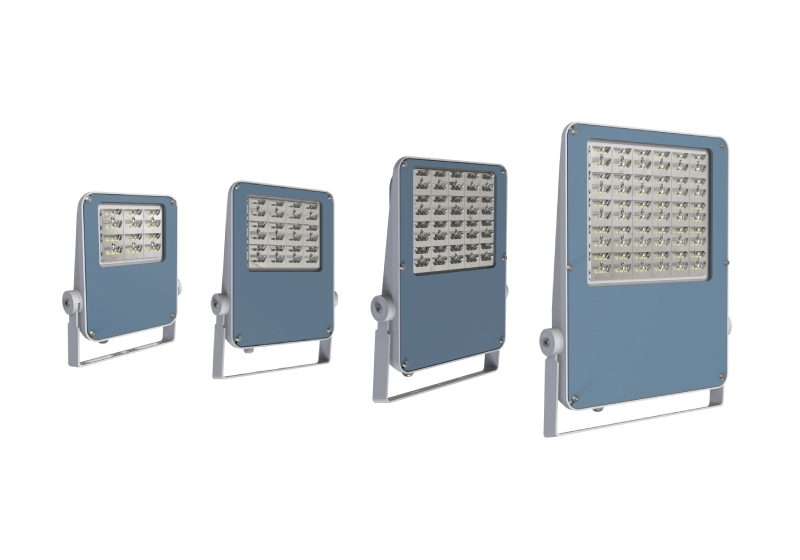
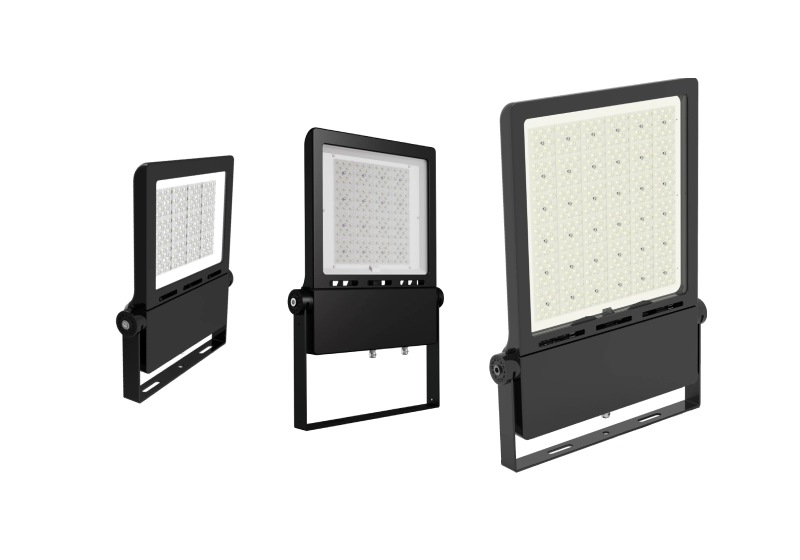
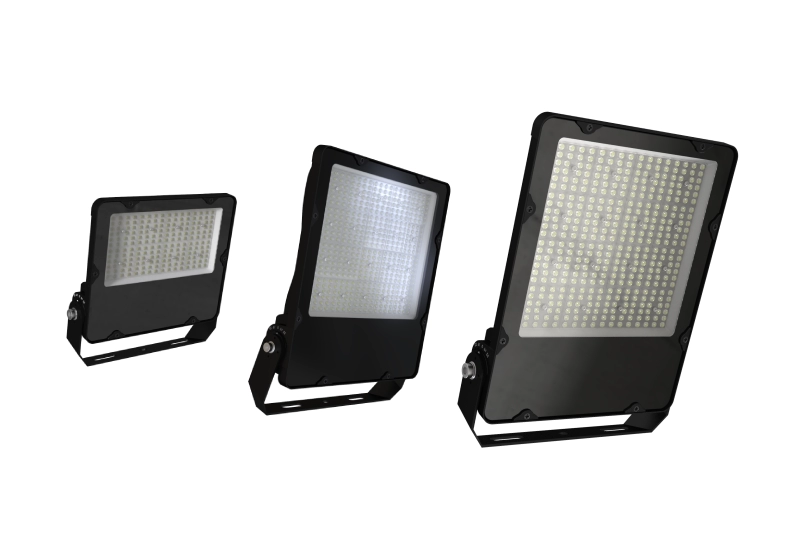
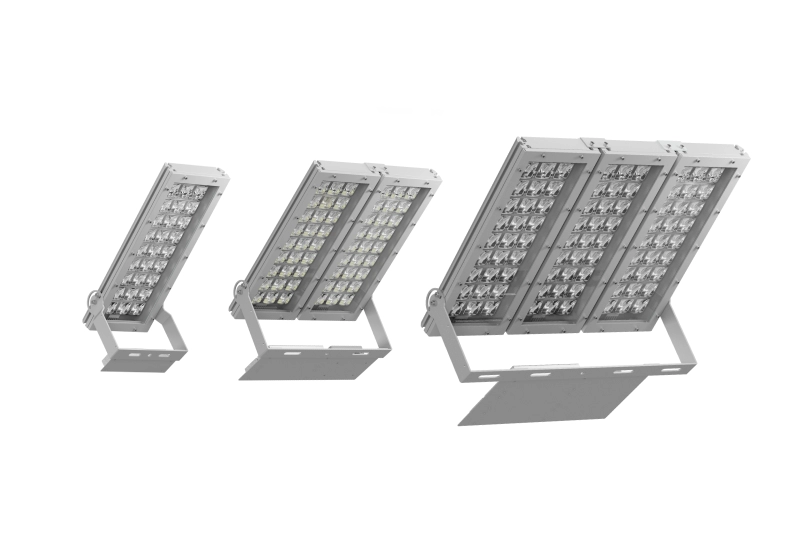
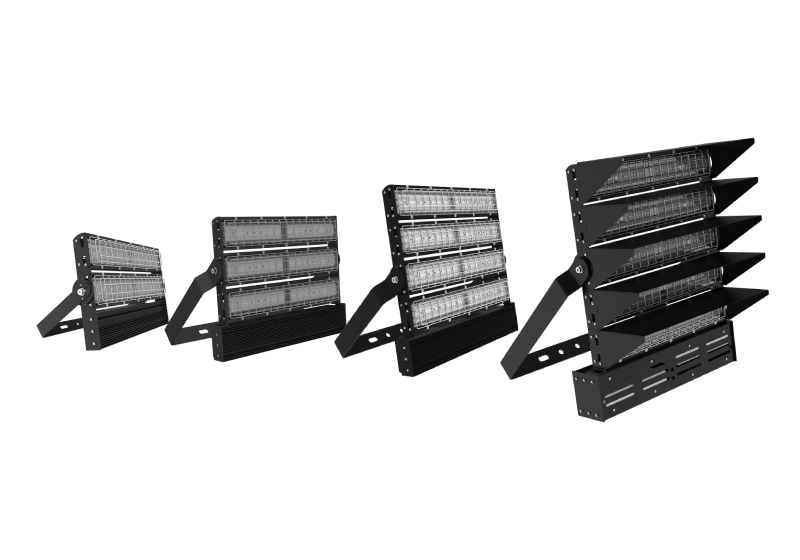
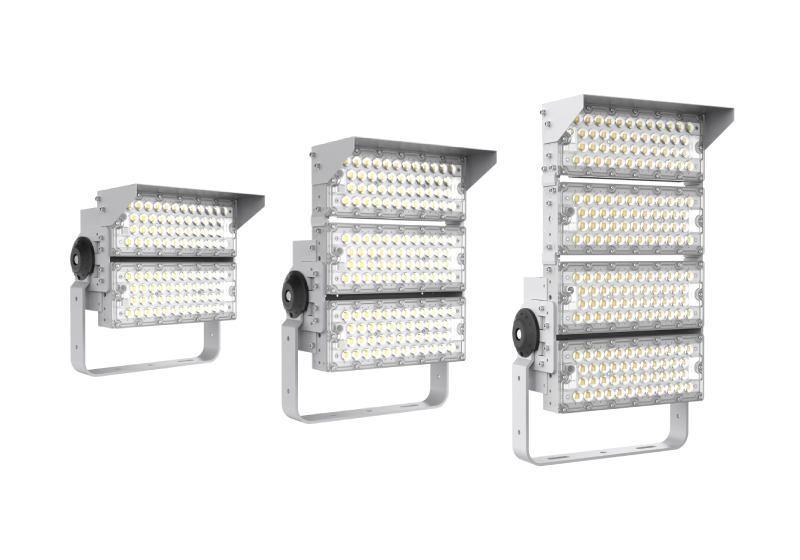
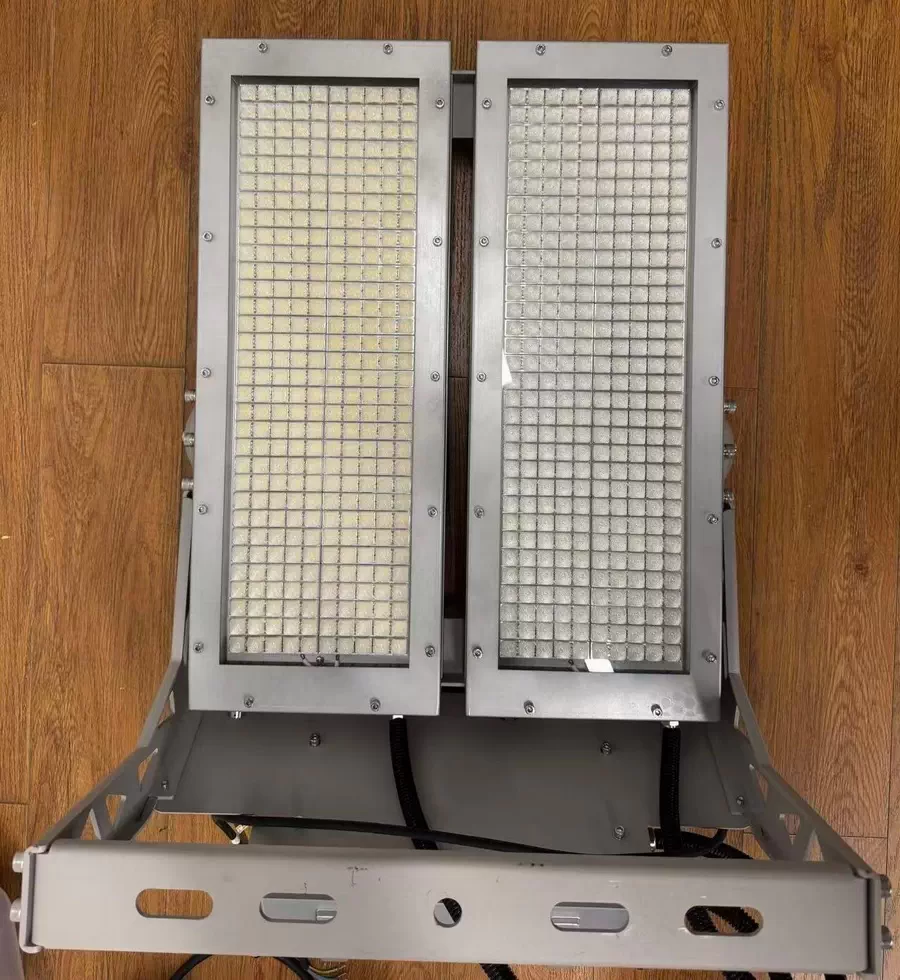
100W To 600W LED Flood Lights Brightness
As is well known, the luminous flux of LED lights is determined by their luminous efficiency. Our industrial and commercial LED flood lights offer efficiencies ranging from 140 lm/W to 160 lm/W. This value is not a deliberate pursuit of energy-saving limits, but rather a balance result validated through long-term engineering applications.
So, what is the total luminous flux of high-power LED floodlights such as 100W, 150W, 200W, 300W, 400W, 500W, and 600W?
| LED Flood Lights | 140 lm/W | 150 lm/W | 160 lm/W |
|---|
| 100W | 14,000 lm | 15,000 lm | 16,000 lm |
| 150W | 21,000 lm | 22,500 lm | 24,000 lm |
| 200W | 28,000 lm | 30,000 lm | 32,000 lm |
| 300W | 42,000 lm | 45,000 lm | 48,000 lm |
| 400W | 56,000 lm | 60,000 lm | 64,000 lm |
| 500W | 70,000 lm | 75,000 lm | 80,000 lm |
| 600W | 84,000 lm | 90,000 lm | 96,000 lm |
Luminous flux is just a basic parameter; the actual brightness of the target illumination area is determined by multiple factors. Besides luminous efficiency, many people may wonder why 200W LED floodlights from different manufacturers have different ground brightness after installation.
- Optical design: Beam angle, lenses, reflectors, etc., determine whether the light is diffused or focused; this is the most important factor.
- Installation height and angle: For the same power, the higher the installation, the lower the ground brightness.
- Environmental factors: Air cleanliness, aging of the luminaire, etc.
Therefore, three LED flood lights with the same power and luminous efficacy may have beam angles of 30°, 120°, and 40*70, respectively, and their actual brightness will be different when illuminating the same area.
Thanks to the high efficiency of LEDs, they can save 60-70% of energy compared to traditional lighting fixtures. This means that 100W to 600W LED flood lights can achieve the same or even higher brightness as 250W to 1800W traditional MH or sodium lamps, and can perfectly replace them.
- 100W LED is equivalent to 250W – 400W MH or sodium lamps
- 200W LED is equivalent to 400W – 600W MH or sodium lamps
- 300W LED is equivalent to 600W – 800W MH or sodium lamps
- 400W LED is equivalent to 800W – 1200W MH or sodium lamps
- 500W LED is equivalent to 1200W – 1500W MH or sodium lamps
- 600W LED is equivalent to 1500W – 1800W MH or sodium lamps
It is important to emphasize that the equivalence relationship comes not only from the comparison of lumens, but also from the advantages of professional LED floodlights in beam control and directionality. Theoretically, by reducing the drive current or using more aggressive chip selection, the luminous efficacy can be increased to over 160 lm/W, but this often leads to problems such as increased heat dissipation pressure, accelerated light decay, and decreased color temperature and color rendering stability, which in turn affects the overall lifespan and lighting consistency, so it is unnecessary.
Application And Wattage Recommendations
The selection of LED floodlight wattage requires comprehensive consideration of installation height, target illuminance, and uniformity requirements. Especially in the high-power range of 100W–600W, the differences between different wattages are not only reflected in brightness, but also in coverage, beam selection, and the overall number of lights. Based on our years of practical application experience, we can provide some references.
- Small parking lots, building entrances, and perimeter walls: 100W–150W is recommended, focusing on basic visibility and safety lighting.
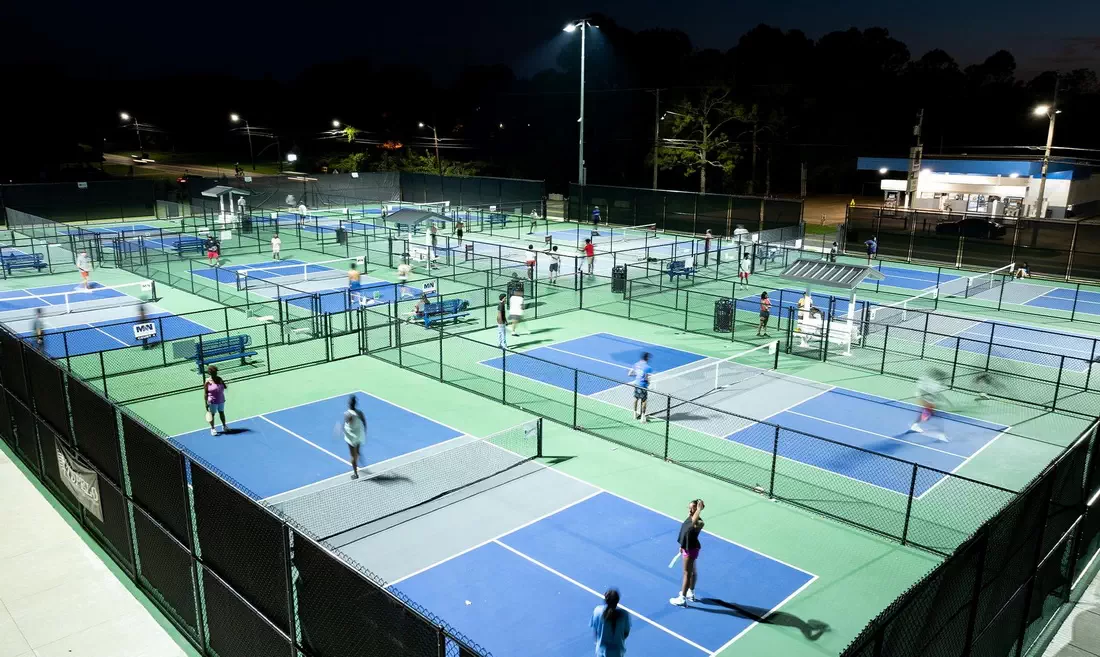
- Warehouses, recreational sports fields, billboards, and intersections: 200W–300W is recommended, enhancing coverage and illuminance; this is the primary choice for most industrial and commercial applications.
- Logistics parks, medium-sized stadiums, and mining areas: 300W–400W is recommended, further improving visual clarity through appropriate light distribution, resulting in a bright and comfortable overall environment.
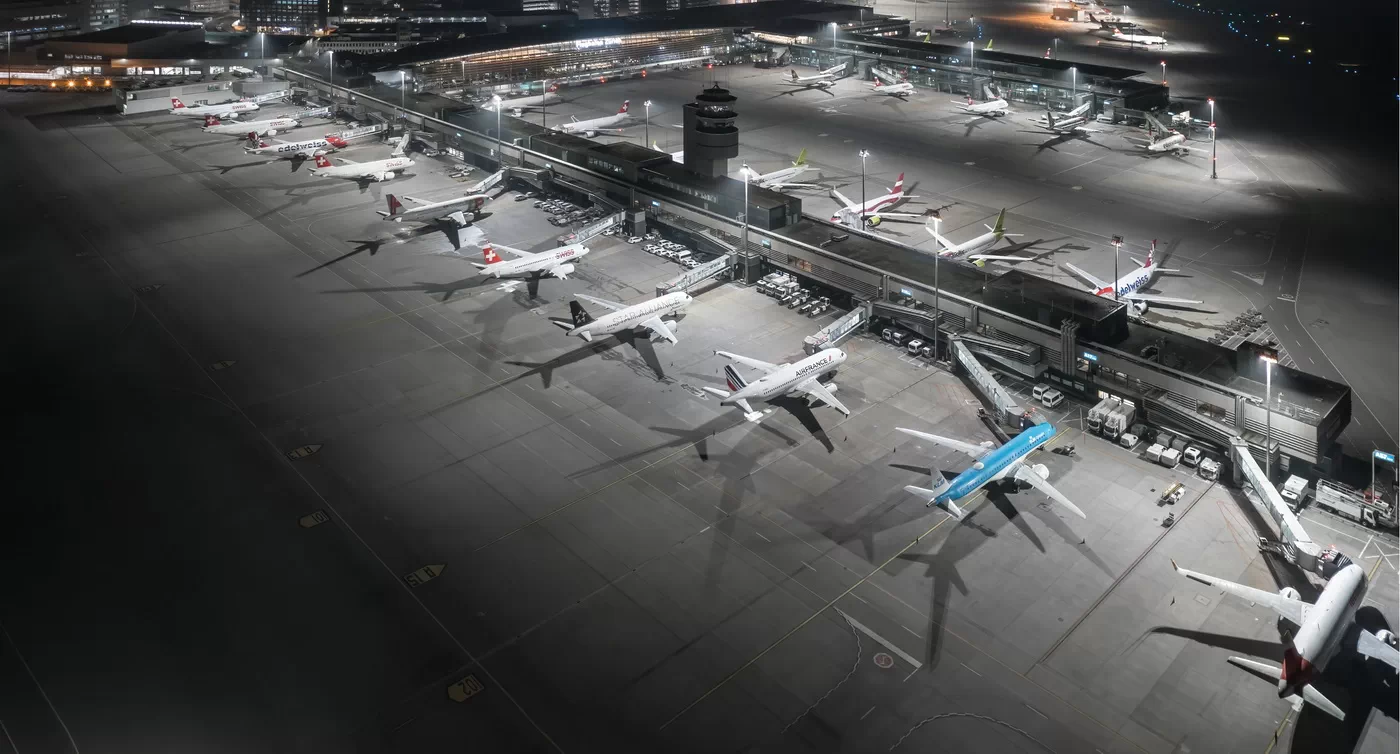
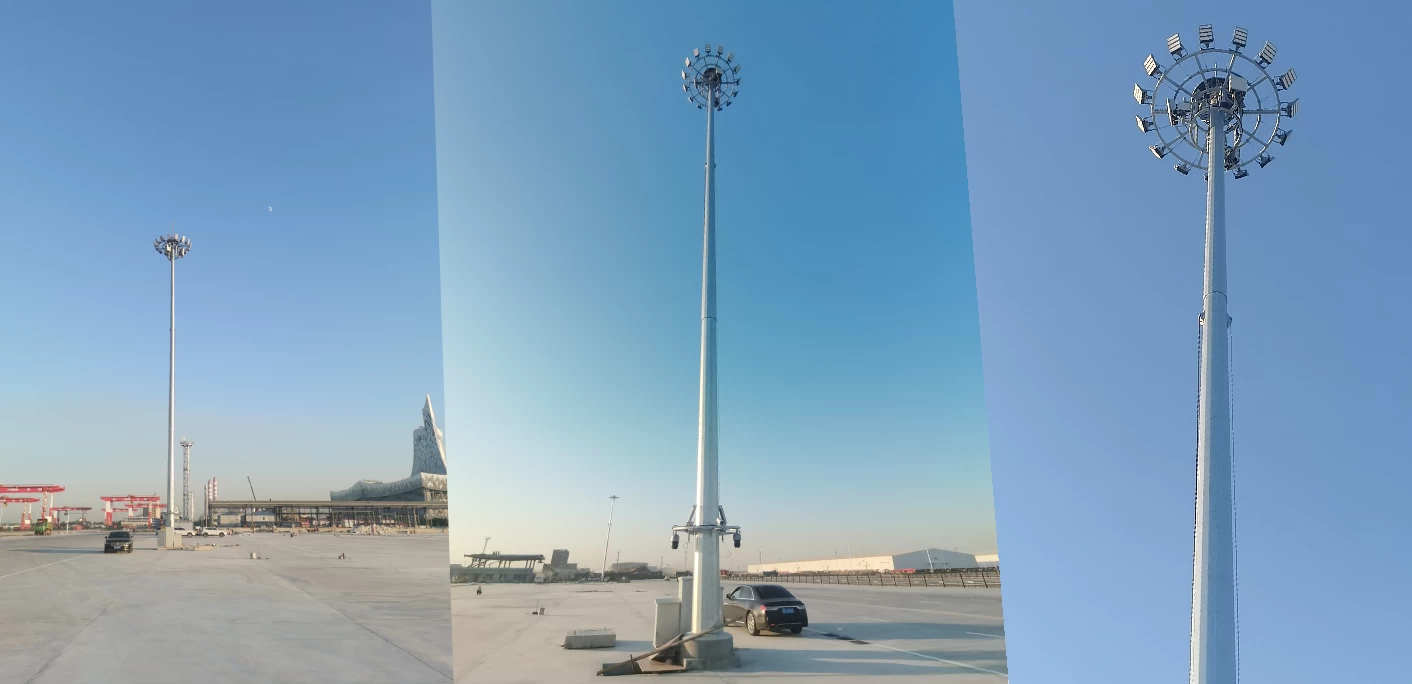
- Airport tarmacs, port terminals, open storage yards, and professional high mast lighting: 400W–600W is recommended; higher installations provide more uniform and wider coverage when projecting over long distances, and lower glare.
Installation height of 100W to 600W LED flood lights
LED floodlights in this wattage range are the primary lighting systems for outdoor industrial and commercial spaces, providing effective illuminance at installation heights ranging from 8m (26 feet) to over 30m (98 feet), meeting the needs of the vast majority of applications.
| LED Flood Lights | Installation Height | Recommended Beam Angle |
|---|
| 100W–150W | ≤ 8m | 90°–120° |
| 150W–200W | 8–10m | 60°–120° |
| 200W–300W | 10–15m | 45°–90° |
| 300W–400W | 12–18m | 30°–60° |
| 400W–600W | 18–30m | 25°–45° |
| 600W+ | > 25m | 10°–30° |
Note that the table shows a reference range for the installation of a single LED flood light. For multi-light combinations (such as 4-8 or more per pole), the installation height can be higher, as the stacking of multiple lights compensates for the insufficient luminous flux of a single light.
The proper matching of flood light wattage, installation height, and beam angle is crucial. 100W to 200W require a wide beam, while 300W to 600W require a narrow beam. If a 100W–150W LED flood light is installed at a height of more than 15m, its luminous flux is significantly diluted before reaching the ground, resulting in light but poor visual brightness. In this case, using a narrow beam angle can solve the problem of insufficient ground illumination due to installation at too high a height, but this will result in a very small coverage area.
Conversely, if high-power lights are installed at too low a height (such as installing 300W–600W flood lights within a range of 6–10 meters), although the brightness will be significantly improved, it will inevitably lead to severe glare and light pollution, especially in areas with frequent human activity, where this discomfort will be more pronounced. In actual engineering projects, multiple lights in this wattage range are usually stacked and installed on high poles, resulting in a higher and more uniform average illuminance.
Structure and Heat Dissipation
For high power LED flood lights of 100W or more, the peak brightness is not what truly determines the value of the product; operational stability is the overriding core indicator. Performance degradation often stems from heat accumulation, with higher wattage resulting in more severe heat generation. If heat cannot be dissipated promptly, it can lead to decreased brightness, color shift, flickering, or even burnout. Therefore, rather than simply emphasizing parameters, the key is to control these risks within safe limits through structural and heat dissipation design.
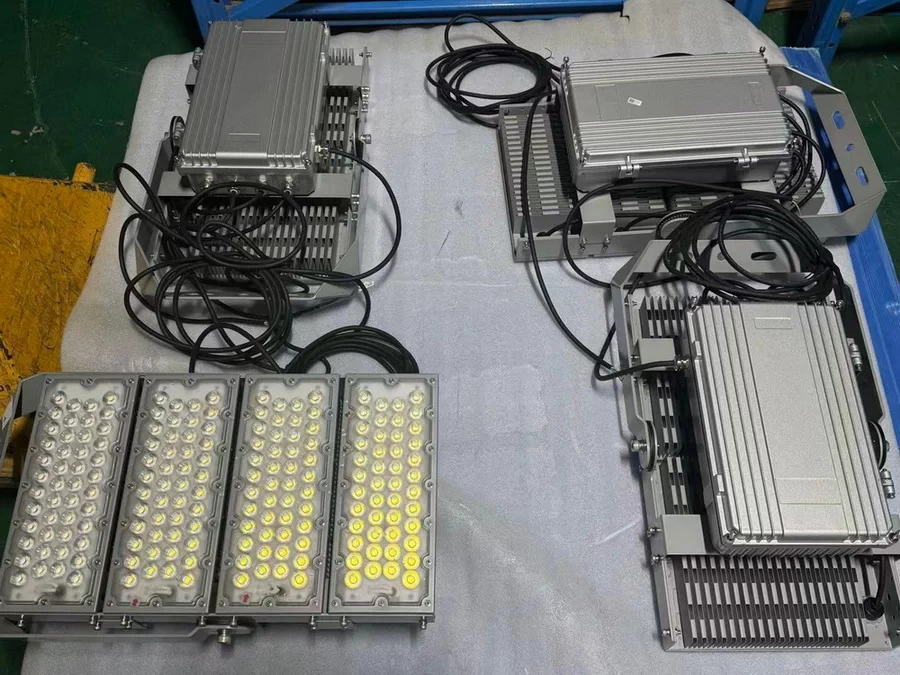
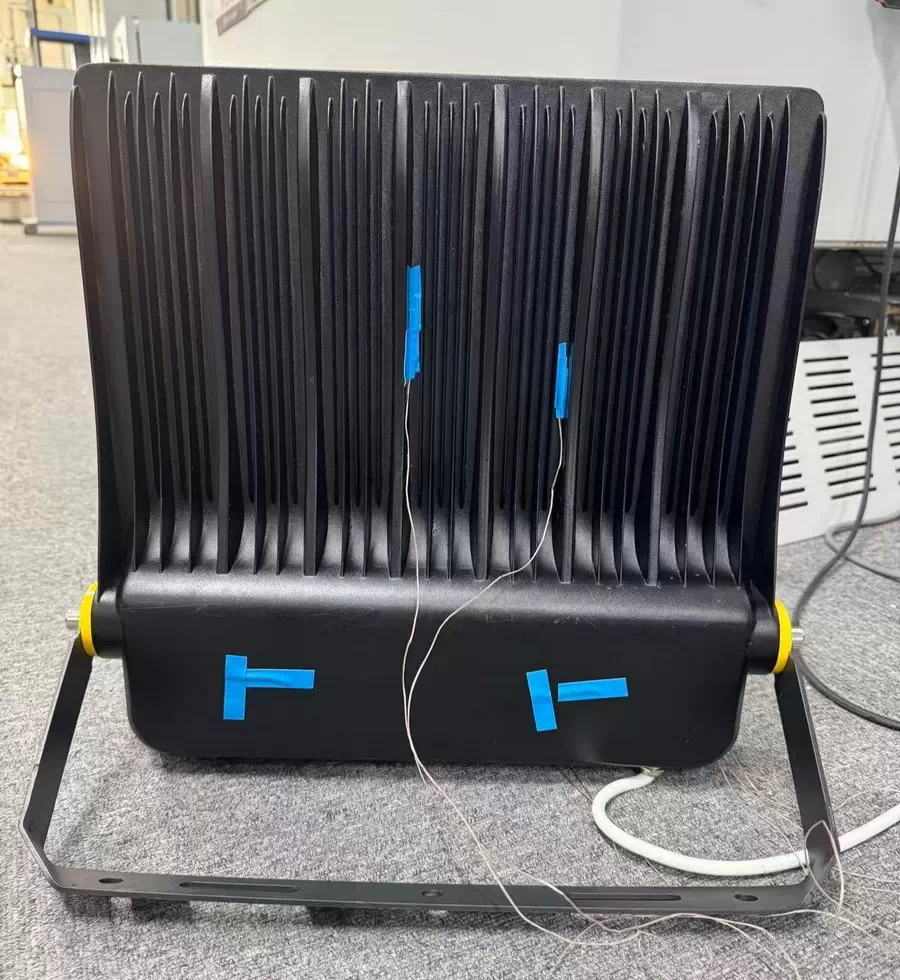
Regardless of the wattage, it should be equipped with die-cast aluminum material with high thermal conductivity as standard. In the more common 100W to 300W LED floodlights, it is usually a one-piece structure and very thin, with a large area of heat dissipation aluminum fins on the back of the fixture body, which can quickly dissipate heat while ensuring that the overall weight is controllable.
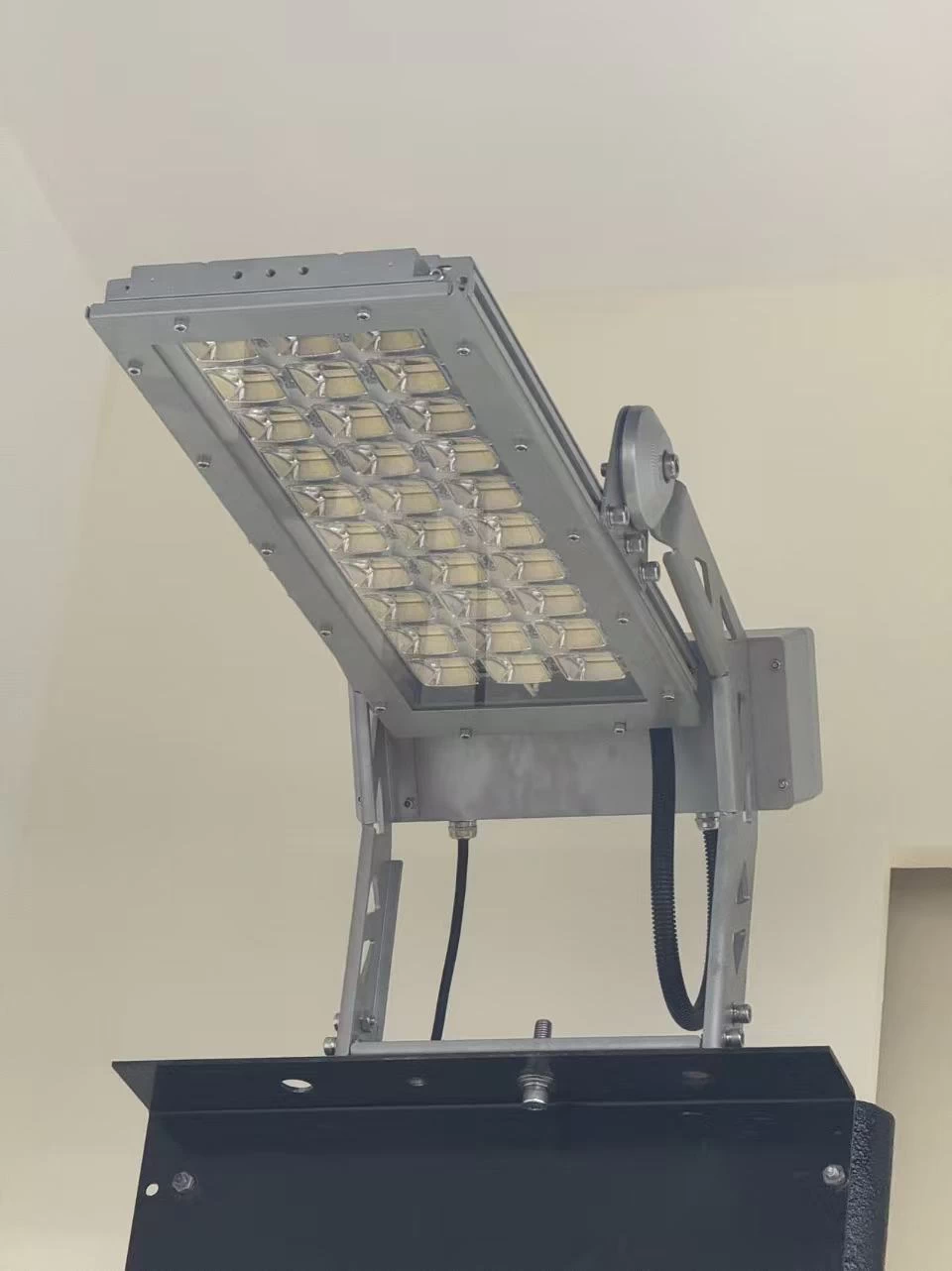
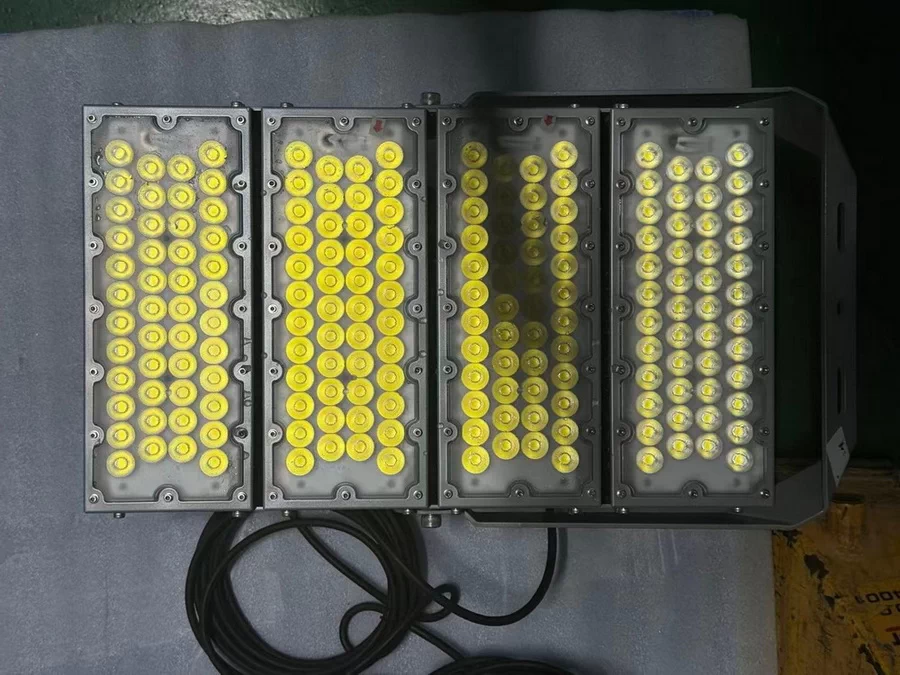
When the wattage reaches 300W or 400W and above, it is often used for high-mast lighting. A single structure can no longer withstand the continuous high heat load, and flood lights are beginning to shift towards modular designs. Each independent light source module has larger and deeper heat dissipation fins, and the driver power is physically separated from the light source module to avoid heat accumulation. Even if one module malfunctions, the rest can still continue to provide stable lighting.
| Technology | Implementation | Stability Benefit |
|---|
| Modular Design | Split 600W into 2-8 independent modules with dedicated heat sinks | Better heat distribution, higher reliability, and easy maintenance |
| High Thermal Conductivity Materials | Die-cast aluminum (ADC12) or 6063 aluminum heat sink | Fast heat transfer, preventing thermal accumulation |
| Fin Bonding Technology | Tightly bonded fins via forging or mechanical locking instead of screws | Reduced thermal resistance, improved heat dissipation efficiency |
| Natural Convection Design | Vertical fin layout with optimized spacing for airflow | Fanless design ensures high reliability with no mechanical failure risk |
| Thermal Isolation | Separate driver compartment from LED modules | Lower driver temperature and extended overall lifespan |
Driver power supplies are typically housed in a separate electrical compartment or externally mounted. This avoids heat buildup, thereby reducing the aging rate of electronic components at high temperatures and improving the overall system reliability and lifespan.
Case Studies
Intersection Lighting
- Lighting Fixtures: 200W LED Flood light
- Number of Poles: 4
- Number of Lights per Pole: 2
- Total Number of Lights: 8
- Installation Height: 12m
- Beam Angle: 90°
- Illuminance: 60lx to 80lx
Training Football Field Lighting
- Lighting Fixtures: 400W LED Flood light
- Number of Poles: 4
- Number of Lights per Pole: 4
- Total Number of Lights: 16
- Installation Height: 20m
- Beam Angle: 45°
- Illuminance: 200lx to 250lx
Port Lighting
- Lighting Fixtures: 600W LED Flood light
- Number of Poles: 6
- Number of Lights per Pole: 10
- Total Number of Lights: 60
- Installation Height: 30m
- Beam Angle: 25°
- Illuminance: 100lx to 150lx

 English
  简体中文
简体中文  Deutsch
  Español
  Français
  Italiano
  日本語
日本語  Русский
  Português
  한국어
한국어