LED Lights for Indoor and Outdoor Pickleball Court
What is pickleball court lighting?
This refers to the use of professionally designed lighting fixtures to illuminate indoor and outdoor pickleball courts, and can also be used in other similar sports lighting applications. While the types of fixtures may differ, their core objective is to cover the entire court and provide lighting characteristics that meet the visual needs of athletes, such as high brightness, even distribution, and soft light. LEDs are now widely used as the light source for pickleball courts, offering advantages in both light quality and stability.
Unlike other outdoor or recreational lighting, pickleball courts lighting typically emphasizes uniformity, glare control, and color rendering. Otherwise, it can easily lead to missed judgments, visual fatigue, and even safety hazards during fast-paced activities. We recommend cool white light with a color temperature above 5000K, as this significantly improves the contrast and clarity of the ball. In summary, lighting needs to consider the characteristics of movement, vision, and optics to create a fair, safe, and immersive competitive environment for players.
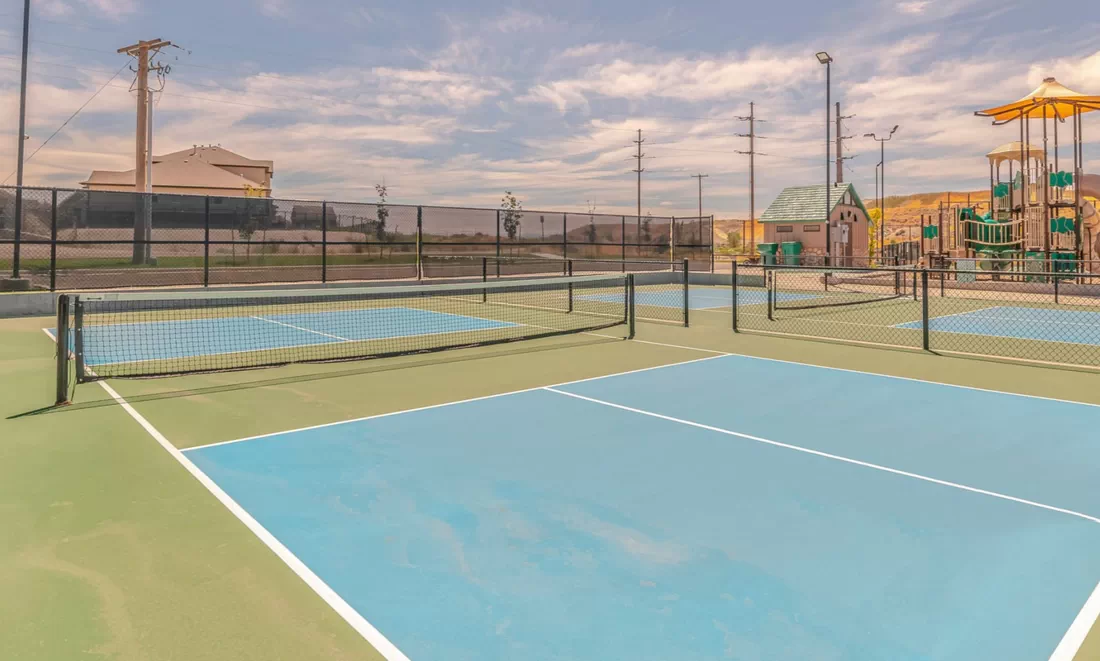
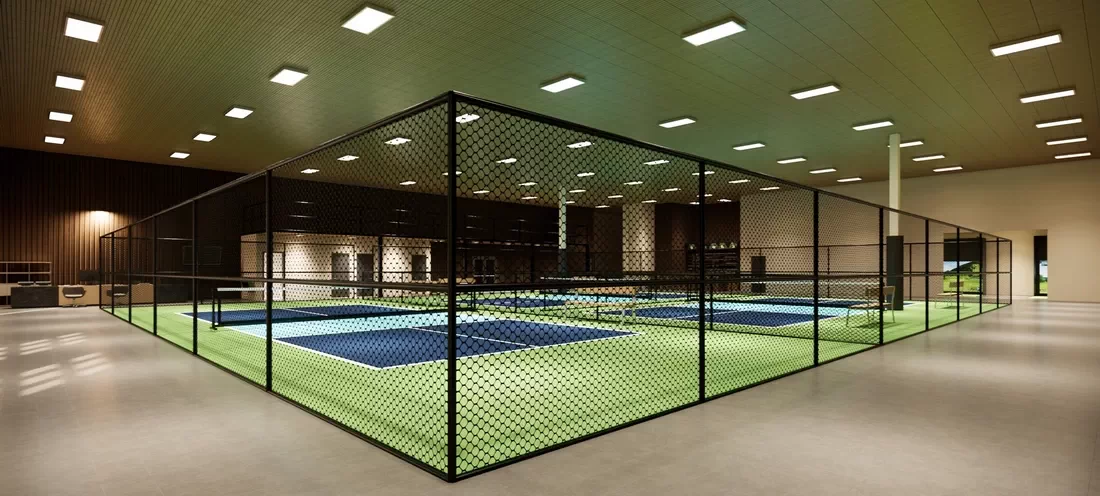
Indoor and Outdoor Pickleball Court Lights
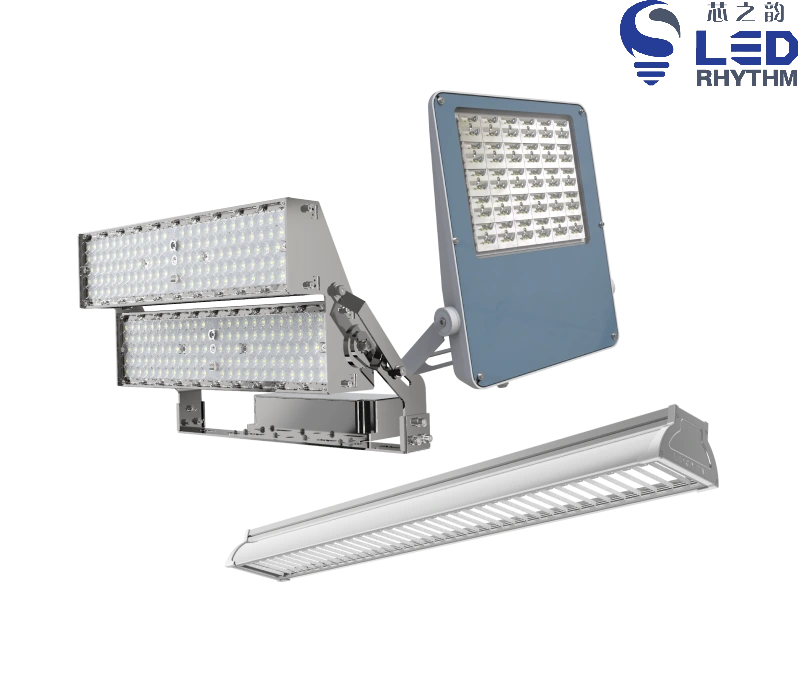
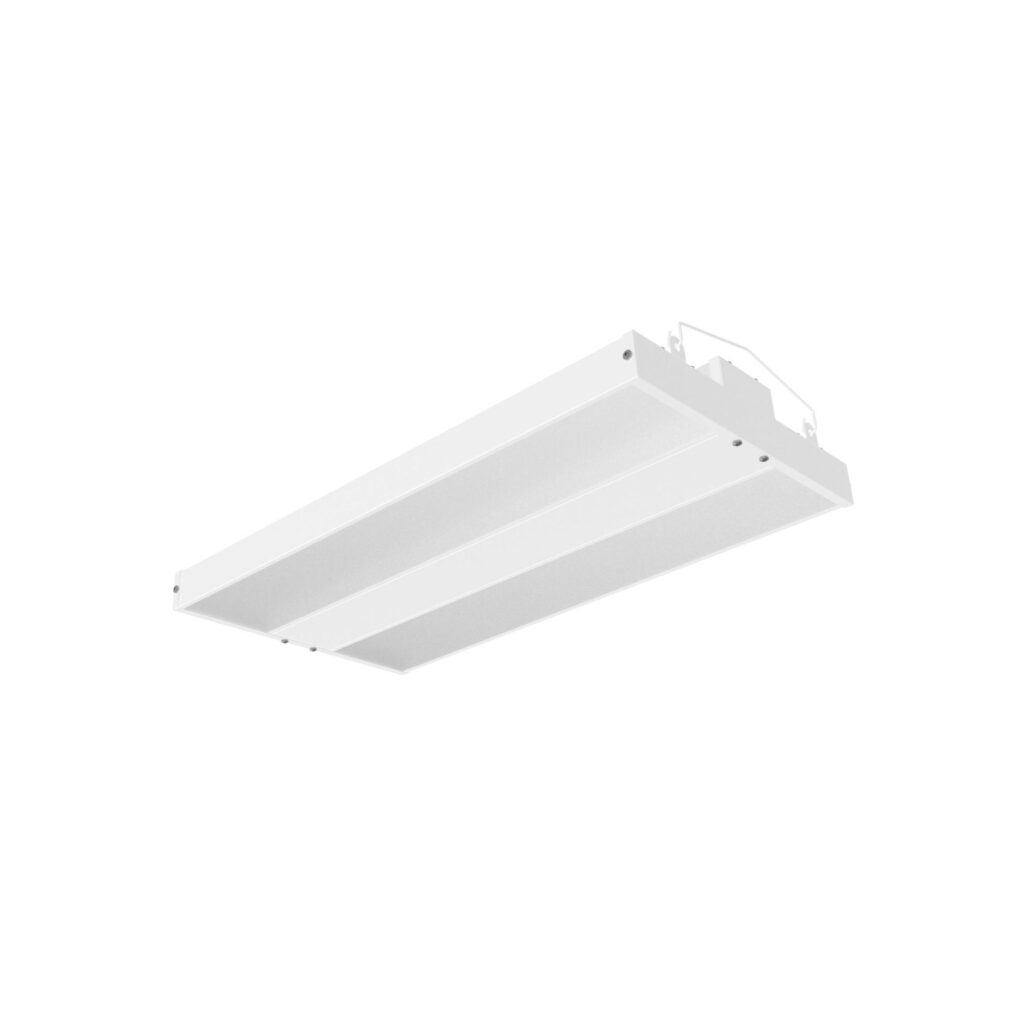
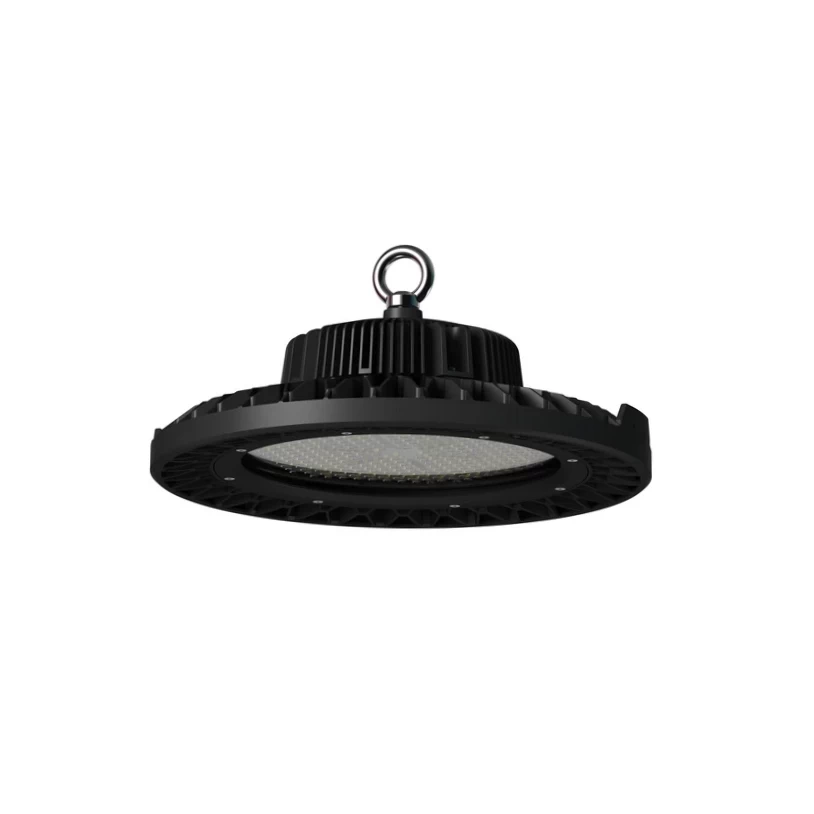
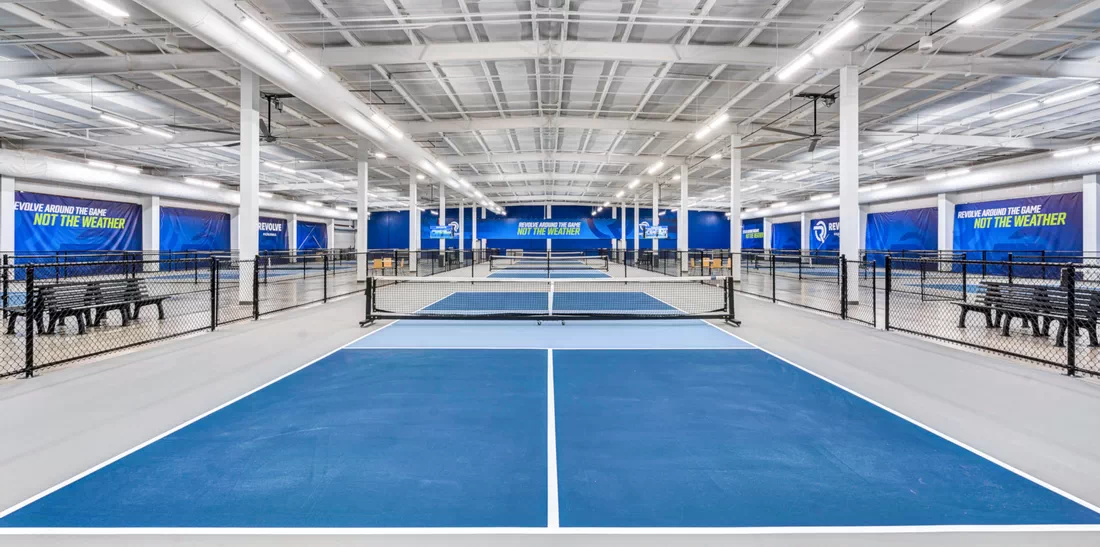
Indoor pickleball courts are unaffected by weather and don’t require waterproofing. However, they are often limited by ceiling height and building structure, and light is easily reflected, leading to problems such as direct glare, bright spots, or uneven illuminance. We recommend using linear LED high bay lights indoors, which have larger luminous surface, softer light, and naturally reduce the risk of glare. It can create a comfortable environment where the light is visible but the fixture is not. They can also be integrated with dimming to switch between different illuminance levels.
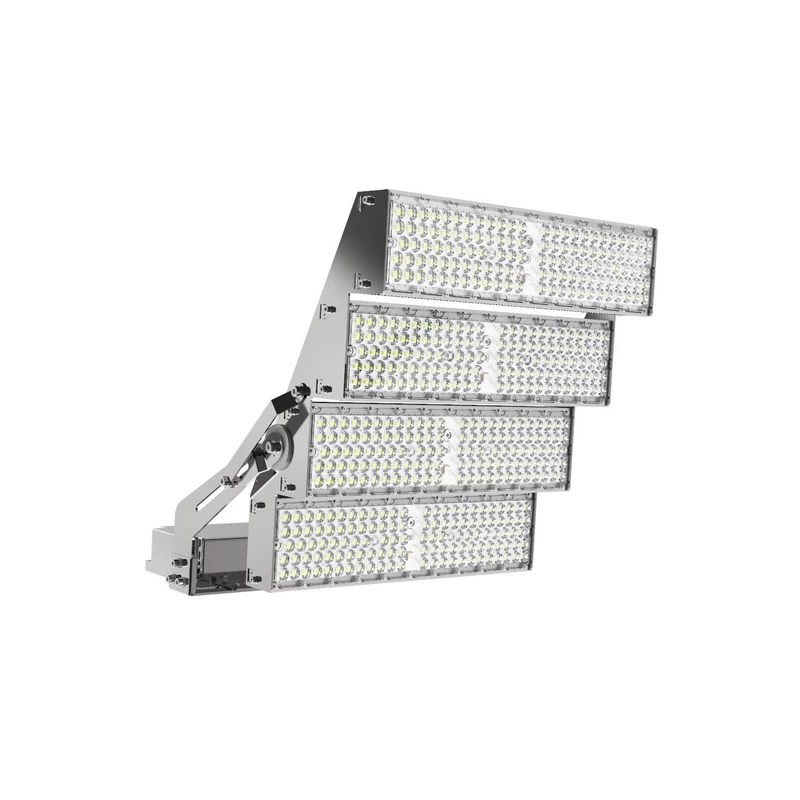
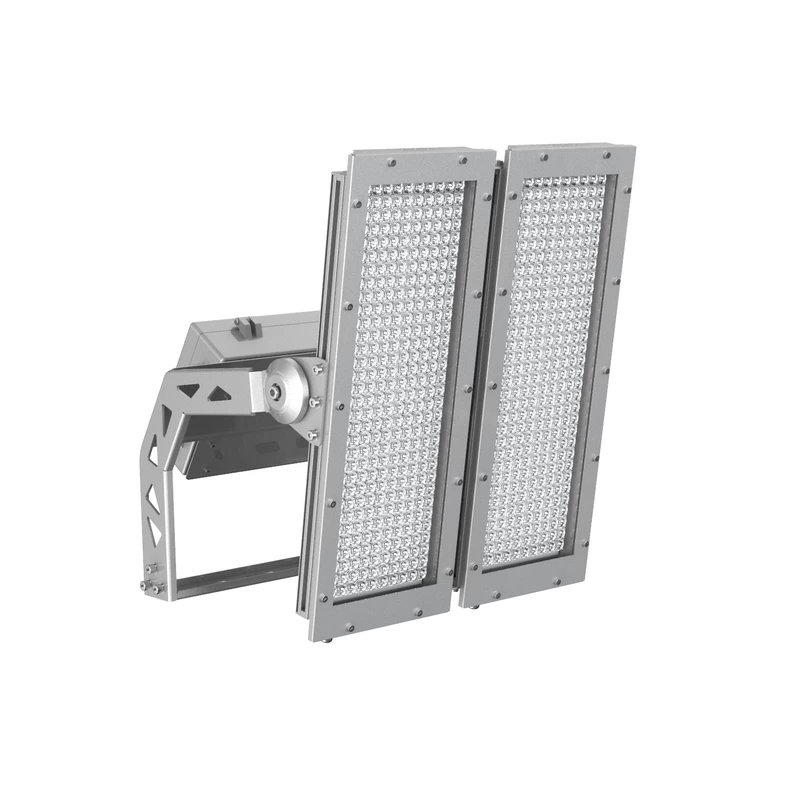
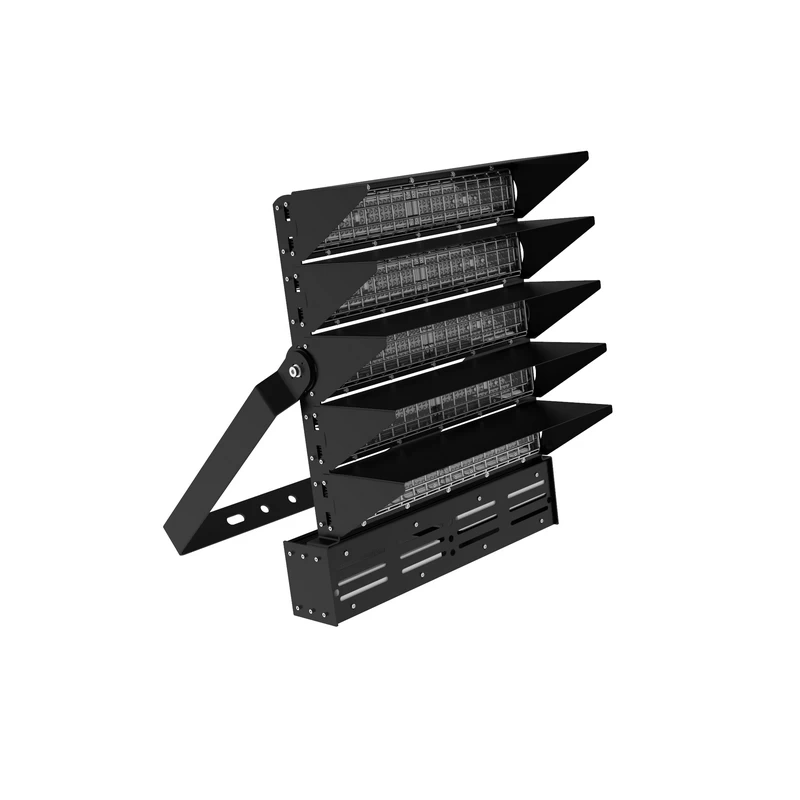
Outdoor courts place greater emphasis on luminous flux output, weather changes, light pollution control, and long-distance projection performance. At the same time, they still need to ensure bright and comfortable lighting effects. We recommend using professional LED floodlights for outdoor pickleball courts. Compared to ordinary floodlights, these offer higher lumen output and various optical options, making them suitable for installation on poles or high place structures. They also feature IP66 waterproof and dustproof ratings, IK08, and 10-20kV surge protection, ensuring excellent environmental adaptability.
| Item | Indoor Pickleball Court | Outdoor Pickleball Court |
|---|
| Lighting fixture | Linear LED high bay | LED flood light |
| Wattage | 100W–300W | 200W–600W |
| Glare control | Critical | Important |
| Color temperature | Over 5000K | Over 5000K |
| Installation | Ceiling | Pole mount |
| IP rating | IP40 | IP66 |
| Dimming | Recommended | Optional |
Why are LEDs recommended for pickleball court lighting?
- High energy efficiency and low cost: While achieving the same or even higher illuminance, LED pickleball court lights consume less power and are more efficient, significantly reducing electricity bills and overall operating costs.
- Flicker-free: High-quality LED driver power completely eliminates flicker perceptible to the human eye. This not only prevents eye fatigue and headaches but also ensures stable and smooth footage during shooting.
- Stable output: The brightness decay of LED lights is more controllable and slower throughout their lifespan, unlike traditional lights which exhibit noticeable dimming or color shift, ensuring consistent lighting quality.
- No more waiting: LEDs eliminate the long start-up and restart times, providing full illumination immediately upon power-on and complete shutdown upon power-off. They are unaffected by any sudden power outages.
- Glare Control: Through various precise shading angles, honeycomb grille, or microprism lenses, LED pickleball court lights can soften glare as much as possible or avoid directing it from the players’ eyes, ensuring visual comfort and focus.
- Outdoor reliability: The fully sealed IP66 waterproof structure, corrosion-resistant housing, and efficient heat dissipation enable LEDs to more easily cope with outdoor rain, snow, salt spray, high and low temperatures.
- Environmental Protection: LEDs contain no mercury or other harmful substances, aligning with modern sports lighting and sustainable development principles. They emit no ultraviolet or infrared radiation and are completely silent.
- Long Lifespan: Over 50,000 hours of lifespan; under normal use, it can operate continuously for more than 10 years. Furthermore, no replacement or maintenance is required during this period.
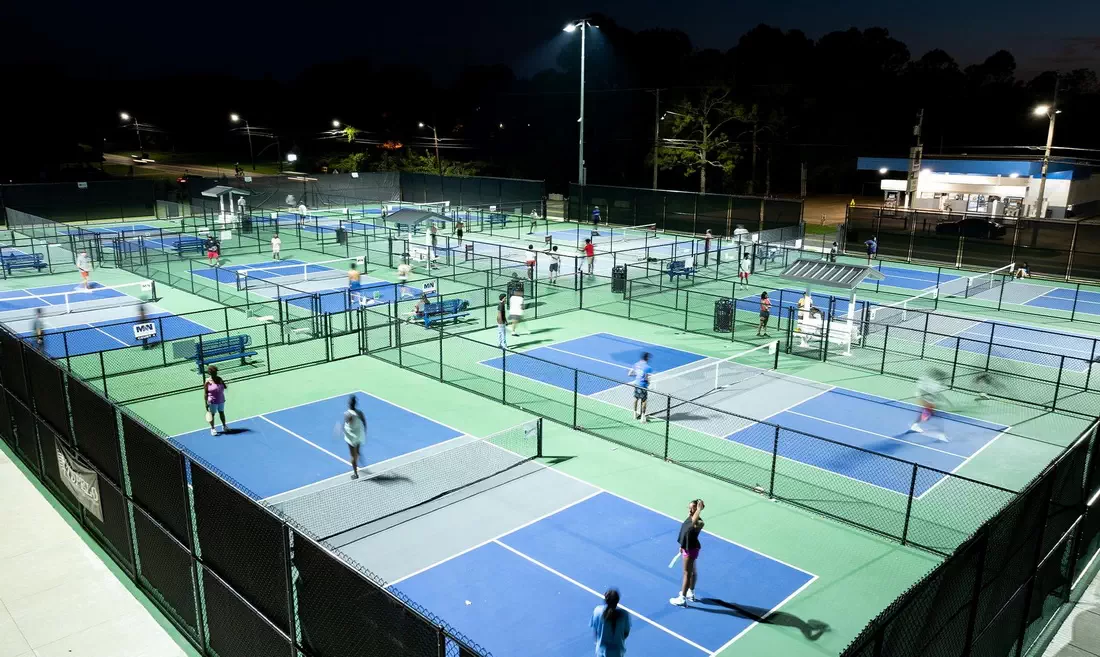
Pickleball Court Lighting Standards
Sports lighting standards are essentially developed around sports visibility, safety, and court professionalism. From recreational to professional competition pickleball courts, the intensity of competition and the needs of spectators differ significantly, therefore the standards for illuminance and light quality also differ.
- Recreational/community pickleball courts: 200–300 lux (20–30 fc) is recommended to meet basic entertainment needs and save costs. Otherwise, it will cause light pollution and energy waste.
- Club/training pickleball courts: 300–500 lux (30–50 fc) is recommended. The clarity of ball and player movements is significantly improved, suitable for extended training and competition, but the cost remains relatively low.
- Competition and broadcast courts: Recommended 700–1000+ lux (70–100 fc), with uniformity greater than 0.7 or 0.8, UGR ≤ 19, professional competition standards.
For any level of pickleball court lighting, the color temperature should be avoided to be below 4000K; otherwise, the yellowish light will create a dim feeling and result in extremely poor clarity. It should also not be higher than 6000K, otherwise the glare will be greater and more difficult to control, reducing the player’s experience.
| Court Level | Illuminance/Foot Candle | Uniformity | CCT | CRI |
|---|
| Recreational | 200–300lx / 20–30 fc | ≥ 0.6 | 4000K–5000K | ≥ 70 |
| Club / Training | 300–500lx / 30–50 fc | ≥ 0.7 | 4000K–5000K | ≥ 80 |
| Competition | 700–1000lx / 70–100 fc | ≥ 0.8 | 5000K–6000K | ≥ 90 |
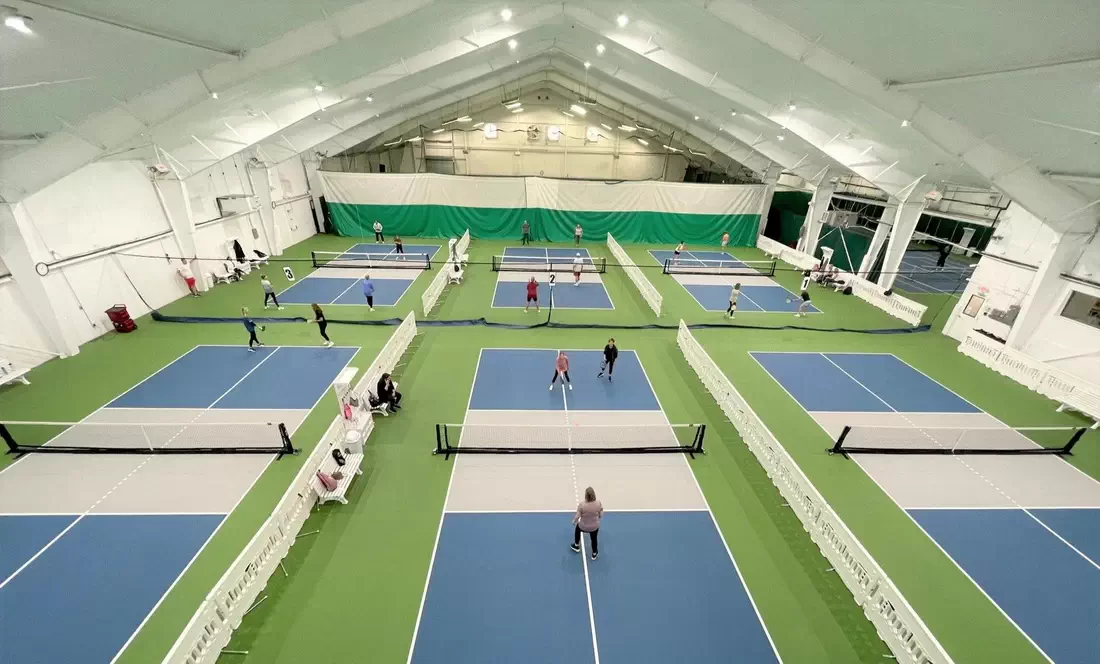
Pickleball Court Lighting Layout
If linear high bay LED lights are used in indoor pickleball courts, we recommend a continuous installation layout rather than a smaller number of high-power lights. This effectively eliminates dark areas between lights, distributes luminous flux across more luminous surfaces, preventing glare caused by excessive brightness from a single light.
- Arrangement: Arranged in parallel rows along the longitudinal or transverse direction of the court.
- Spacing: Fixtures are spaced 3-4 feet apart or arranged continuously without spacing. The spacing between rows is usually the installation height.
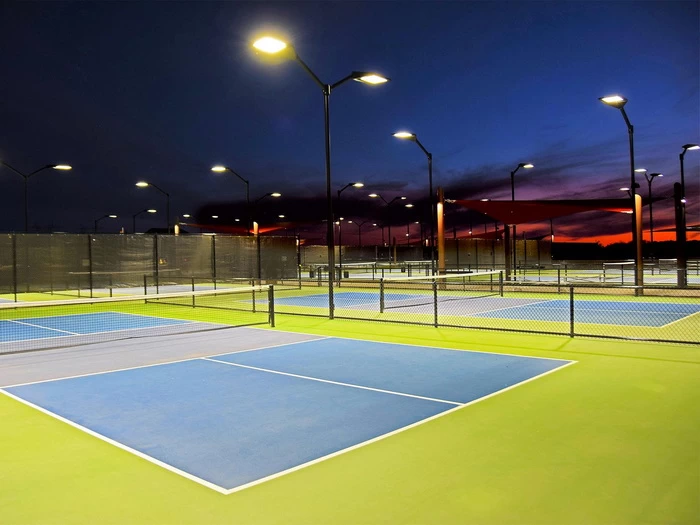
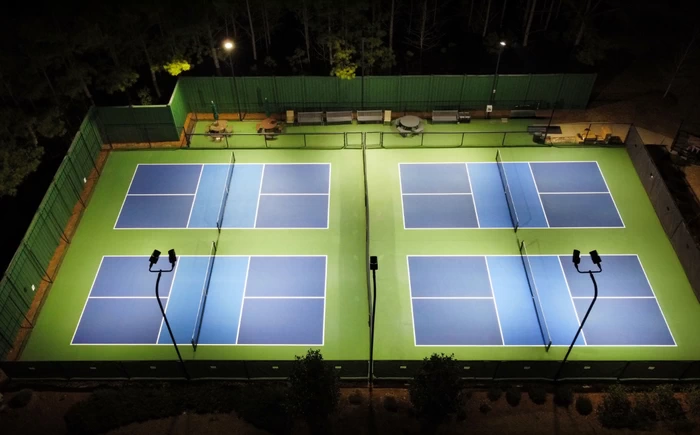
Outdoor pickleball courts often use a combination of light poles and LED floodlights, with the focus on overall planning rather than isolated design of individual courts. For a single court, installing one light pole at each of the four corners or two light poles on each side of the court ensures a more uniform and brighter lighting effect. If many pickleball courts are concentrated in one area, they can be treated as a whole for light pole placement, but some areas may have shadows and dark spots.
Comparison of Lighting Electricity Costs
Using LEDs in pickleball courts can result in significant energy savings, as LEDs are 2-3 times more efficient than traditional metal halide or high-pressure sodium. This means that lower-wattage LEDs can replace high wattage traditional light sources, leading to cost savings. For example, when used for 6 hours a day, 360 days a year, and an electricity cost of $0.12/kWh:
- A 300W LED is equivalent to 800W MH or HPS, saving 1080kWh annually, saving costs $130 annually
- A pickleball court with 4 LEDs would save $518 annually.
| Item | LED flood light for pickleball court | MH / HPS |
|---|
| Equivalent wattage | 200W – 300W | 600W – 800W |
| Annual runtime | 2,160 h | 2,160 h |
| Annual energy use | 432 – 648 kWh | 1296 – 1,728 kWh |
| Energy saved per LED light | 864 – 1,080 kWh / year |
| Electricity rate | $0.12 / kWh |
| Annual cost per light | $51.84 – $77.76 | $155.52 – $207.36 |
| Cost saved per LED light | $103.68 – $129.60 / year |
| Savings per court (4 lights) | $414.72 – $518.40 / year |
Frequently Asked Questions
How high can outdoor LED pickleball court lights be installed?
Our LED floodlights can be installed at heights of 6 to 20 meters on outdoor pickleball courts, which essentially depends on the luminaire’s effective light output capability, power range of 100W to 900W, and the optical design’s excellent control over long-distance projection. Higher installation heights require higher power and narrower beam angles to maintain adequate illuminance on the court. For example, a 300W LED might perfectly cover a court at 10 meters, but at 15 meters, it might require 500W or compensate through optimized lighting optics.
- 100–300W: Suitable for installation heights of 6–12 meters, for low-pole or small community courts.
- 300–600W: Suitable for heights of 12–18 meters, covering most standard outdoor pickleball courts.
- 600–900W: Suitable for heights of 18–24+ meters, suitable for overall coverage of multiple courts.
How many lumens to light a pickleball court?
First, it should be clear that the higher the required illuminance for a pickleball court, the higher its total lumens. A standard pickleball court is 6.1 m × 13.4 m, approximately 82 square meters. In actual lighting, the surrounding buffer zone is usually covered as well, so the actual illuminated area is often between 90 and 110 square meters. Therefore, the total lumens for a court are approximately:
- At 200–300 lux: the total lumens for a pickleball court are approximately 20,000–30,000 lm.
- At 400–500 lux, approximately 40,000 – 50,000 lm.
- At 600–700 lux, approximately 60,000 – 70,000 lm.
- At 800–1000 lux, approximately 80,000 – 100,000 lm, commonly used in professional competition and broadcasting courts.
It is worth noting that the total lumens data above only represents the light received by the pickleball court ground and does not represent the total luminous flux emitted by all the lights. The sum of the luminous flux of all the lights would be much higher because a significant amount of light is wasted due to factors such as installation height and light scattering.
For example, a 60,000 lumen luminaire with scattered light distribution is far less effective at illuminating a 40,000-lumen LED pickleball court light with precise optics. The latter focuses the light onto the court, while the former wastes it on the sky and the eyes of the spectators.
What are the considerations for LED pickleball court lighting design?
- For outdoor pickleball courts, the protective performance of the lighting fixtures is of utmost importance; they must be waterproof, dustproof, corrosion-resistant, and resistant to voltage fluctuations.
- First determine whether it’s for recreational, training, or competition use, then decide on the illuminance range; otherwise, all wattage calculations will be meaningless.
- Different installation heights require the selection of corresponding light distribution angles; otherwise, it will be difficult to achieve the best lighting effect.
- For multiple pickleball courts in an area, it is recommended to plan them as a unified lighting area rather than repeatedly using individual court solutions. This facilitates installation, maintenance, and management, and can even save costs.
- The overall uniformity of the site is better than the local brightness. Pickleball balls are small and move quickly, so excessive brightness in certain areas is more likely to cause visual disturbance than overall darkness.
- For renovation projects of old pickleball court lighting, lighting design should can be prioritized based on the original installation location, but the structural is sturdy should be checked.
How long can LED pickleball court lights last?
Whether for indoor or outdoor, our LED lights for pickleball court are industrial-grade products designed for long-term reliability, not short-term use. Standard lifespan is typically between 50,000 and 100,000 hours, depending on the environment, and brightness decays smoothly and slowly. We use high-performance LED chips and drivers; this data comes from our real-world testing results. This means that if used for 6 hours a day without external interference, it can last at least 23 years.
Is the process of renovating the lighting of pickleball court complicated?
Most pickleball court lighting projects are not complex, especially when upgrading from traditional metal halide lamps and sodium lamps to LEDs. Essentially, they are equipment replacement projects rather than structural engineering projects. These projects only involve high-altitude disassembly and install and optical adjustments. The construction is simple and the cycle is short; many courts can even be completed within 1–3 days.
- Confirm whether the existing number of light poles, installation height, layout, and power supply conditions are still usable.
- Select equivalent or higher-performance LED lights to achieve the same or even higher illuminance and uniformity with lower wattage.
- In most cases, no new cabling or changes to the control system are required. Simply remove the old lights, replace them with new LEDs, and adjust the angles.
However, if an old pickleball court is to be completely renovated, its installation structure damaged, or even upgraded to a professional competition area, then the lighting renovation process is complex and requires a complete redesign.
What are the installation methods for indoor pickleball court lighting?
For indoor pickleball courts, linear high bay LED lights are recommended as the main lighting. Support suspended installation, can be hung under any structure, and are height-adjustable; this is the most common and flexible installation method. Ceiling mounting is also supported, allowing direct attachment to concrete ceilings or metal structures. Wall mounting is also supported, allowing the luminaires to be directly fixed to the wall to illuminate the center of the court or as supplemental lighting to eliminate shadows.

 English
  简体中文
简体中文  Deutsch
  Español
  Français
  Italiano
  日本語
日本語  Русский
  Português
  한국어
한국어